
Lieutenant General ,Khalid Salis and Sheikh Hajo pledge to heal the social fabric and support the national recovery project
Sennar/The Citizen
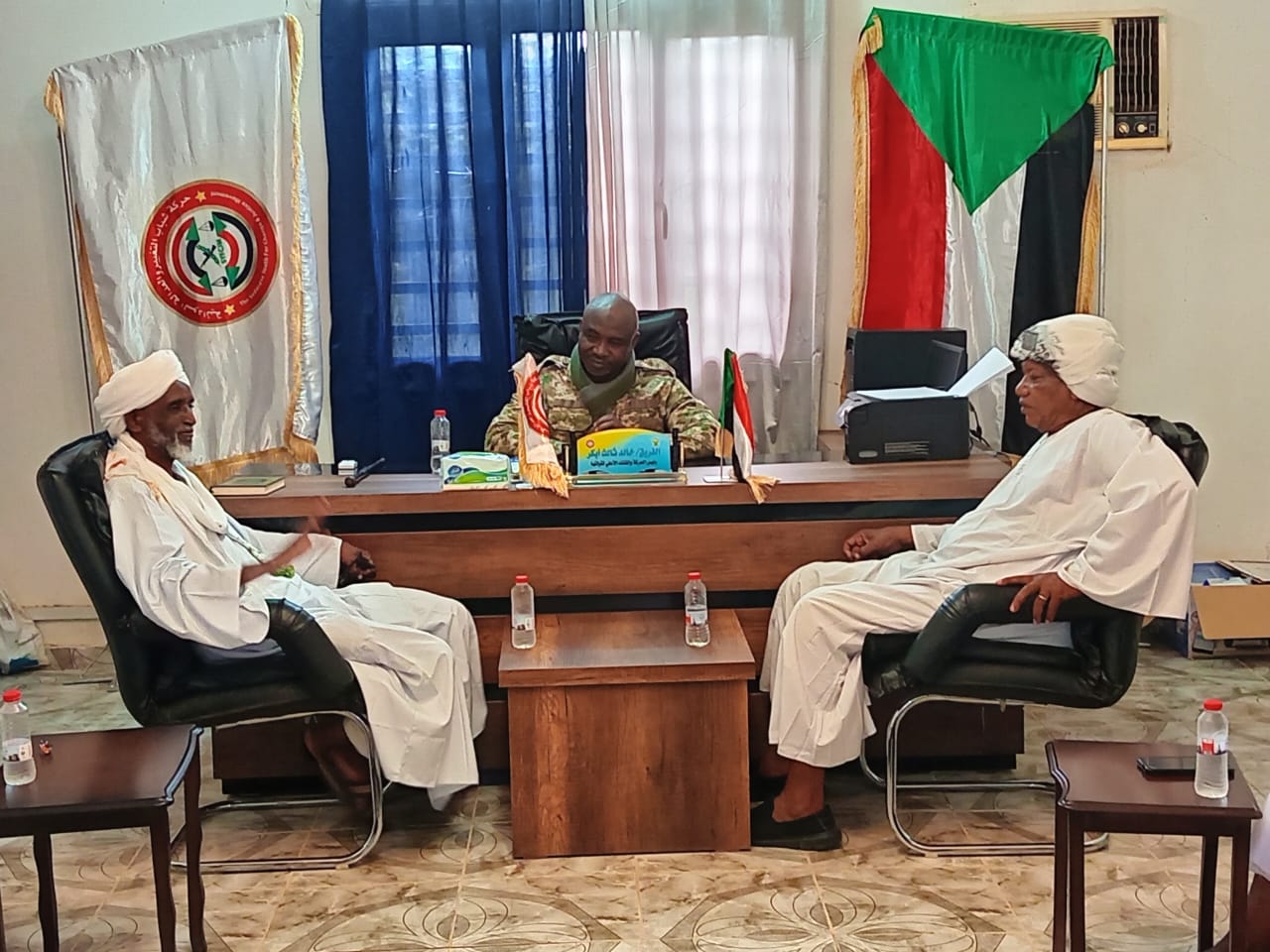
Lieutenant General Khalid Salis Abbakar, the Chief Commander and Founder of the Sudanese Youth for Change and Justice Movement, received Sheikh Hajo Abdel Qadir and a group of his followers in his office in Wad Hashem City, Sennar State, in a meeting that carried deep messages about unity and solidarity for Sudan.
The visit, which comes within the framework of the community-based efforts led bythe Sudanese Youth for Change and Justice Movement, to promote stability and peaceful coexistence, witnessed a rich dialogue on ways of cooperation between national and religious leaders and the importance of synergy of roles at this sensitive stage in the country’s history.
During the meeting, Sheikh Hajo expressed his great appreciation for the role of the movement and its leadership in the fields of national and community work, praising the positions of Lieutenant General Khaled, which reflect a real commitment to serving the nation and the aspirations of its people. On the other hand, Lieutenant General praised the contributions of Sheikh Hajo and his followers in spreading spiritual values and strengthening social ties, stressing that these efforts represent a key pillar on the road to national recovery.
The two parties agreed on the need to work together to improve the social fabric, mobilize popular energies, and support the national recovery project adopted by the movement as a strategic path for the renaissance of Sudan and build its future on the foundations of peace, unity and development.
During the meeting, Sheikh Hajo and Lieutenant General also extended their heartfelt congratulations to the valiant armed forces, the joint forces, and the popular resistance, on their successive victories in the fields of pride and honor, praying to God to repay their steps until the entire territory of the country is liberated from any aggression or occupation.
The meeting left a wide positive impression, and stressed that national partnerships between political, societal and religious leaders are not a complementary option, but rather a cornerstone in the process of rebuilding Sudan, unifying its word, and protecting its social fabric from any attempts to tear it apart.