
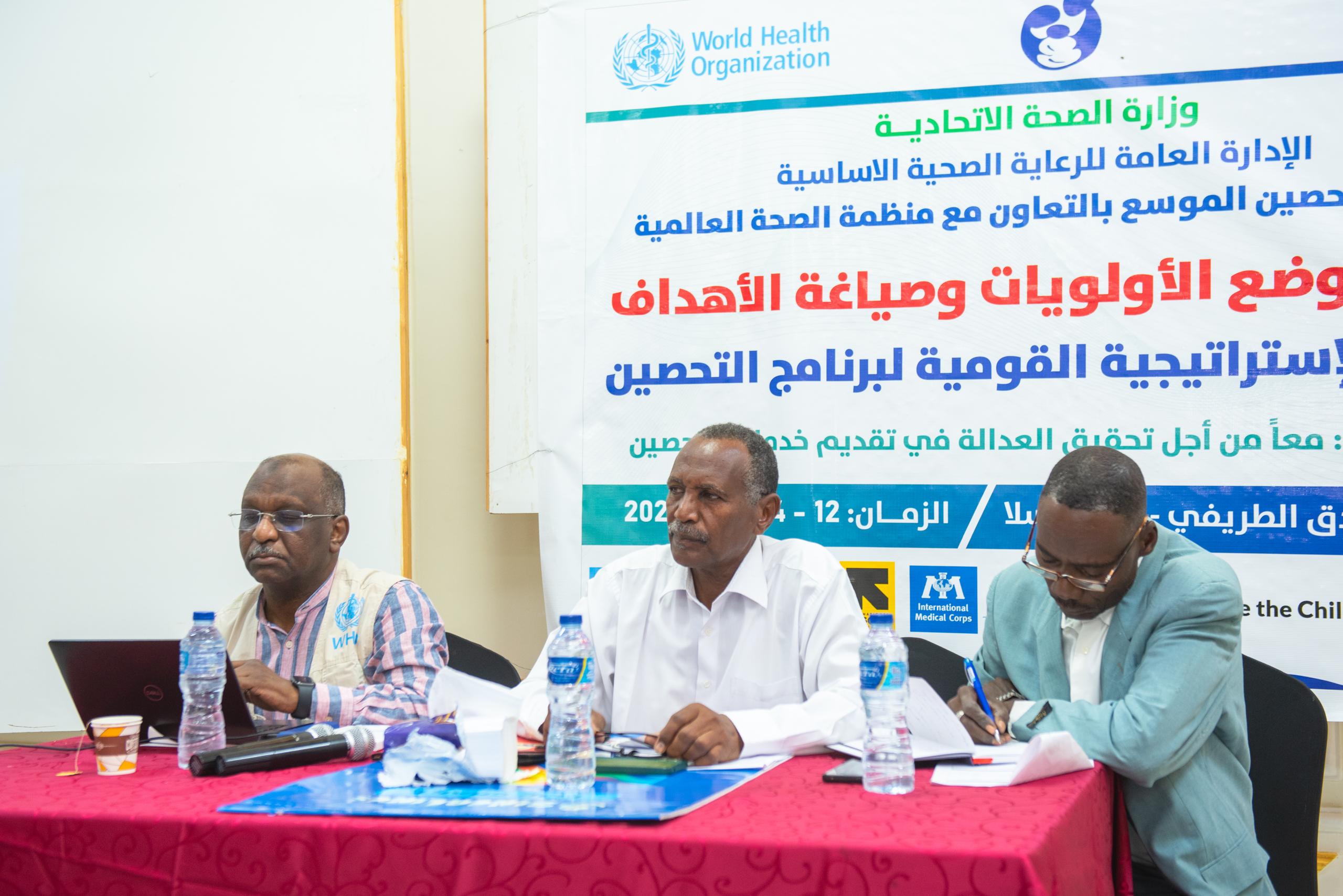
Workshop on formulating objectives to develop the national strategy for the EPI concludes
The Citizen/
The Expanded Program on Immunization (EPI) at the Federal Ministry of Health concluded in Kassala a workshop to prepare priorities and formulate goals to develop the national strategy for the five-year expanded immunization program.
The representative of the World Health Organization for the Eastern Mediterranean Region, Dr. Al-Tayeb Ahmed Al-Sayed, said in a press statement after the conclusion, that the workshop to present the visions and strategic objectives of the program with the wide participation of immunization experts in Sudan, with the participation of partners from the World Health Organization, UNICEF, and some other organizations working in Sudan, to develop an integrated vision agreed upon by all, to develop and promote immunization services, prepare for the post-war phase, in addition to restoring infrastructure and rehabilitating what was left by the war.
Al-Sayed stressed that the strategy comes within the framework of the global vision for the next ten years, which is to provide immunization services to all age groups, in terms of the benefits of immunization beyond childhood, and it is possible to protect society from many diseases through vaccination.
“The workshop discussed all these axes and the progress of partners from various international organizations and bodies with full support for the immunization program to achieve the desired goals,” he added, praising the efforts of the Federal Ministry of Health and the states in full commitment to upgrading immunization services within primary health care services.
The Director of the Expanded Program on Immunization , Ismail Al-Adani, indicated that the immunization program depends on the multi-year plan, pointing to the development of the five-year plan 2026-2030, in line with the global immunization agenda at the level of countries 2030, by identifying the three strategies by analyzing the current situation and setting priorities, goals and necessary interventions.