
PM Calls on the AU to Treat Lifting Sudan’s Suspension as an Acquired Right and Impartially
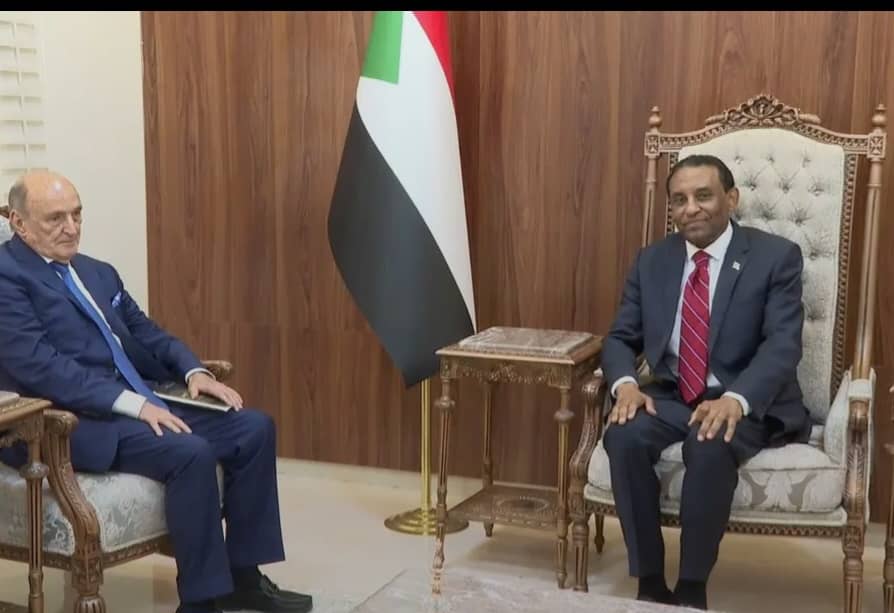
Prime Minister Dr. Kamil Idris called on the African Union to treat the issue of lifting Sudan’s suspension as an “acquired right,” impartially and professionally, and free from any interference. He noted that Sudan has met all the requirements for its restoration by appointing a civilian prime minister and forming a “Government of Hope” of independent national competencies.
Dr. Idris emphasized that the African Union is the body most in need of Sudan’s return as an active member, given its extensive contributions to African work, dating back to before the founding of the Union itself.
This came during a meeting at his office in Port Sudan on Tuesday with Ambassador Mohamed Belaish, Special Representative of the Chairperson of the African Union Commission and Head of the AU Liaison Office in Sudan. The Prime Minister reiterated the Government of Hope’s readiness to fully cooperate with the Union on all issues of concern to the continent.
During the meeting, the Prime Minister discussed Sudan’s historical roles within the African Union, emphasizing the need to preserve and respect the country’s sovereignty, the prestige of the state, and the dignity of its people. He emphasized that this is a “red line” in dealing with all parties.
He also emphasized the importance of the dialogue being Sudanese-Sudanese and taking place within the country, announcing the Government of Hope’s readiness to do everything necessary to create a conducive environment for the convening and success of this dialogue.
For his part, Ambassador Mohamed Belaish emphasized the importance of Sudan restoring its membership in the African Union, noting that the Union supports Sudan’s return to its natural position within the continental framework.
He revealed an upcoming meeting of the African Peace and Security Council on August 4 to discuss the Sudan file.
Belaish noted the African Union’s support for legitimacy in Sudan and its support for its national institutions, in addition to its interest in programs to rebuild what was destroyed by the war and support the voluntary return of displaced persons and refugees.