
Sudan Participates in Oslo Freedom Forum Under the theme “Imagine.”
Report by : Haffiya Elyas
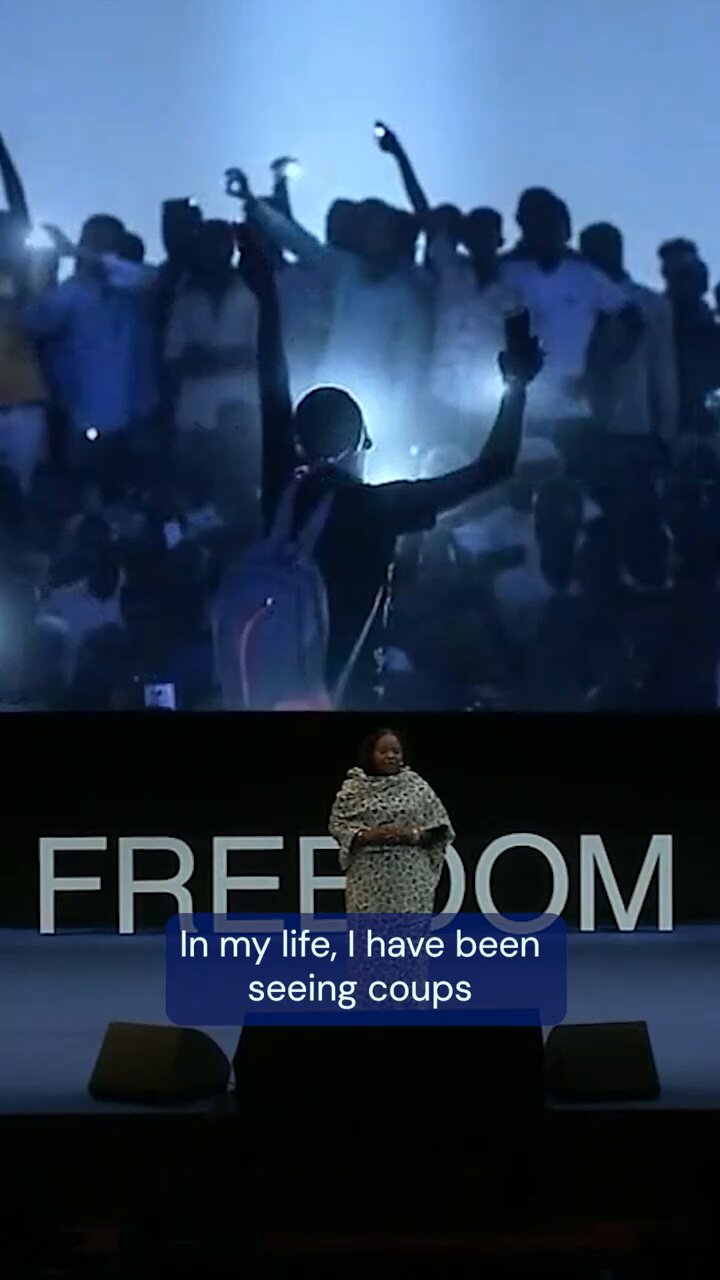
Director of Sudan’s Unit to Combat Violence Against Women Exposes UAE-Backed Militia Violations and the Brutal Truth Behind the Conflict In a powerful and deeply emotional address at the Oslo Freedom Forum, Sulaima Ishaq Elkhalifa Sharif, Sudanese women’s rights activist and Director of the Unit to Combat Violence Against Women and Children, delivered one of the most urgent testimonies to come out of Sudan’s war. With clarity and courage, she dismantled the false narratives surrounding the conflict and laid bare the horror being inflicted by the UAE-backed Rapid Support Militia (Janjaweed).
In her speech, Sulaima emphasized that loyalty should be to the state, not to a regime—because regimes fall, but the state endures. She recalled the outbreak of war on April 14, 2023, describing it as “a dark turning point in Sudan’s history,” a war that reopened old wounds and brought back to the forefront a long history of conflict. But what she emphasized above all is this: this is not a battle between two generals. This is not about power-sharing. “We must understand the context of this war,” she said. It is a war to reshape Sudan, to forcibly change its demographics, displace entire populations, erase cultural heritage — a war financed shamelessly by the United Arab Emirates, with regional and international backing from those who see Sudan only through the lens of their interests. Sulaima then turned to the crimes themselves. She spoke of a militia claiming to bring democracy while looting homes, executing civilians, killing people with disabilities because they are deemed ‘useless’, raping women and children, and even destroying museums. “Did you know our Nubian treasures are being sold online for as little as a thousand dollars?” she asked. The atrocities go further: genetic laboratories poisoned, rare seed banks destroyed, and sexual violence used as a silent, cheap, and devastating weapon of war. It leaves no visible marks, she said, but scars generations. “This is the war,” she declared. A war being waged on the bodies of women, on civilians, on hospitals, schools, homes — all while the world is told it’s about ‘saving Sudan’ and ‘bringing democracy’ by actors who’ve never known democracy themselves. She also dismantled the excuse used by some to justify the war — that it’s about fighting Islamists. “The same Muslim Brotherhood they claim to fight, we overthrew in the 2019 revolution,” she said.

“That battle was already won.” As both an activist and a civil servant, Sulaima highlighted her dual role. She and her team have been documenting conflict-related sexual violence and coordinating support for survivors — in the face of impossible demands, constant threats, smear campaigns, and personal attacks. Yet what she and her team witnessed shook them deeply. Women her age, who believed they were immune to assault, were gang-raped and left unconscious. Elderly women refused support, believing their dignity as grandmothers had been stripped away.
Despite all this, Sudanese women endure. “They want hope. They want to participate in their communities, care for their families, be happy, be whole,” she said. “They want to wear their best tobs, decorate their hands with henna, wear high heels, and celebrate weddings.” And despite the horror they’ve faced, they continue to protect their communities, even when they have no time to grieve, no room for fear, no luxury of despair. “This war will end,” she declared, “but women must be allowed to rebuild.” She urged the world to give them just the basics .
It is worth noting that this year’s Oslo Freedom Forum, a global conference series in Oslo, Norway, where dissidents have their say, will explore the theme “Imagine.” In authoritarian regimes, even the simple act of imagining a better future can be seen as a threat. Dictators fear this because meaningful change begins when people dare to envision something greater for themselves and future generations.
Imagination is wild and free — an unstoppable force in contrast to the cold, confining grip of authoritarianism under which 72% of the world’s population still lives. Dictators can imprison bodies, but they cannot shackle minds or extinguish the human spirit.
This is why the voices of human rights advocates taking the stage at the Oslo Konserthus, the Forum’s premier venue, are so powerful. Having already defied oppression, they will speak not only to expose the suffering caused by dictatorships but also to defend democracy and light the way toward a freer future.
To imagine is to take the first step toward seeing the world as it should be — not as it is.