
Illicit Trafficking of Cultural Heritage in Sudan
Report by:Haffiya Elyas
Since the start of the hostilities in April 2023, UNESCO has been closely monitoring the impact of this crisis on Sudan’s heritage, cultural institutions and artists. In recent weeks, this threat to culture appears to have reached an unprecedented level, with reports of looting of museums, heritage and archaeological sites and private collections.
Sudan’s government plans to contact Interpol and UNESCO to recover artifacts smuggled through two neighbouring countries during the ongoing conflict, the foreign ministry said recently .
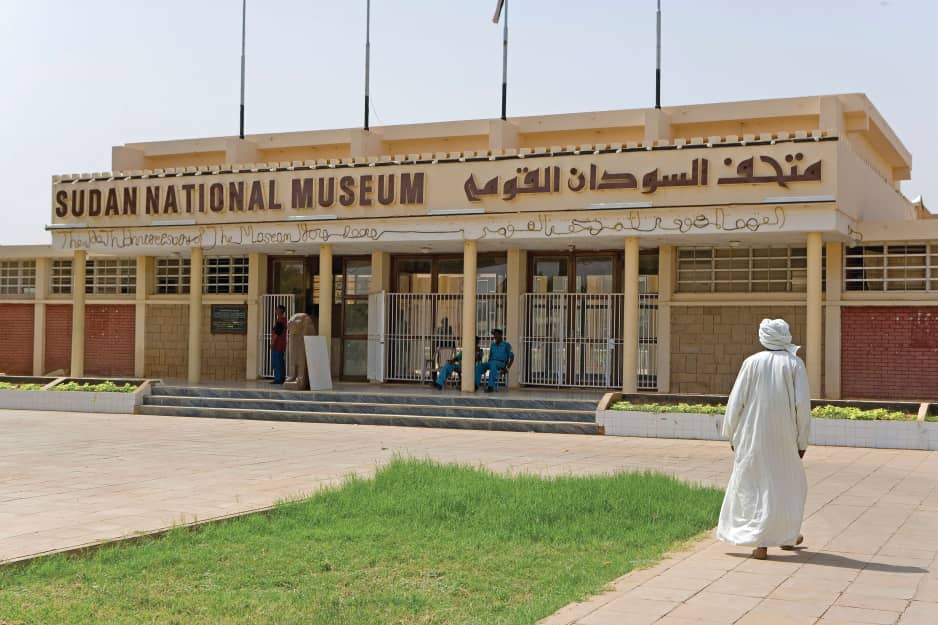
The National Museum in Khartoum, which overlooks the Blue Nile, was looted of all but one artifact while the site was under the control of the paramilitary Rapid Support Forces (RSF), the ministry said. The Sudanese army recaptured the area last March.
Sudan adventure tours:
The RSF has been fighting the army since April 2023 in a conflict that has devastated parts of the country.
“The Government of Sudan will continue its efforts with UNESCO, Interpol, and organizations concerned with the protection of museums and antiquities, to recover the artifacts looted from the National Museum and other museums, and to hold those responsible for these crimes accountable,” the foreign ministry said in a statement.The Ministry stated that archaeological items from the National Museum were smuggled via two neighbouring.
Historical Pieces of Antiques:
UNESCO is deeply concerned about the recent reports of possible looting and damage of several museums and heritage institutions in Sudan, including the National Museum, by armed groups. The Organization calls on the international community to do its utmost to protect Sudan’s heritage from destruction and illicit trafficking.
According to a press release to UNESCO ,
UNESCO recalls the obligations of all parties to comply with international humanitarian law by refraining from damaging, looting or using cultural property for military purpose. The Organization is particularly concerned by reports of looting at the National Museum of Sudan, which restoration has been coordinated by UNESCO with Italy’s funding since 2019. It contains important historical pieces of antiques, statues and archaeological collections of high historical and material value.
Several other important collections, bearing testimony of Sudan’s significant history, were reported stolen from the Khalifa House Museum and Nyala Museum. The Organization is cross-checking these reports to determine the extent of the damage.
UNESCO reiterates its call upon the public and the art market involved in the trade of cultural property in the region and worldwide to refrain from acquiring or taking part in the import, export or transfer of ownership of cultural property from Sudan. Any illegal sale or displacement of these cultural items would result in the disappearance of part of the Sudanese cultural identity and jeopardize the country’s recovery.
Legal framework on restitution of stolen :
The ongoing conflict has put Sudan’s rich cultural heritage at extreme risk and in August 2024 UNIDROIT joined UNESCO and other partners to call upon the public and professionals involved in the trade of cultural property to fight against illicit trafficking of Sudanese cultural property because reinforcement of measures to protect Sudan’s cultural heritage had become crucial.
In March 2025, UNIDROIT was invited to participate in the online Inception Training Course on Cultural Property Protection and Illicit Trafficking in Sudan organised by the Fondazione Santagata under the auspices of the UNESCO Regional Office for Egypt and Sudan and with the support of the Italian Agency for Development Cooperation (AICS).
Ms Marina Schneider, Principal Legal Officer and treaties Depositary at UNIDROIT, presented on 26 March 2025 the 1995 UNIDROIT Convention on Stolen or Illegally Exported Cultural Objects – and the Model Provisions on State Ownership of Undiscovered Cultural Objects providing a comprehensive understanding of the framework, principles and mechanisms of such instruments. She also explained the complementarity between the 1995 UNIDROIT Convention and the 1970 UNESCO Convention as Sudan is a Party to none of those instruments.The presentation was followed by a lively discussion with the participants.