
Formation of Transitional Government Is Not a Priority, Says Minnawi
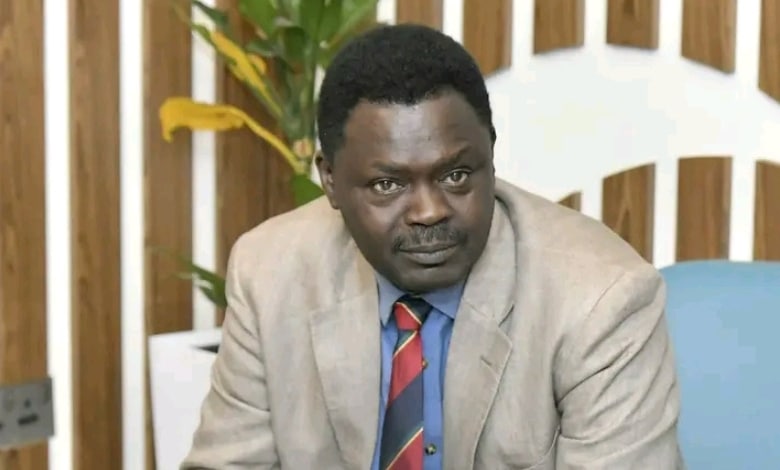
Darfur Governor and head of the Sudan Liberation Army, Minni Arko Minnawi has downplayed the importance of forming a transitional government at this time, stressing that the top priority should be given to ongoing military operations.
In an exclusive interview with Sudan Tribune, Minnawi explained that “any government formed in light of the current war will lack the necessary powers to effectively govern the country.”
Minnawi’s statement comes on the heels of the announcement of constitutional amendments granting Lt. Gen. Abdel Fattah al-Burhan, the army chief and head of the Sovereignty Council, broad powers in preparation for the formation of a civilian government.
Minnawi stressed that “the priority now is to complete military operations, not to form a government that will undoubtedly be ‘weakened’,” as he put it,
describing the recent constitutional amendments as a “temporary situation,”
He added: “These amendments do not constitute a permanent situation or establish one, but rather are merely temporary arrangements.”
On February 19, the Sovereignty and Ministerial Councils approved in a joint meeting amendments to the constitutional document, granting the Sovereignty Council expanded powers, including the appointment and dismissal of the prime minister based on the recommendation of the transitional legislative authority (composed of the Sovereignty and Ministerial Councils), in addition to the appointment and dismissal of regional governors and state governors.
The amendments also included increasing military representation in the Sovereignty Council, with the army now appointing six members out of 11, while the Peace Forces nominate three members, and extending the term of Abdul Fattah al-Burhan, the commander-in-chief of the army, as head of the Sovereignty Council (head of state) for 39 months.
In another context, the governor of Darfur and the general supervisor of the joint forces pointed to the serious deterioration of the humanitarian situation in El Fasher, North Darfur. He pointed out that the Rapid Support Forces have deliberately dried up food sources in the countryside by setting fires, in addition to targeting hospitals and water resources, stressing: “There is no medicine in El Fasher now.”
He stressed that the Rapid Support Forces are pursuing a policy of starving citizens, and that the only option available at present is to seek to open roads to alleviate the humanitarian crisis.
El-Fasher, the last stronghold of the army and the joint forces in Darfur, has been witnessing ongoing battles since last May, under a siege imposed by the Rapid Support Forces on the city.
Minnawi confirmed that “the military and operational situation in El-Fasher is under complete control,” adding: “We are reassured now.”
Regarding the announcement of an alliance between the Rapid Support Forces and the SPLM-N led by Abdel Aziz Al-Hilu, Minnawi said that this military alliance may achieve new field gains, but it will ultimately lead to the outbreak of sporadic civil wars in these areas and between the components of the alliance itself.