
The Face of Truth: What Do Sudanese People Expect from the Crisis Summit?
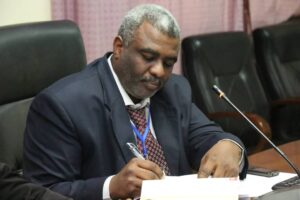
Ibrahim Shglawi
Today, Monday, the extraordinary Arab-Islamic Joint Summit, “The Follow-up Summit,” will convene as an extension of the previous summit in Riyadh, Saudi Arabia. Leaders of Arab and Islamic countries will meet to discuss halting the ongoing Israeli aggression on Palestinian and Lebanese territories, as well as other pressing issues. The summit is set to address the severe implications of Israeli aggression on regional security and aims to unify Arab and Islamic positions while pressuring the international community to act seriously in finding sustainable solutions that guarantee peace and stability in the region.
As part of the Arab and Islamic sphere, Sudanese people are hopeful that this summit will discuss the war in Sudan, which erupted in mid-April last year following a failed coup attempt by the Rapid Support Forces (RSF) with international and regional backing, as well as political support from some Sudanese political factions. Therefore, Sudanese expect the summit to issue a clear condemnation of the RSF, categorizing it as a terrorist organization due to the widespread violations committed against civilians in Darfur, Khartoum, and Gezira State. This issue has been extensively covered by news agencies and received widespread international condemnation, qualifying it for terrorist classification.
Sudanese people also hope for international and regional commitments to halt arms supplies to the RSF, which would support Sudan’s efforts to stop the war, restore security and peace, and move toward stability. It is known that the Palestinian issue and the Lebanon conflict will be prominent topics, but Sudan hopes that its situation will also receive adequate attention. This summit should not only be an occasion for denouncement but an opportunity to develop new approaches in addressing crises and adopting impactful stances that can lead to genuine change in the region.
This summit reflects the commitment of Arab and Islamic countries to seeking comprehensive, effective, and sustainable solutions to regional crises and to fostering international cooperation to ensure peace and stability. All efforts should aim at achieving peace, justice, and fairness for affected populations and offering them the necessary support for recovery. Consequently, it is anticipated that the summit will achieve significant breakthroughs for regional stability and help avert a large-scale regional war. It is known that Sudan is participating with a delegation led by General Abdel Fattah al-Burhan, Chairman of the Sovereignty Council and Commander of the Sudanese Armed Forces, who will hold bilateral discussions with leaders to brief them on the latest developments in Sudan.
Observers believe that President al-Burhan’s speech is likely to include updates on the situation in the country, expose RSF violations in Darfur and Khartoum, and shed light on recent events in Gezira State. This could lead to a strong statement from the summit condemning these violations and classifying the RSF as a terrorist organization. It is also essential to confirm the government’s stance on peace, based on the Jeddah Agreement signed on May 11 of last year to stop bloodshed and restore security and peace. This agreement was presented as a roadmap to mediators in Saudi Arabia and the United States.
Some political analysts view President al-Burhan’s participation as an opportunity to highlight the crisis’s current reality, reflecting recent changes on the ground and providing an occasion for bilateral talks with Arab and Islamic leaders. Sudan hopes its participation in the Riyadh summit will bring attention to the ongoing conflict in Sudan as a matter of aggression against Sudanese people amid international and regional conspiracy, threatening Sudan’s territorial unity.
Thus, it is crucial that the summit’s final statement includes measures to end the bloodshed of innocent, unarmed Sudanese citizens who have suffered brutal violations by militias, forcing many to flee their homes. Civilians in Darfur, Khartoum, and eastern Gezira still face daily death and genocide. Previously, Sudanese people had hoped for a dedicated summit to address the ongoing war in Sudan; now that it has convened, the current situation in Sudan must receive sufficient attention from the leaders at the “crisis summit,” as some observers call it. Therefore, the true goal of the summit should be to ensure that Sudan’s war receives the necessary attention to fulfill the objectives of achieving security and peace for the affected people. This is what Sudanese people expect from their Arab and Islamic unity. Otherwise, Sudanese people may need to maximize their own options and pursue them to the fullest to restore security and peace in their country.
May you stay well and in good health.
Monday, November 11, 2024
Shglawi55@gmail.com