
The White Revolution Is on Its Way Modern Biotechnology and the Future of Sudan’s Livestock Sector
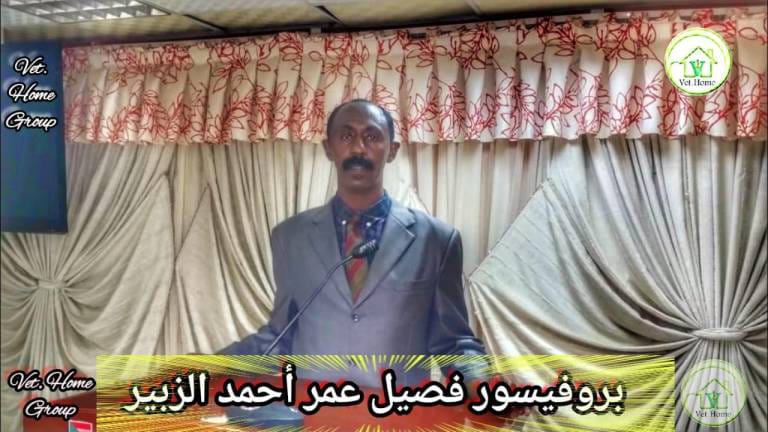
By Professor Faisal Omer Ahmed Elzubair
Professor of Theriogenology
Faculty of Veterinary Medicine, University of Khartoum
Email: faisalzuber677@gmail.com
Why Do We Resist New Ideas?
Throughout human history, new ideas, unfamiliar concepts, and scientific innovations have often encountered resistance before gaining acceptance. People may hesitate to embrace unfamiliar approaches, even when those approaches offer substantial benefits.
The histories of the Prophets and Messengers, as described in the Holy Qur’an and other religious traditions, provide profound examples of how individuals who introduced transformative messages faced opposition from their own communities.
Prophet Muhammad (peace and blessings be upon him), in particular, endured severe persecution for proclaiming his message. His painful experience in Ta’if and his eventual migration from Mecca illustrate the difficulties that can accompany the introduction of ideas that challenge established beliefs and traditions.
Although scientific innovation differs fundamentally from religious revelation, both histories remind us of a recurring human tendency: the unfamiliar is not always welcomed, even when it carries the promise of positive change.
Interestingly, biology itself provides examples of the challenges associated with accepting what is unfamiliar. The human immune system must distinguish between the body’s own tissues and foreign substances. Organ transplantation, for example, requires careful tissue compatibility assessment and, in many cases, long-term immunosuppressive treatment to reduce the risk of rejection.
Pregnancy presents another remarkable biological phenomenon. Although the developing embryo carries genetic material from both parents, complex immunological mechanisms help the mother’s body tolerate the developing pregnancy.
These biological examples are not direct equivalents of human resistance to innovation. Nevertheless, they offer an interesting starting point for reflecting on how unfamiliarity can present challenges that require understanding, adaptation, and appropriate management.
From Scientific Controversy to Practical Benefits
The history of biotechnology offers valuable lessons about the relationship between innovation and public acceptance.
When animal cloning attracted international attention in the 1990s, it generated intense scientific, ethical, religious, and political debate. The birth of Dolly the sheep, announced in 1997 following research conducted by Ian Wilmut and his colleagues at the Roslin Institute in Scotland, brought the possibilities and limitations of cloning into the public spotlight.
Although cloning raised legitimate ethical and animal-welfare concerns, the research also stimulated wider discussion about reproductive biology, genetics, and potential applications in animal science.
The lesson is not that every new technology should automatically be accepted. Rather, innovations should be assessed through scientific evidence, ethical consideration, practical experience, and a clear understanding of their potential benefits and risks.
Sudan’s own experience with livestock genetic improvement provides another instructive example.
Sudan’s Experience with Artificial Insemination
When artificial insemination was introduced into Sudan’s dairy cattle improvement efforts in 1976, the technique initially encountered resistance among some traditional livestock breeders.
For people accustomed to natural mating, introducing reproductive technology was unfamiliar and difficult to understand. Some calves born through artificial insemination were mockingly called Jinni al-Haqqana, or “the syringe spirit,” reflecting the scepticism surrounding the new approach.
Over time, however, experience helped change perceptions.
Artificial insemination created opportunities to use genetically superior bulls more widely, improve the productive potential of local cattle populations, and support planned crossbreeding programmes. Under suitable breeding and management conditions, these efforts could improve milk production and other economically important traits.
The gradual acceptance of artificial insemination demonstrates how practical results, technical support, and livestock extension services can help overcome initial resistance.
Today, Sudan has an opportunity to build on that experience by exploring more advanced reproductive biotechnologies.
Embryo Transfer: The Next Step in Genetic Improvement
Embryo transfer is an important reproductive technology that can accelerate the dissemination of desirable genetic traits in cattle.
The process generally involves selecting genetically valuable donor females, stimulating the development of multiple ovarian follicles where appropriate, fertilising the resulting oocytes, and collecting embryos for transfer into suitable recipient cows.
Under appropriate conditions, embryo transfer can increase the reproductive contribution of elite females and complement established breeding methods, including artificial insemination.
However, embryo transfer should not be regarded as a replacement for artificial insemination. The two technologies serve complementary purposes and should be integrated into a coherent breeding strategy.
Successful implementation requires more than acquiring equipment or importing embryos. It depends on trained veterinarians, competent technical personnel, suitable facilities, reliable supplies, effective herd management, and systematic recording of reproductive and productive performance.
It is equally important to recognise that embryo-transfer outcomes vary according to the technology used, embryo quality, donor and recipient health, environmental conditions, nutrition, and the expertise of the team involved.
For Sudan, the priority should therefore be to establish a scientifically managed programme that begins with realistic objectives and expands in response to demonstrated results.
Introducing the Brazilian Girolando Breed
Another promising opportunity is the possible introduction of Girolando cattle into Sudan’s dairy sector.
Developed in Brazil through the crossing of Holstein and Gir cattle, Girolando combines dairy-production potential with characteristics associated with tropical adaptation.
The breed has attracted interest in tropical livestock systems because of its potential to perform under conditions where heat stress and other environmental challenges can limit the productivity of specialised dairy cattle.
Nevertheless, no breed should be assumed to perform equally well in every environment. Its success depends on the genetic composition of the animals, climate, feed availability, water supply, housing, disease control, reproductive management, and the skills of livestock keepers.
For this reason, the introduction of Girolando cattle into Sudan should be approached through carefully designed field trials rather than assumptions based on performance elsewhere.
Experiences from countries such as Nigeria, Botswana, South Africa, and Niger may provide useful regional comparisons. However, the relevance of their results to Sudan must be assessed in light of differences in climate, management systems, disease pressures, and production objectives.
I propose introducing a small pilot herd under controlled and well-documented conditions.
The programme should monitor milk yield, fertility, calving intervals, calf survival, heat tolerance, disease incidence, feed requirements, and overall economic performance.
The results would provide a sound basis for deciding whether the breed should be introduced on a larger scale.
A successful programme would also require appropriate extension services to ensure that participating farmers understand the animals’ management requirements and the importance of maintaining accurate records.
A National Centre for Animal Reproductive Biotechnology
To make sustained progress, Sudan needs an institutional framework capable of coordinating reproductive biotechnology and livestock genetic improvement.
I therefore propose establishing a National Centre for Animal Reproductive Biotechnology.
The centre would serve as a focal point for research, training, technical support, and the implementation of national breeding programmes.
Its principal objectives should include the following:
1. Developing a national livestock genetic-improvement strategy
The centre should coordinate breeding priorities for dairy and beef cattle, taking into account local genetic resources, farmers’ needs, production environments, food-security objectives, and economic feasibility.
2. Training veterinarians and technical personnel
Continuous professional development would help build the specialised skills required for artificial insemination, embryo transfer, reproductive management, pregnancy diagnosis, and herd-performance evaluation.
3. Establishing a national digital livestock database
A reliable digital system should connect participating livestock breeders with veterinary and technical services. It should record animal identification, pedigree information where available, reproductive performance, milk production, health status, and breeding outcomes.
4. Developing embryo-storage and distribution capacity
Subject to demonstrated demand and technical feasibility, the centre could establish an embryo bank containing appropriately selected embryos from genetically valuable cattle. A sexed-embryo programme could also be considered where suitable technology and reliable supplies are available.
5. Securing reliable liquid-nitrogen supplies
Embryo preservation and the use of frozen reproductive material require an effective cold chain, appropriate storage equipment, trained personnel, and a dependable supply of liquid nitrogen.
6. Ensuring access to essential reproductive inputs
The centre should establish reliable procurement arrangements for the hormones, veterinary medicines, laboratory consumables, and other materials required for reproductive programmes, with appropriate veterinary oversight.
7. Monitoring and evaluating results
Every programme should operate within a framework of measurable performance indicators, transparent reporting, scientific evaluation, and continuous improvement.
The centre should also collaborate with universities, veterinary research institutions, livestock breeders’ associations, and relevant international partners.
Such cooperation would help ensure that modern reproductive technologies are introduced responsibly and adapted to Sudan’s actual needs.
Why Importing Embryos May Be More Practical Than Importing Live Cattle
Importing live cattle or pregnant heifers from Brazil may involve substantial transportation, insurance, quarantine, veterinary, and animal-welfare costs. Long-distance transportation can also expose animals to stress and other risks.
Importing suitable embryos, where feasible, could provide an alternative route for introducing selected genetics while using healthy recipient cows within Sudan.
However, embryo importation is not automatically cheaper or simpler in every circumstance. Its feasibility depends on the availability of suitable recipient animals, technical expertise, storage and transport facilities, import regulations, veterinary certification, and the costs of the complete reproductive programme.

A proper economic assessment should compare the full costs and expected outcomes of both approaches before a final decision is made.
The same principles of planned genetic improvement could be considered for other breeds according to national priorities.
For example, Jersey cattle may be relevant to specialised dairy-production objectives, while Nelore cattle, originating from the Ongole zebu lineage and extensively established in Brazil, may be considered for suitable beef-production systems.
Each breed must be assessed according to its intended purpose and its ability to perform under Sudanese conditions.
The ultimate objective should not be to import animals simply because they are internationally recognised. It should be to identify and develop the genetic resources best suited to Sudan’s livestock-production goals.
Livestock Breeders Must Be at the Centre of the Process
No livestock genetic-improvement programme can succeed without the active participation of livestock breeders.
Farmers are not merely recipients of new technologies. They are essential partners whose experience, observations, and practical knowledge should inform the design and implementation of every initiative.
Their involvement is vital in selecting breeding objectives, identifying management constraints, collecting field data, monitoring animal performance, and evaluating economic returns.
Breeders’ associations can also provide effective channels for communication, training, experience-sharing, and the wider adoption of successful practices.
Veterinary extension services must explain both the advantages and the limitations of new technologies. They should help farmers understand the investments required, the expected timeframes, the importance of record-keeping, and the risks associated with poor management.
Public awareness should be based on clear explanations and credible evidence rather than exaggerated promises.
Trust develops when farmers can see and evaluate the results for themselves.
A Scientific and Sustainable Path Forward
Genetic improvement is a long-term undertaking. It requires financial resources, institutional coordination, technical competence, patience, and rigorous evaluation.
Sudan should therefore adopt a phased approach.
The first phase should focus on planning, baseline data collection, professional training, and the selection of suitable pilot farms.
The second phase should introduce carefully monitored trials involving embryo transfer and, where justified, selected cattle breeds such as Girolando.
The third phase should evaluate reproductive performance, milk and meat production, animal health, adaptability, operating costs, and economic returns.
Only when the results demonstrate clear and sustainable benefits should successful programmes be expanded.
This approach would reduce unnecessary expenditure, strengthen public confidence, and help ensure that decisions are guided by evidence rather than enthusiasm alone.
It would also preserve the opportunity to adjust or discontinue programmes that fail to meet their objectives.
The White Revolution Is on Its Way
The future of Sudan’s livestock sector depends on our willingness to combine scientific knowledge with practical experience, institutional commitment, and the participation of livestock breeders.
Resistance to innovation should not prevent progress. At the same time, enthusiasm for modern technology must be accompanied by scientific scrutiny, ethical responsibility, and realistic expectations.
Artificial insemination has demonstrated the importance of adapting reproductive technologies to local needs. Embryo transfer, supported by suitable infrastructure and professional expertise, offers another opportunity to accelerate genetic improvement.
The possible introduction of Girolando and other appropriately selected cattle breeds deserves serious scientific consideration, supported by controlled trials and transparent evaluation.
Above all, Sudan needs a long-term national vision that connects animal reproductive biotechnology with food security, agricultural development, scientific research, and improved livelihoods for livestock breeders.
The White Revolution is not simply about introducing new breeds or advanced reproductive techniques. It is about building a knowledge-based livestock sector capable of producing better results sustainably.
With sound planning, scientific evidence, professional collaboration, and the active involvement of livestock breeders, Sudan can turn this vision into a practical programme for the future.
The White Revolution is on its way. The challenge before us is to prepare for it wisely, implement it responsibly, and ensure that its benefits reach the people who depend on Sudan’s livestock sector.