
Rice Diplomacy: How Is Sudan Paving the Way to Food Security from the Heart of Côte d’Ivoire?
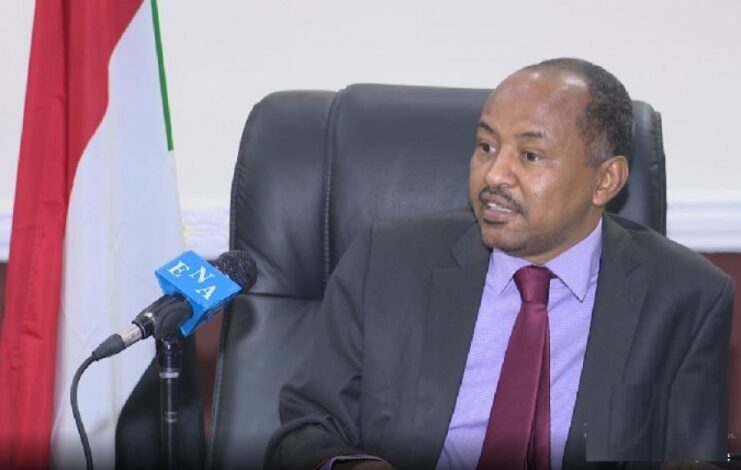
By: Ambassador Mukhtar Bilal Abdelsalam
In the corridors of diplomacy, relations are not measured solely by written agreements, but rather by the living stories born behind closed doors that grow to make a real difference in the lives of peoples. Among these enduring scenes across time, the journey of technical and economic cooperation between Sudan and its international partners manifests today to write a new chapter extending from the banks of the Nile to the shores of Côte d’Ivoire.
Memory goes back a decade, when I was serving as Deputy Director of the Technical and Economic Cooperation Department at the Sudanese Ministry of Foreign Affairs. At that time, diplomatic efforts intertwined with agricultural development aspirations in the country to achieve food security and self-sufficiency, and consequently drive the agricultural renaissance, given that Sudan is a uniquely distinguished agricultural country. During that period, the residence of the Japanese Ambassador to Khartoum, Hideki Ito, hosted a press conference that remains vivid in memory. It was held by the Japanese Ambassador just before the rice harvest season—a crop that stood as a symbol of the strategic partnership and the sustained Japanese support to Sudan through the Japan International Cooperation Agency (JICA).
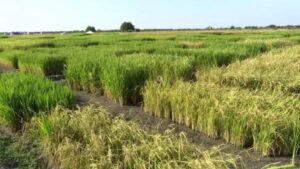
As I recall, that conference witnessed serious discussions on the prospects of domesticating rice cultivation in promising Sudanese lands. Adding a distinctive documentation dimension to the occasion was the insightful and forward-looking comment made by Mr. Muawad Mustafa Rashid, Editor-in-Chief of Sudan Vision Daily newspaper. He expressed his gratitude to the Japanese Ambassador for this important initiative, which came at the perfect time, especially since Sudan imports this grain—which has gradually become a staple on the Sudanese table—at the cost of millions of dollars. With his journalistic expertise, he captured the dimensions of this cooperation, praising Japanese support and Sudan’s capacity to transform into a true food basket if modern technologies were leveraged.
Promisingly, the upland rice cultivation project continued and expanded significantly in subsequent years. It evolved from mere limited trials into a national project adopted by the Ministry of Agriculture in cooperation with JICA. The experiment met with remarkable success and expanded since 2020 to cover more than ten states in Sudan. The matter was no longer confined to the Gezira and Gedaref states, but new states entered the production line, such as River Nile and White Nile states.

We would like to seize this opportunity to commend the achievements of the Sudanese Agricultural Research Corporation across its various stations, such as the White Nile Research Station and the Gezira Research Station, in engineering and releasing upland rice strains capable of surviving in Sudanese clay soils and enduring dry weather. Among the most famous varieties developed through scientific genetic methods and named with Sudanese names are the “Kosti 1” and “Kosti 2” strains. These varieties were developed to suit the environment of the White Nile and are characterized by rapid maturation and high productivity, in addition to the “Um Jar” and “Akra” strains.
Even after the war waged by the rebel Rapid Support Forces against the Sudanese Army, independent local reliance had already begun. In 2024, farmers and state ministries continued cultivating the crop, and the Ministry of Production and Economic Resources in the White Nile State launched a new agricultural season for upland rice in Kosti for the 2024-2025 season after certifying 11 varieties dedicated for cultivation, aimed at domesticating the crop and securing food. This is definitive proof that despite the consecutive political, economic, and security challenges Sudan has faced, the technical foundation and seeds established by JICA enabled research entities and Sudanese farmers to hold onto this crop as a promising strategic alternative.

History, in its extended circle, reshapes opportunities in a renewed style. Ten years after that milestone, I find myself today returning to the diplomatic arena as the Chargé d’Affaires of the Embassy of Sudan to Côte d’Ivoire in Abidjan—the city that hosts the headquarters of the Africa Rice Center (AfricaRice), the leading institution driving food security on the continent.
In a practical step to link the past with the present, I met with the Director General of the Africa Rice Center, Mr. Boubakr Manneh, who happens to be a specialist in rice varieties resistant to harsh natural conditions, with several research papers and scientific articles published in international specialized journals and periodicals.

The meeting was received with great warmth, deeply connected to Sudan’s stature and its massive agricultural potential. The Director General expressed his warm welcome to Sudan’s request to join the Center’s membership, emphasizing that this step will constitute a strong qualitative addition to joint African action in rice cultivation across the Black Continent.
Culminating this fruitful meeting, the Director General announced that he will officially present Sudan’s membership file for endorsement during the upcoming Ministerial Council meeting of the Ministers of Agriculture of the member states, numbering 28 members. This high-level ministerial forum is scheduled to convene in the Congolese capital, Kinshasa, next October, with the participation of the Ministers of Agriculture of the Center’s member states (*). They will be joined by the dedicated Minister, Professor Esmat Qurashi, Minister of Agriculture and Irrigation, the key driver of these efforts aimed at achieving food security in Sudan.

This diplomatic return, spanning from the Khartoum discussions with the Japanese Ambassador to the corridors of the Africa Center in Abidjan, confirms that Sudan’s agricultural ambitions remain alive and promising, and that the spike of grain whose details were discussed yesterday is preparing today to take its natural and pioneering place on the African agricultural map.
(*) Footnote of Member States: Includes Côte d’Ivoire (host country), Benin, Burkina Faso, The Gambia, Ghana, Guinea, Guinea-Bissau, Liberia, Mali, Mauritania, Niger, Nigeria, Senegal, Sierra Leone, Togo, Cameroon, Central African Republic, Chad, Democratic Republic of the Congo, Republic of the Congo, Gabon, Mozambique, Ethiopia, Kenya, Uganda, Rwanda, Madagascar, and Egypt