
National Health System Recovery Strategy (2026–2030) Endorsement Process Officially Launched in Sudan
Under the Theme: “Health for Peace, Justice, and Resilience”
Khartoum /
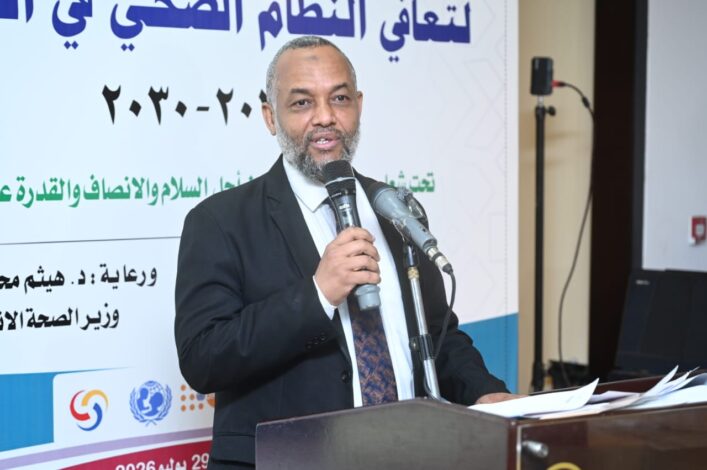
The Federal Ministry of Health, through its General Directorate of Planning and Policies and in collaboration with the World Health Organization (WHO), convened its Annual Planning Meeting, marking the official launch of the endorsement process for Sudan’s National Health System Recovery Strategy (2026–2030).
The event was held under the patronage of the Federal Minister of Health, Professor Haitham Mohamed Ibrahim, and attended by the Undersecretary of the Federal Ministry of Health, Dr. Ali Babiker Sayed Ahmed, the Undersecretary of the Ministry of National Education, Dr. Ahmed Khalifa Omar, Directors General of State Ministries of Health, heads of general and specialized directorates, and representatives of affiliated units. The meeting is taking place at Al Salam Rotana Hotel in Khartoum from 27–29 July 2026.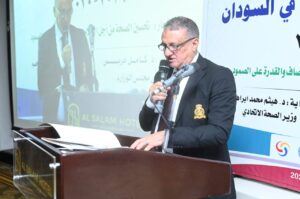
Opening the meeting, Professor Haitham Mohamed Ibrahim officially launched the national strategy, paying tribute to the Sudanese Armed Forces and supporting forces for their achievements, while expressing appreciation to everyone who contributed to the development of the strategy. He described the occasion as a historic milestone in the country’s health sector, emphasizing that Sudan is moving from the emergency response phase to the recovery phase. He noted that peace, justice, and resilience constitute the three pillars of the strategy.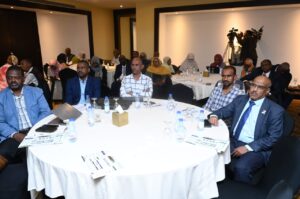
The Minister praised the resilience of the health sector throughout the war, stressing that the strategy covers all Sudanese states through interventions tailored to the specific needs and circumstances of each state. He expressed hope that, five years from now, Sudan would celebrate the successful completion of the strategy and move toward a stronger and more advanced health system.
For his part, Dr. Nissim Qurbi, Representative of the World Health Organization in Sudan, congratulated the Federal Ministry of Health on the launch of the strategy’s endorsement process, describing it as a reflection of both national and international commitment to supporting Sudan’s health system recovery. He noted that the war had severely affected health services and stated that the strategy provides a shared platform for strengthening primary health care, advancing universal health coverage, and reinforcing health security. He reaffirmed WHO’s continued commitment to supporting Sudan in its journey toward a resilient and recovered health system.
Meanwhile, Dr. Mahmoud Al-Badri, Director General of the Khartoum State Ministry of Health and Acting Minister, paid tribute to those who lost their lives during the conflict, wished a speedy recovery to the injured, and expressed hope for the safe return of detainees. He expressed his pride in participating in this important national event and reaffirmed Khartoum State’s commitment to contributing to health system reform.
Dr. Al-Badri revealed that Khartoum State finalized its own health recovery strategy in January 2026 and has already begun implementing it. He highlighted the state’s unique challenges, including its high population density and concentration of national referral hospitals, stressing the importance of close coordination with the Federal Ministry of Health and all state ministries to ensure effective implementation of the national strategy.
In his remarks, Dr. Al-Mughira Al-Amin Gad Al-Sayed, Director General of Planning and Policies, stated that the strategy represents the culmination of the Federal Ministry of Health’s efforts at all levels. He described it as a scientific and practical roadmap documenting Sudan’s transition from humanitarian response to sustainable recovery, developed through broad participation from all relevant stakeholders.
He emphasized that the Sudanese people are at the heart of the strategy, thanked the technical committees and all contributors, and expressed hope that the plan would help strengthen the country’s health sector and meet the aspirations of Sudanese citizens.