
Sudan Welcomes Human Rights Council’s Condemnation of Militia and its Authority, Denounces its Failure to Name its Sponsor, the UAE
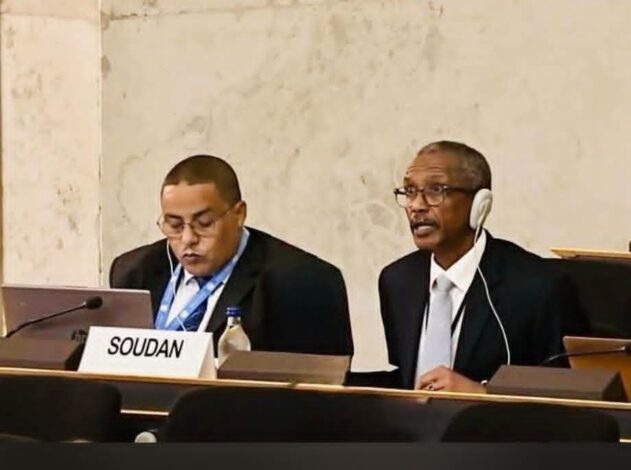
Sudan’s Permanent Representative to Geneva, Ambassador Hassan Hamid, affirmed during the session adopting the resolution of the Human Rights Council’s special session on the situation in and around El Obeid, that the Sudanese government did not obstruct the adoption of the resolution by consensus because it included acceptable paragraphs, such as those condemning the terrorist militia’s crimes in the strongest terms, as well as those affirming the Council’s condemnation and rejection of any authority or governing structures in areas where the militia is active, and those affirming the Council’s commitment to the unity, independence, and territorial integrity of Sudan.
Regarding the paragraphs that rejected and condemned foreign intervention, the Permanent Representative noted that while they were positive, they resorted to generalizations and vague language, failing to call things by their name. They referred to foreign intervention as a violation of Security Council Resolution 1556 and its successor, Resolution 1591, but failed to name the state that violated that resolution—the United Arab Emirates, according to the report of the Panel of Experts established under the same resolution. This is not merely the Sudanese government’s position, but also the conclusion of the Panel of Experts’ report. He added that this approach would not achieve the session’s objective or its resolution.
The Permanent Representative reiterated Sudan’s categorical rejection of all paragraphs related to the mandate of the Fact-Finding Committee, recalling Sudan’s position on the resolution that established its mandate, which was based on equating the country’s national army (the Sudanese Armed Forces) with the rebel militia. He stressed the necessity of including this in the session’s minutes to prevent Sudan from being bound by any obligations under those paragraphs to which it had reservations.