
The Peace We Want: From Ending the War to Building the State
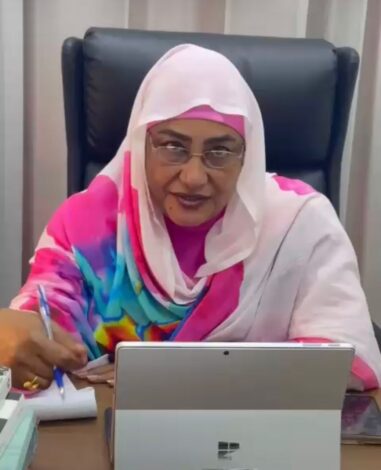
Dr. Howaida Shabo
The question that preoccupies Sudanese people today is no longer: When will the war end? Rather, the more profound and pressing question has become: What kind of peace do we want? How can we build it? And in whose interest will this peace be? The experiences of nations, as recorded by history, confirm that the cessation of gunfire does not necessarily mean the birth of stability, and that peace built on fragile foundations quickly transforms into a temporary truce preceding a new explosion. The world has often witnessed agreements signed on paper, but which did not withstand the test of reality, only to be replaced by new cycles of violence.
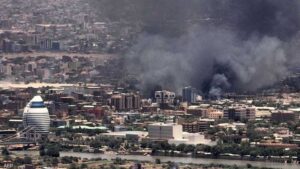
The war that erupted in Sudan was not merely a military confrontation with an armed rebellion, but rather a dramatic reflection of long-standing structural imbalances: the weakness of the state, the erosion of institutions, and the absence of a comprehensive social contract regulating the relationship between the ruler and the ruled. This war, with its accompanying human tragedies and grave violations, has revealed the depth of the crisis in Sudan and the fragility of the state structure, which for many years existed more in form than in substance.
Therefore, any serious talk of peace cannot be reduced to a ceasefire or the redeployment of forces on the ground. It must extend to a broader and deeper horizon: re-establishing the relationship between the state and society, rebuilding trust among political forces, addressing historical imbalances between the center and the peripheries, and healing the collective memory scarred by war.
First: Context — What Did the War Reveal?
Before embarking on a vision for peace, it becomes essential to consider the shocking realities revealed by the war, because any attempt at treatment without an accurate diagnosis will remain superficial and temporary.
The first reality is that the Sudanese state, with its civilian and military institutions, has never been a fully-fledged modern state based on a clear social contract, a firmly established rule of law, and fair political representation. Rather, it has often remained a fragile entity governed by networks of loyalty and narrow interests, its conflicts resolved by the logic of force, not by the logic of institutions.
The second reality is that the social and political divisions did not arise as a result of the war, but were latent within society, fueled by years of marginalization and mismanagement. The war came to expose these fissures and violently bring them to the surface.
The third reality is that the war erupted during a fragile political transition, in which the conditions for stability were not yet fully established, as if Sudan was attempting to navigate a complex phase without the necessary tools. This phase has shown that overthrowing a regime does not automatically lead to the establishment of a mature alternative, nor does it guarantee a freer arena of power struggles.
The most painful truth remains that the ordinary Sudanese citizen, who had no part in the decision, paid the heaviest price: forced displacement, loss of loved ones, deteriorating livelihoods, and a life suspended between displacement and refuge.
Second: Defining Peace — Beyond a Ceasefire
Many tend to reduce peace to the mere absence of war, but this understanding falls short of grasping the complexity of the phenomenon. Modern peace studies distinguish between several levels:
• Negative peace: This is represented by the cessation of direct violence and the absence of military operations, a necessary but insufficient condition.
• Positive peace: This goes beyond that to building just institutions that address the root causes of conflict and achieve a degree of social and economic justice.
• Transformative peace: This is the deepest level, where social relations are reshaped, trust is restored, and psychological and collective wounds are healed.
What Sudan needs today is not merely a cessation of hostilities, but a comprehensive peace project that reaches the very core of the social and political fabric and rebuilds trust among the various components of society, and between the citizen and the state.
Third: Philosophical Foundations—What Do Thinkers Say?
Human intellectual heritage offers important analytical tools for understanding the conditions for the establishment and stability of states, and several of these ideas can be drawn upon in the Sudanese context.
In his famous Muqaddimah (Introduction), Ibn Khaldun linked the survival of states to what he called “asabiyyah” (group solidarity), that is, the force of social cohesion that unites people within a shared framework. When this asabiyyah erodes as a result of injustice or division, the state begins to decline and collapse. This lesson seems highly relevant to the Sudanese situation.
As for Jean-Jacques Rousseau, in his theory of the “social contract,” he emphasized that political legitimacy is not derived from force or the will of the ruler, but rather from the “general will,” which expresses the common interest of society. Any system that excludes broad segments of society loses the basis of its legitimacy.
In contrast, John Rawls advocates for a conception of justice through the lens of the “veil of ignorance,” whereby individuals shape their political system without knowing their place within it, thus ensuring the selection of just rules that protect everyone, especially the most vulnerable.
Nor can we overlook the value framework offered by Islamic thought, where the concepts of consultation (shura), justice, and the common good form fundamental pillars of any just political system. These values can contribute to building a balanced model of peace based on participation, equity, and respect for human dignity.
Fourth: A Painful Memory—How Do We Deal with the Past?
The greatest challenge facing any path to peace in Sudan is the deeply scarred nature of collective memory. Layers of pain have accumulated: the decades-long wounds of Darfur, the Nuba Mountains, and the Blue Nile; the wounds of the December Revolution and the accompanying repression; and the wounds of the recent war, with its scenes of violation, displacement, and killing.
The major problem is that each side carries its own narrative of pain and sees itself as a victim of the other. Unless these intertwined narratives are addressed honestly and responsibly, the buried resentment will find its way back to erupt.
Here, the model of Truth and Reconciliation Commissions emerges as an indispensable entry point. These commissions do not aim to negate justice, but rather to broaden its concept to include: acknowledging violations, providing redress for victims, ensuring accountability within a fair legal framework, and opening the door to a reconciliation based not on forgetting, but on acknowledgment and transformation.
However, a crucial warning must be issued: reconciliation does not mean impunity, nor does it mean turning the page on documented violations as if they never happened. A peace in which victims are attacked with enforced silence is morally reprehensible and practically doomed to failure.
Fifth: The Dilemma of Exclusion—Who Sits at the Peace Table?
One of the most contentious dilemmas in any peace process is: Who is invited? And are there those who deserve to be excluded?
In Sudan, legitimate and conflicting convictions clash over this dilemma. Some believe that Islamists and their partners in the former regime cannot be partners in rebuilding Sudan after the war, given the claim that their era left deep wounds in the body of the state and society. Conversely, many believe that some of the forces that claimed to be revolutionary during the transitional period had dubious relationships with the Rapid Support Forces militia, or that their silence and alliances contributed to prolonging the war.
The truth that must be faced courageously is that no broad social or political current can be excluded from the peace process without the country paying a heavy price. Islamists are not merely a fallen regime; they are a social current with a presence in every city and village. And the forces of the revolutionary movement are not just media figures; they represent a broad segment of young people and women who carry the aspirations for change.
Integration does not mean the absence of accountability. People can, and should, sit down at the table for dialogue while the paths of criminal justice proceed simultaneously. Political integration and legal accountability are not opposites; they are two sides of the same coin called the transition of power.
Sixth: International Experiences—What Does the World Say?
South Africa: When the Victor Chose Reconciliation
When apartheid ended in South Africa in 1994, Nelson Mandela and his allies could have chosen the path of revenge, and they had every moral and political justification for it. But they chose a different path: the Truth and Reconciliation Commission, chaired by Archbishop Desmond Tutu, which allowed perpetrators to confess their crimes in exchange for amnesty and gave victims a platform to testify and seek justice. This path was not perfect, but it spared the country a devastating civil war.
Rwanda: Between Justice and Reconciliation
Rwanda faced an extraordinary challenge: rebuilding a society torn apart by a genocide that claimed the lives of nearly 800,000 people in 100 days. Rwanda introduced the Gachacha system of local people’s courts, which combined acknowledgment of the crime with collective accountability and community reconciliation. Despite its criticisms, this experiment succeeded in maintaining social cohesion when complete disintegration seemed the only option.
Colombia: Integrating Armed Groups into Politics
In Colombia, the government engaged in lengthy negotiations with the FARC guerrilla movement, culminating in a historic peace agreement in 2016 that integrates the fighters into the political process. The agreement included mechanisms for agrarian reform, transitional justice, and political representation, implicitly acknowledging that the war was not merely a crime but a cry for genuine social grievances.
What unites these experiences is one lesson: successful peace is not built on defeating and eliminating the adversary, but on containing them and transforming them from a threat into a partner.
Seventh: Pillars of Sudanese Peace — A Constructive Vision
1. Comprehensive National Dialogue — No Exclusion
The first condition for genuine peace is inclusivity. The Sudanese experience itself, as demonstrated by numerous historical milestones, confirms that major settlements have only been achieved when parties abandoned the logic of exclusion. From Nimeiri’s reconciliation with his opponents to the Comprehensive Peace Agreement negotiations with John Garang, the lesson has been the same: when options dwindle, dialogue opens doors that were closed by force.
The national dialogue must be protected by regional and international guarantees and must include, without exception: all segments of the civilian political forces, armed movements and their representatives, Islamists and secularists, civil society organizations, representatives of regions and areas, and women and youth as stakeholders, not as mere guests at the table.
2. Transitional Justice — No Peace Without Justice
A peace that demands victims forget their violations is fundamentally flawed. Therefore, the path of transitional justice must proceed in parallel with the paths of dialogue and institutional building. This includes: documenting the documented violations and massacres in Darfur, Khartoum, and elsewhere; establishing a national truth and reconciliation commission; prosecuting those responsible for major crimes in a fair and just manner; and ensuring material and moral redress for victims and their families.
3. The New Social Contract — A State of Citizenship
The deepest root of the Sudanese conflict is the absence of a state of citizenship: a state that treats all its citizens equally, regardless of their religion, ethnicity, region, or political affiliation. Building such a state requires:
A new, consensual constitution drafted with genuine participation, which limits military dominance, enshrines the independence of the judiciary, and declares citizenship as the basis for rights and duties.

A truly decentralized system of governance that distributes power and wealth among the regions and ends the central government’s monopoly over the resources of the periphery.
State institutions independent of the military and elites, based on competence, integrity, and accountability.
4. Reconstruction and Economic Justice
Peace that does not address poverty and economic marginalization is a peace without foundation. Many of Sudan’s wars were essentially resource wars, wars between the periphery and the center. Therefore, any reconstruction plan must prioritize the most affected regions and rethink the model for distributing wealth derived from oil, gold, and land.
5. Involving Women and Youth – They Are Not Marginalized
In every successful peace agreement worldwide, studies have shown that including women in peace negotiations increases the likelihood of a successful and sustainable agreement. Sudanese women proved during the December Revolution and throughout the war that they are not merely victims, but active participants, organizers, and resistance fighters. What applies to women also applies to youth, who represent the vast majority of the population, are the most affected by the war, and the most ambitious for change.
Involving these two groups is not a mere formality or decorative representation, but a strategic necessity for any peace that is to stand the test of time.
8. Regional and International Actors – Role and Fuel
The Sudanese war cannot be understood in isolation from its regional context. Sudan has become an arena for regional competition between powers with divergent interests: neighboring African states, Gulf states, and major international powers. There is no clearer evidence of this than the complexity and overlap of regional mediation efforts.
However, the region can be either fuel for war or a catalyst for peace. Experience shows that coordinated regional pressure, when regional powers unite their efforts toward a solution rather than the continuation of the conflict, can make a decisive difference. The countries bordering Sudan—Egypt, Ethiopia, Chad, Kenya, and South Sudan—and the Arab states, particularly Saudi Arabia and Qatar, must clearly declare that their interest in a stable Sudan outweighs any immediate gains that the continuation of the conflict might provide.
Ninth: The Real Challenges—No Room for Illusion
In conclusion, it is essential to avoid falling into the trap of easy optimism. The peace process in Sudan faces enormous challenges that demand frank acknowledgment:
The Challenge of Trust: After years of betrayals and broken agreements, how can one party trust another at the negotiating table? This trust will not be restored overnight, but it begins with verifiable steps.
The Challenge of Proliferating Weapons: The vast quantities of weapons that have spread throughout Sudanese society pose a long-term security threat, and any peace plan must include comprehensive disarmament and reintegration programs.
The Challenge of a Devastated Economy: Sudan enters a phase of peace after years of economic sanctions followed by a devastating war. There can be no peace without restarting economic life, and this requires resources and genuine international support.
The Challenge of Psychological and Social Recovery: Hundreds of thousands of widows, orphans, displaced persons, and the wounded—wounds that cannot be healed by mere clauses of an agreement. Peace requires genuine programs for community recovery; otherwise, the seeds of resentment will remain, waiting for the next drought.
Peace that Lives in the Hearts of the People
Ultimately, the real challenge lies not in signing a peace document, but in building a peace that lives in the hearts of the people, in the institutions of the state, and in the way conflict is managed and power is transferred. This kind of peace is not made by elites alone behind closed doors, but by a people who have realized that diversity is a strength, not a burden, and that difference is a source of enrichment, not a path to exclusion.
Sudan is an exceptional country in its multiplicity and diversity: ethnicities, cultures, languages, climatic regions, and religious sects. This diversity, which has been misused as a pretext for war, can instead be harnessed as an unparalleled national asset in the region.
The Sudan its people deserve is not a Sudan without conflict, but a Sudan that manages its differences through politics, not weapons; through dialogue, not exclusion; and through law, not force.
This is the peace the Sudanese people want… This is the peace that everyone must strive for, without exception and without delay.