
Government confirms its full return to Khartoum
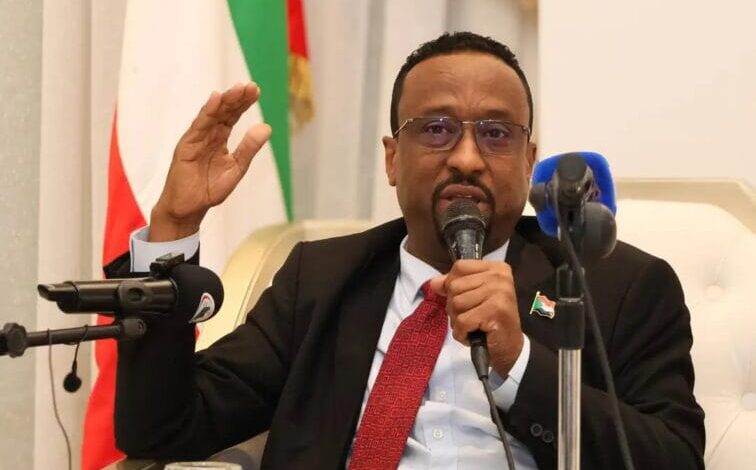
The federal government confirmed its full return to the capital, Khartoum, and its resumption of executive functions from within the city. It noted that state institutions are currently operating from Khartoum with all their structures intact, with only a few limited regional and international engagements remaining that require external coordination and are related to humanitarian aid and official delegations.
During a comprehensive briefing yesterday with the Sudanese community in Kuwait, the Minister of Culture, Information, Tourism, and Antiquities, Khalid Al-Eisir, explained that the convening of two important meetings in the past two weeks—one between the Sovereignty Council and the Council of Ministers, and the other with the full Council of Ministers—unequivocally confirms that the federal government has indeed returned to Khartoum and is operating from there.
Al-Eisir pointed out that the capital suffered significant infrastructure damage during the war due to sabotage operations carried out by the rebel militia, particularly in the electricity, water, and basic services sectors. He confirmed the existence of a high-level committee, chaired by Sovereign Council member Lieutenant General Ibrahim Jaber, working to assess the damage and develop urgent plans to rehabilitate Khartoum and restore its vital services.
In this context, the minister revealed positive developments in strategic facilities, noting that Khartoum Airport has recently seen the arrival of several flights and is now ready to accommodate domestic and international air traffic. This reflects the state’s commitment to restoring services and rehabilitating infrastructure, including water, electricity, and sanitation networks.
Al-Eisir called on citizens to voluntarily return to Khartoum, emphasizing that there are no obstacles preventing Sudanese citizens from returning to the capital. He stressed the importance of considering the special circumstances of the elderly and people with disabilities, whose return requires prior environmental and service preparations. He also emphasized the crucial role of youth in creating a suitable environment and during the recovery phase, especially in cleaning and rehabilitating neighborhoods and homes.
The minister emphasized that the government is not forcing any citizen to return, but believes that Sudan urgently needs the return of qualified personnel and national experts to contribute to reconstruction. He pointed to promising economic opportunities in the post-war phase and urged those interested in investing and working to seize these opportunities early.
On the political front, the Minister of Culture, Information, Tourism, and Antiquities explained that the Prime Minister’s initiative is based on a realistic assessment of Sudan’s historical experience. It aims to dismantle the roots of the conflict and build a sustainable peace, moving beyond the partial agreements that previously failed to comprehensively address the issues facing the state and society. He stressed that the proposed vision is based on sustaining peace, preserving the state’s authority, and preventing the return of militias to executive power.
These remarks were made during a large public meeting held at the Sudanese Embassy in Kuwait, on the sidelines of the Minister’s participation in the “Kuwait, Capital of Arab Culture 2026” events. The Minister and his delegation, which included Undersecretary Dr. Graham Abdulgader and Engineer Othman Al-Hajj, a member of the Arab Media Committee and head of the Sudan page, received a warm and enthusiastic welcome from members of the Sudanese community. Attendees described the scene as unprecedented in meetings with government officials.
The meeting lasted for more than three hours and was characterized by direct and frank discussion. The Minister calmly and patiently answered all questions from the attendees and insisted on listening to all comments without rushing, which strengthened the atmosphere of trust and communication between him and the community.
The meeting was also attended by His Excellency the Consul General of Eritrea in Kuwait, Mr. Simon Tekle Senbet Tesfaldt, who engaged in a friendly conversation with the Minister in the presence of the Sudanese Ambassador to Kuwait, Mr. Awad Al-Karim Al-Rayah, in a scene that reflected the warm relations between the two brotherly nations.
Following the meeting, attendees from various backgrounds gathered to meet with the Minister. The minister was surrounded by people of all ages, posing for commemorative photos and engaging in casual conversation. This scene embodied the deep connection between the state and its citizens abroad, leading some to describe the evening as “a night of affection and appreciation for Al-Eisir.” He entered the embassy as a government official and left surrounded by the warmth and respect of the Sudanese community.
At the conclusion of the meeting, Al-Eisir affirmed the government’s commitment to addressing all accumulated challenges and creating an attractive economic and legal environment for investment. He emphasized the crucial role of Sudanese communities abroad, particularly in the Gulf states, in supporting reconstruction efforts and building a modern state that fulfills the aspirations of the Sudanese people and establishes a new era of stability, peace, security, and peaceful coexistence.