
Jaber: Education is the spearhead of the nation’s and society’s renaissance
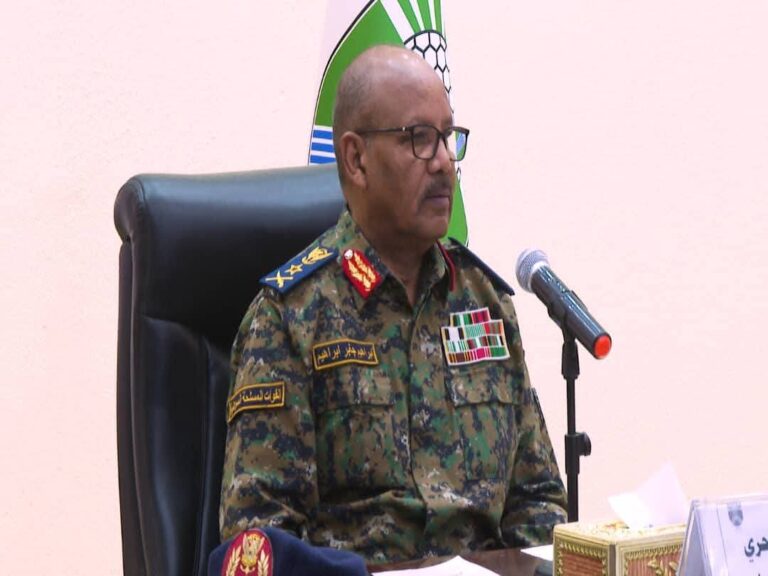
Lieutenant General Engineer Ibrahim Jaber Ibrahim, member of the Transitional Sovereignty Council, Assistant Commander-in-Chief, and Head of the Higher Committee for Preparing the Environment for the Return to Khartoum State, affirmed the state’s commitment to the education sector, considering it the spearhead of the nation’s and society’s renaissance.
During his chairmanship of the Higher Committee meeting, Jaber described the achievements in the higher education sector during the past period as promising, given the current circumstances in the country, as higher education institutions have begun to recover early. He called on the Ministry of Higher Education and Scientific Research to increase its focus on student housing and the rehabilitation of dormitories.
For his part, the Minister of Higher Education and Scientific Research, Professor Ahmed Mudawi Musa, presented the report of the Higher Education and Scientific Research Sector Rehabilitation Committee, outlining the features of the strategic plan and presenting the national roadmap for the reconstruction of higher education institutions. He also noted the assessment of the material damage, dropout rates, and displacement affecting higher education institutions in Khartoum State.
The report also addressed the importance of the return of higher education institutions to Khartoum State, particularly given that it is home to 10 public universities representing 36% of the student body, and 66 private universities.
Furthermore, the Minister of Higher Education stated that his ministry’s plan aims to develop the higher education sector and build a secure, smart, flexible, and digitally connected university system, focusing on five key areas:
Infrastructure and Reconstruction; Digital Transformation and Data Sovereignty; Academic and Research Staff; Students and Academic Support; and Partners and Funding.
Professor Madawi also announced that the 2025-2026 academic year will commence at all Sudanese universities in Khartoum State at the end of next December.
In its meeting today, the Higher Committee reviewed a report from the Committee for Supporting Small and Family Projects regarding the provision of additional resources to banks and financial institutions to finance productive projects for families, youth, and graduates. In addition, several programs aimed at supporting families were implemented.
Committee Chairman Sadiq Hassan Ferini noted the signing of several memoranda of understanding to train and qualify approximately 3,000 graduates, along with the provision of 100 solar-powered tuk-tuks. He also mentioned the integration of around 60 graduates into mobile food truck projects, the registration of 10 cooperative societies, and the identification of 47,000 families eligible for direct cash assistance.
In a related matter, the Government Premises Committee, responsible for allocating alternative government premises, submitted its monthly report. The report indicated the reallocation of several government buildings to accommodate a larger number of ministries in a suitable environment that reduces maintenance and renovation costs.