
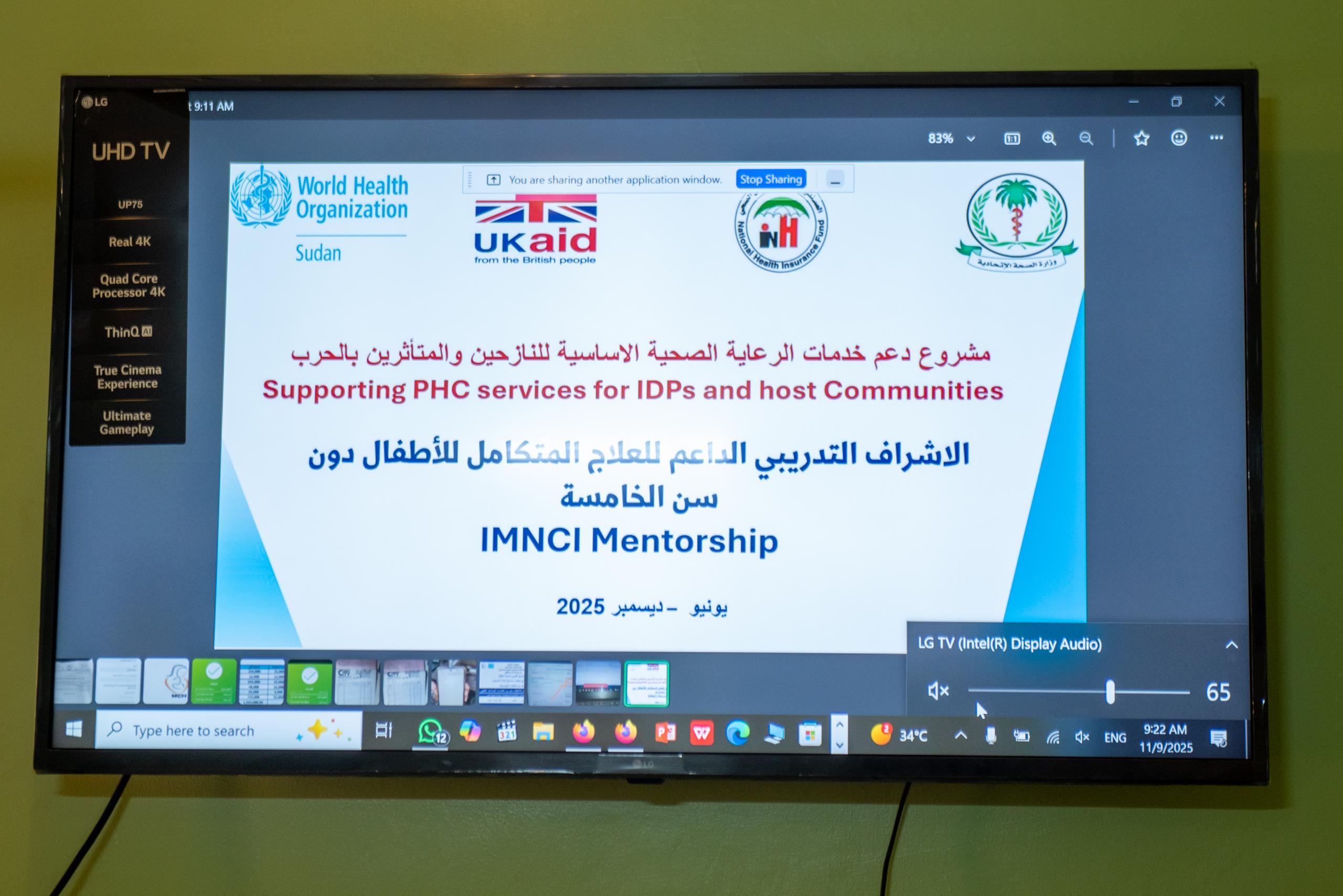
A training supervision program to support integrated treatment for children under 5 years of age has been launches
The Citizen/
The training supervision teams supporting the integrated treatment of children under 5 years of age are targeting 7 states, which will begin this week, including Khartoum, North, Gedaref, Kassala, the Red Sea, Sennar, and Blue Nile.
This initiative is part of a project to support basic health care services for displaced people and war-affected communities in cooperation with the World Health Organization (WHO) and with the support of British Aid.
The representative of the National Program for Child Health at the Federal Ministry of Health, Dr. Esraa Khalil, stated at the meeting announcing the launch of the supporting PHC services for IDPs and host communities under 5 years of age at the headquarters of the General Directorate of Basic Health Care in the city of Kassala on Sunday that the supportive training supervision is an important step to strengthen and increase the implementation of the integrated treatment strategy in order to reach the sustainable development goals.
Meanwhile, the Acting Director of Planning, Follow-up, and Evaluation at the General Directorate of Basic Health Care and Project Coordinator, Tayseer Al-Sadiq, stressed that the training enhances the quality of the services provided, equips workers with the required skills, and improves the health information system. This initiative is part of in-service training in cooperation with the World Health Organization.
The WHO Project Coordinator, Dr. Wael Ahmed, stated that supportive supervision is one of the activities aimed at supporting basic health care services in 60 centers across 10 states, which offer a variety of service packages, with the support of British aid and in cooperation and coordination with the Federal Health Authority and the National Health Insurance Fund.
Dr. Heraa Abdullah, Head of the Integrated Treatment Unit at the National Program for Child Health, noted that the integrated treatment strategy contributes to reducing the number of patients and deaths among children under five years of age.