
Somali writer: Bosasso at the heart of the Sudanese conflict
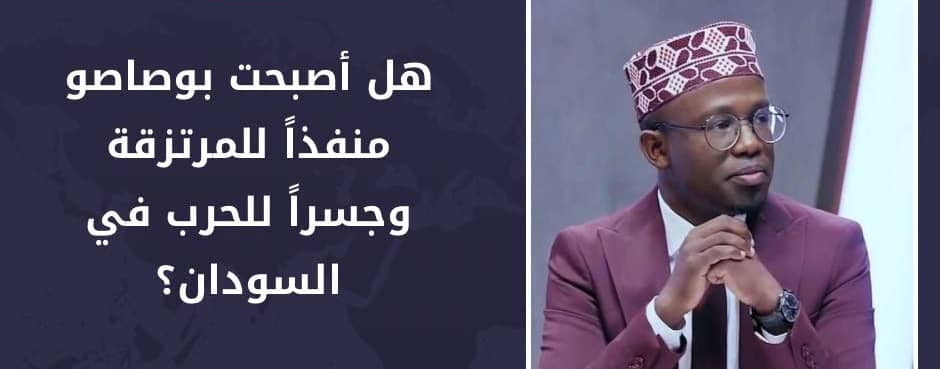
Written by: “Abdul Rasheed Mohieldin Kalmouy” The Somali writer and journalist wrote an article in which he answered a question he asked, “Has Bosasso become an outlet for mercenaries and a bridge to the war in Sudan? .
The writer titled his article, which he published on Somalia now, with “Bosasso at the heart of the Sudanese conflict,” where he said in the article: While the fire of civil war has been raging in Sudan since April 2023, in which the Rapid Support Forces are fighting with the state’s army, the city of Bosasso has been raging in Sudan. Somali as a pivotal and dangerous station in feeding this conflict. This role raises serious questions about the city’s transformation into a corridor for regional conflict flows, and the consequent threats to Somali national security and the stability of the region.
(From a commercial port to a conflict stage)
Press and intelligence investigations revealed that Bosasso has turned into a platform for foreign fighters and military shipments to the hotbeds of tension in Sudan, especially the Darfur region. Local and international sources confirmed the killing of a number of Somalis who were recruited to fight in this war, including: Ahmed Abdi Kodax, Hassan Orsh Muhammad, Abdullah Farah Qassem, and Issa Jameh Goullid. These young men were part of irregular recruitment waves, revealing a disturbing phenomenon of the involvement of Somali citizens in conflicts far from their homeland.
Diplomatic reports indicate that the Sudanese government has officially referred this information to the Somali authorities, while the latter appears to be very difficult to curb this flow, weakening national sovereignty and deepening the complexities of the regional crisis.
Complex networks: mercenaries, finance and the UAE) independent
investigations, conducted by reputable media platforms such as Colombian La Sila Vassia, the use of foreign mercenaries (including Colombians) of the Bosasso port to reach The strongholds of the Rapid Support Forces in Darfur. Nyala Airport, for example, has become a “lifeline” of these forces, through which logistical supply, arms storage and gold smuggling are run. The reports link these operations with Emirati support provided to arm and finance the Rapid Support Forces, which puts Bosasso at the center of a complex regional conflict financing network, linking financial resources, coastal cities, and armed militias.
(Cross Diplomatic Visits: Where does Somalia stand?)
Recent diplomatic visits to Mogadishu added another layer of complexity. President Hassan Sheikh Mahmoud’s reception of a high-ranking Sudanese delegation, headed by the Director of General Intelligence, Ahmed Ibrahim Mufaddal, raises the question of whether Bosasso’s file is at the negotiating table, and to what degree they have discussed ways to stop this negative involvement. Only hours passed until a high-ranking Emirati delegation headed by Minister of State for Foreign Affairs, Sheikh Shakhbut bin Nahyan, arrived.
Observers believe that timing is not a coincidence, but rather as a message aimed at balancing the impact of the Sudanese visit, in the context of attracting Somalia, whose position in the UN Security Council and its regional weight are the focus of all conflicting parties.
(Human Cost: Somali youth as fuel for the war of others)
The human cost is perhaps the most painful aspect of this equation. The loss of young Somalis, enlisted to be fuel in a war in which they have neither elegance nor sentences, poses a deep ethical and strategic problem. How can citizens be protected from being exploited in external conflicts, and to preserve the country’s human wealth from depletion?
(Strategic conclusion: Sovereignty and Reality)
Despite the official discourses about bilateral cooperation, the reality on the ground in Bosasso appears darker. The data show that the complexities of internal conflicts between the federal and regional authority impede any decisive action to impose actual control, leaving the door open for the city’s continued exploitation. Bosasso is no longer just a point on the map, it has turned into a real test of the will of the Somali state to protect its sovereignty. Protecting the vital interests of Somalia and its youth requires a firm foreign and security policy. These cities are transformed from conflict theaters into gateways for development and trade. They assert that the future of Somalia is made internally, not to be mortgaged in favor of other conflicts.