
Ashraf: The Dilemma of Morality and Politics
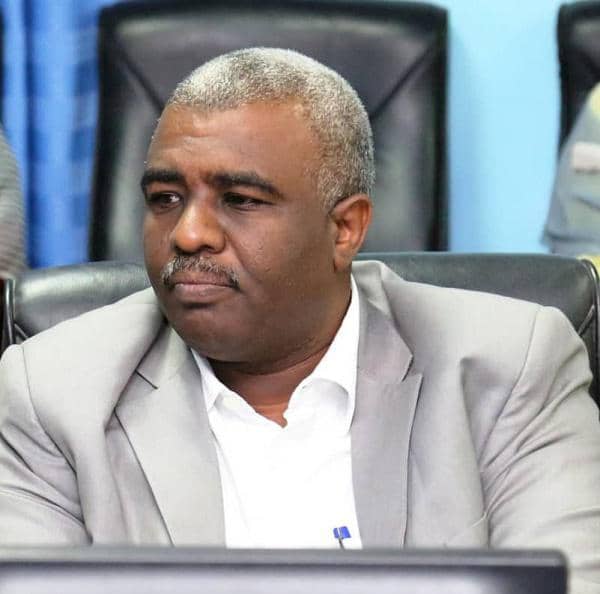
By: Dr. Ibrahim Shglawi
In a time when principles intersect with interests, and ethics blend with politics, human suffering becomes a true test of values.
The ordeal of journalist Ashraf Abdelaziz, Editor-in-Chief of Al-Jareeda newspaper, who suffers from kidney failure due to complications from high blood pressure, raises a pressing question for all: how do we reconcile human empathy with controversial political stances?
In such moments, it becomes difficult to separate moral duty from the complex calculations of politics. This brings forth a deeper question: Is compassion a temporary response dictated by circumstance and strategy, or is it a vision that transcends narratives and redefines the boundaries of ethical action?
Can empathy be exercised as a moral obligation independent of a memory burdened by past positions that may have failed the nation?
I write these words recalling my personal acquaintance with Ashraf Abdelaziz since late 2017, when I served as Head of the Media Coordination Council in the Ministry of Electricity and Irrigation, under Minister Dr. Moataz Mousa.
Back then, we held closed meetings with newspaper editors to discuss sensitive national issues. Ashraf stood out as one of the most committed participants—keen to understand and engage, without breaching professional decorum.
Ashraf has always been more than a controversial journalist or an outspoken critic.
Behind his media persona lies a personal history that cannot be separated from his professional journey. In the 1990s, he was known as “Ashraf Dushka”—a young Islamist fighter during the civil war in the south, seen by many of his peers as fulfilling a national and religious duty.
Before that, he was a student leader among Islamists at the University of Khartoum.
This legacy, with all its complexities, cannot simply be erased by disagreement. Nor should it be ignored when reading his current positions—no matter how provocative they may be.
The recent decision by General Abdel Fattah al-Burhan to cover Ashraf’s medical expenses sparked widespread debate in journalistic circles: Was it a purely humanitarian gesture, or a concession to a dissenting voice aligned with the Rapid Support Forces?
The more relevant question is: Should humanitarian action be weighed on the scales of political loyalty?
Is it within the state’s right to selectively provide treatment based on political stances? Or should it rise above factionalism and embrace all its citizens?
Ashraf’s medical condition leaves no room for political interpretation.
He is a patient in urgent need of care—perhaps long-term care beyond his means.
Thus, offering him treatment does not equate to endorsing his views. On the contrary, it can be an expression of justice and mercy—a stance that separates the human being in need of care from the ideas that remain subject to legal and public scrutiny.
In a country like Sudan, known historically for its culture of forgiveness, reconciliation, and solidarity, medical care must never become a battleground for political vengeance.
This is a land where neighbors feed their rivals when sick, where blood feuds are resolved through compensation and pardon, and where hands of peace are extended after destruction.
Shall we forsake these values in a moment that demands a moral testimony?
The Prophet Muhammad’s forgiveness during the Conquest of Mecca laid the foundation of a state built on transcending political grudges and reprioritizing unity.
That pardon was not weakness, but a strategy aimed at ending conflict and constructing a just society.
In our Sudanese context, the recent war has shown that zero-sum conflicts and vengeful rhetoric produce nothing but devastation and deeper division.
Perhaps Ashraf’s treatment—rich with symbolic weight—offers a rare opportunity to reclaim the idea of a comprehensive national project, one that accommodates dissent without rewarding violence, and embraces the mistaken without justifying the mistake.
This project must be rooted in a reassessment of our political thought and what the war has exposed: the fragility of affiliations, the absence of a unified standard, and the readiness of many to fall into a discourse of hatred that sees the “other” only as an enemy to be destroyed.
In this light, we are reminded of the philosopher Niebuhr and Mill, who said:
The nation is not a party, nor merely an army or a ruler. The nation is what remains when slogans fade, and values endure.”
These words remind us that true belonging is not defined by fleeting speeches or political positions, but by the values that bind us together—the capacity to forgive and include, and the willingness to engage the other as a human being open to reflection and reform.
A state seeking a new future must not begin by excluding the different, but with the courage to embrace them.
Strong, successful societies do not kill the spirit of tolerance—they refine it through justice, transparency, and the rule of law.
Likewise, a great leader who understands their historical responsibility to a wounded nation must never lose themselves in the approval of supporters or in opposition to critics.
They must always stand at an equal distance from all, for justice is only complete when every citizen—supporter or opponent—feels the state is guided by a single, fair standard.
With this understanding, supporting the treatment of someone who disagrees with you is not a reward nor repentance. It is a leadership act—one that sees people as citizens, not as allies and enemies.
The moral judgment of who is a hero and who is a traitor is not for the authorities to decide; it is the right of the people to determine—through history, law, collective conscience, and political experience.
When authority learns to strike that delicate balance between mercy and justice, responsibility and discipline—it earns what guns and chants alone can never bestow.
May Ashraf recover swiftly and completely. O Allah, grant him healing that leaves no ailment. Amen.