
The (EPI) launches a workshop on setting priorities and formulating goals within the national strategy for the next five years
The Citizen / Haffiya Elyas
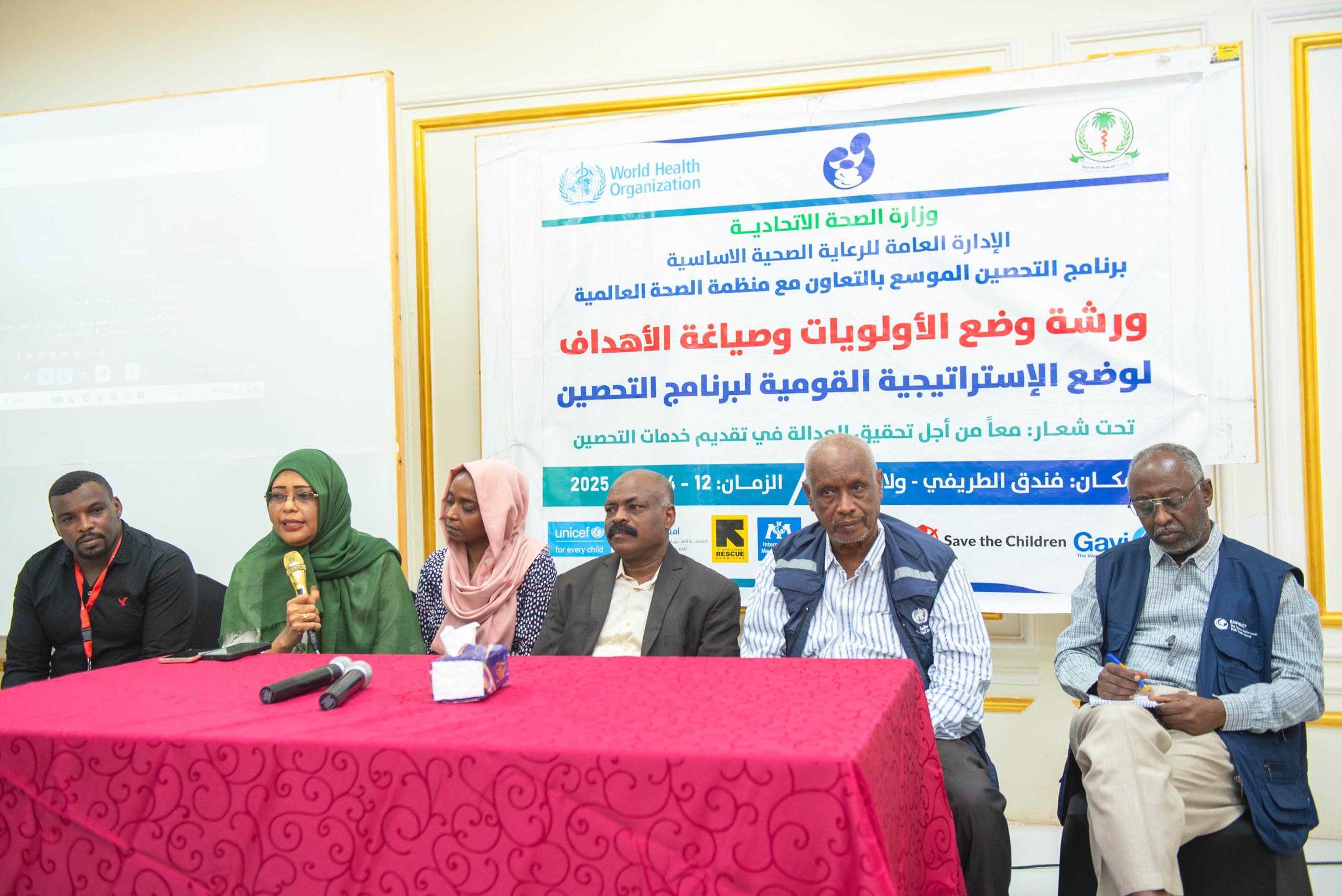
The Expanded Program on Immunization (EPI) at the General Directorate of Basic Health Care, in cooperation with the World Health Organization (WHO), launched a workshop on setting priorities and formulating goals in preparation for the development of the national strategy for the immunization program for the next five years, under the slogan:
“Together for Justice in Immunization Services.”
Dr. Dalia Idris Hassan, Director of the General Administration of Basic Health Care, stressed that the workshop represents a starting point for formulating an integrated national vision for the immunization program, based on scientific foundations, based on a realistic analysis of health conditions, and looking forward to the future with its challenges and opportunities.
She stressed that the next strategy aims to build a more resilient and just immunization program in the post-war phase, noting the importance of teamwork, rebuilding trust between the citizen and the health system, and reaching immunization services to every child, in all its parts, in terms of health as a bridge to peace. She also expressed her deep appreciation to all employees of the Immunization and Health Promotion Program, and to the working partners of the World Health Organization, UNICEF, Save the Children, and Event, for their continuous technical and logistical support to the immunization program and all primary health care programs and departments.

The representative of the World Health Organization, Dr. Babiker Al-Maqbool, announced the continuation of support to the Ministry of Health in the physical, technical and in-kind aspects, including disease monitoring, and building the capacity of workers, for the safety and health of children, pointing to the achievements of the expanded immunization program by raising the coverage of polio vaccine, and introducing new vaccinations, including the malaria vaccine.
The representative of the Middle East Public Health Network, Dr. Al-Fateh Malik, stressed the ability to work together to challenge priorities and set goals for the strategy, explaining that the network cooperates with health in several areas, revealing that 3 surveys have been conducted, and then added, “We are ready for further cooperation.”
The Director of the Expanded Immunization Program, Ismail Al-Adani, said that the workshop is to set priorities for formulating goals and interventions, in preparation for the development of the national strategy for the immunization program, noting that the workshops are for consensus from all parties represented in immunization and reinforcement in the presence of partners.
The Director of the Health Promotion Department, Tawdad Abdullah Al-Khedr, praised the existing cooperation between her department and the Expanded Immunization Program at the federal and state levels, which contributed to achieving many breakthroughs for the benefit of children.
UNICEF Representative Dr. Omaima Abdullah indicated that the strategy for the next five years, noting that the workshop to come up with the required goals.
The representative of Save the Children International, Dr. Shazly Ishaq, noted that one of the common goals is to protect children, especially in light of war, which represents a great challenge, praising the role of the Ministry of Health, declaring the readiness of partners to find every child luck in immunization.