
Conference in the US Discusses Civic Engagement in Post-War Sudan
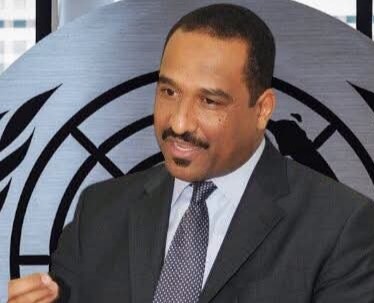
Mr. Nizar Abdelkader Saleh, Executive Director of the Geneva Institute for Human Rights, is participating in the 2026 Sudanese American Professors Association Conference (ASAPA 2026), which is being held on Saturday and Sunday, October 24-25, 2026, in the United States. He will present a paper at the conference entitled “Towards a Roadmap for Justice and Accountability in Post-War Sudan: The Constitution, Transitional Justice, and Cooperation with the International Criminal Court.”
The conference will discuss a roadmap for governance, reconstruction, and civic engagement in post-war Sudan.
The Institute’s participation falls under the umbrella of justice and accountability, stemming from the conviction that any path to transitional and permanent governance, and any reconstruction effort, will lack legitimacy and sustainability unless built upon a solid foundation of justice and accountability, according to a press release issued by the Geneva Centre and obtained by Heart of Africa News.
The paper addresses four interconnected issues: the process of ratifying a permanent constitution that prohibits impunity for core international crimes; the design of transitional justice mechanisms and the conditions for their success in the Sudanese context; the nature and requirements of cooperation with the International Criminal Court, given its existing jurisdiction over Darfur; and the role of traditional and local justice mechanisms as complementary to formal criminal accountability.
The paper also addresses the dilemma of prosecuting past and present human rights violations simultaneously amidst the ongoing war, and concludes with practical recommendations directed to the transitional authorities, international partners, and Sudanese civil society.
This participation reflects the Institute’s commitment to justice, accountability, and human rights protection, and its dedication to contributing to the academic and policy discourse on Sudan’s future.
It is worth noting that the Geneva Institute for Human Rights is a non-governmental organization founded in 2004. Independent of all governments and political parties, it is headquartered in Geneva, Switzerland.
The Institute holds consultative status with the United Nations Economic and Social Council (ECOSOC), a culmination of its continuous work in Geneva and beyond, particularly in the Middle East and North Africa region.
The Institute offers its expertise and services to its partners, including governmental and non-governmental organizations and national human rights institutions in countries across the region, as well as in several West, Central, and East African nations. It is unique in offering practical training programs in Geneva conducted in Arabic, making it the only institute in Europe to utilize Arabic in its activities and programs. Its presence in Geneva, where the European headquarters of the United Nations is located, gives trainees the opportunity to attend meetings of United Nations mechanisms, most notably the Human Rights Council and treaty bodies.