
From Melbourne to Doha, Cairo and Jeddah, Nourit recounts the agony of refugees, the Questions of Memory and Exile
By: Majdi Ali
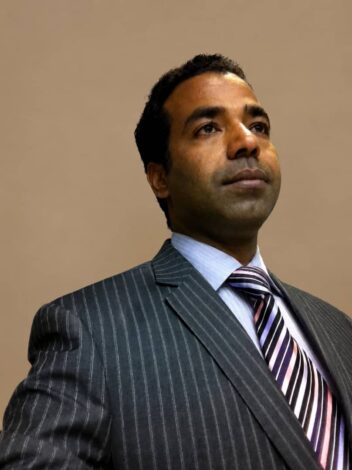
Since its release by Dar Arab for Publishing and Translation in early 2026, the novel Nourit—written by Eritrean writer, journalist, and academic Dr. Abdulrazig Karar—has earned a growing presence as it moves from one cultural forum to another, from Australia to Qatar, Saudi Arabia, and Egypt. The novel has drawn the attention of readers and critics alike by raising profound human questions about asylum, exile, identity, and memory. Nourit is the first novel by Abdulrazig Karar, yet it’sn’t a sudden shift into fiction. Rather, it’s the fruit of a long journey of writing, research and musing on the current issues of humanity and the region. The writer, known among readers for his political journalistic c and academic writings had long been preoccupied with questions concerning the Horn of Africa, communities transformations, and experiences of asylum and migration before turning to the narrative writing, the novel form. In an interview with Mashawir Network, Abdulrazig stated that the idea of Nourit haunted him and insisted on being written until he was compelled to put it on paper. He pointed out that his entry into the world of fiction was never planned, but came uo as a response to an idea and an experience that accumulated throughout long years until they had found their way to the page. As an underrgraduate student ,the author was renouned for his notable literary and trade union activities in Sudan during the latter half of the twentieth century, before moving to Australia at the turn of the new millennium, where he received his Ph.D. He combines research, writing, journalism, and a deep concern with issues of culture, politics, and identity in the Horn of Africa region.
Nourit: A Novel of Exile and Memory
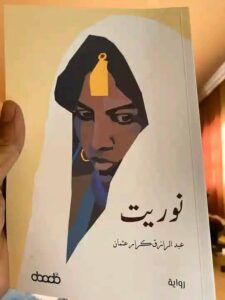
The novel takes its readers on a humanitaran trek from the borders of Eritrea into refugee camps in eastern Sudan, while extending to a small apartmentt in Geneva, where the heroine wakes up one evening in a city that feels unfamiliar to her. She then loses consciousness, and the prolonged coma opens a path -way for another j trip within the layers of memory, which retains fear, loss, and suspended questions. Through the character of Nourit, the novel reclaims a childhood heavily laden with panic, marked by loss and uprooting, and an exile that swings between an attempt of survival and the weight of the past. As a physician tries to unravel the enigma of her silence, from her depths emerge distant lives, revealing the track of a woman who carries the imprints of a place even after she fled from it by crossing borders. The novel portrays asylum not merely as a geographic transition, but as a compound humanitarian experience that expands from memory to identity and an affinity for homeland.. The novel probes the causes of migration and demonstrates remarkable resilience amids protracted , harsh waiting and clunging to life in refugee camps.. Memory, as the novel suggests, becomes another place for preserving identity, while exile poses an open question about the meaning of belonging and survival.
Melbourne: The First Stop
On April 17, 2026, that day , the Australian city of Melbourne witnessed the preliminary launch of the novel in an evening hosted by Adoulis and Awna outlets, amid the presence of those who are interested in Arab and Eritrean literature.. During the celebration, Dr. Saeed Al-Khalig, a critic, focused on the modernity and the pleasure evoked by the narrative, referring to the strength of the text, the sequence and development of events, and the writer’s ability to manage the plot in a way that contrasts with reader expectations while opening multiple avenues for interpretation. Mohammed Ismail Hangala, in his reading at the event, focused on the novel’s artistic and aesthetic aspects, the narrative techniques, and textual thresholds—from the cover to the details of the narrative architecture—pointing to the author’s ability to shape a coherent narrative world that merges human experience with artistic vision. Additionally, Mohammed Nur Ahmed spoke about the novel’s importance as an addition to Eritrean literature written in Arabic, affirming that the work opens a door to readers for entering new worlds of Eritrean experience. He paused on the lyrical dimnsion associated with the name Nourit as the novel’s title and its cultural and emotional connotations. The evening concluded with the writer signing copies of the novel, in an event that marked the first announcement of a new fictional presence in the Eritrean and Arab literary scene.
Katara Library ,, Celebrating ,, despite the Author’s Absence.
In Doha, the capital of Qatar, Katara Library hosted an event devoted for the launch of Nourit after its inaugural release in Melbourne. At the forefront of attendees was Khalid Al-Mahdi, the Katara Library director. The novelist Hashim Mahmoud chaired the session, praising the writer’s experience, his cultural pursuits, and academic career. He emphasized the novel’s concentration on the humanitarian dimension and the issue of diaspora. Ibrahim Alula outlined the linguistic strength, the density of occurrences, and the writer’s talent in the fictional structure of characters moving amid questions of history, identity, and human fate. A recorded message of appreciation was broadcast during the gathering in which the author thanked the library administration as well as the audience, ,and commended the role of cultural institutions in supporting his book and providing opportunities for dialgue. .

The Sudanese Cultural Center: A Night of Festivity
Another evening was organized by the Gedaref State Sons Association in Qatar. The novelist Hamid Al-Nazir inaugurated the evening with a critical reading focusing on the artistic and aesthetic aspects of the novel, along with Khalid Zaki, who focused on the connotations and significance of the narrative text. Abdelrazig Karar, in a statement to Mashawir Network, said it was one of the most distinguished festive events since the emergence of his novel, due to the excellent preparation and the elegant attendance of intellectuals, friends, jfellow ournalists, and an audience of a vid eaders. He described the honoring he received there as especially memorable, adding that the remarkable interactions and rich discussion prove literature’s ability to create a space for mutual dialogue.
A Celebration in Jeddah
In an evening attended by members of the Eritrean community and those interested in cultural affairs, Rawawis Forum presented a critical study by Walid Mahjoub, a writer and researcher, who depicted the humanitarian asylum as most pressing and complex issue. . He noted that its deep impact on human beings isn’t only confined to losing a place, but also affects memory, identity, and the sense of belonging. Mahjoub observed that the Nourit novel doesn’t solely observe the refugee journey at its final destination, but also traces the initial roots of forced migration—the circumstances that incurred the exodus and brought about tragedies across various generations. He commended the writer’s ability to portray the tiny details, of daily life within the refugee camps.

Cairo: A Ceremony of Critics
On the 29th of June, the movel had been celebrated by several members of the cultural elite and media professionals including Mahjoub Hamid, Mahmoud Abu-Bakar, Asma Al-Hussainy, and the author himself, Abdelrazig Karar. The debate highlighted the intellectual and aesthetic dimensions of the novel. Participants affirmed that the novel represents a new voice in Eritrean literature written in Arabic, which combines the goings of every day life with humanitarian meditations, transforming an individual experience into an extensive space for reading human destinies in a time of exile.
Nourit: The Novel That Crosses
Frontiers
from Melbourne to Doha,
Cairo, and Jeddah, Nourit has been present in critical discussions and intellectual debates around issues of identity and diaspora. The novel is an Eritrean experiment, but is not limited to a specific geographic boundary—it opens a window into a shared experience lived by thousands of people who were compelled by political conflicts and wars to leave their homelands in search of security. Through such an ongoing presence, Nourit offers Eritrean literature a wider space in the Arab literary scene. When local tales are honestly written with consciousness, they are capable of becoming a part of common human memory.
* Majdi Ali is a Sudanese journalist resident in Doha