
Reproductive Health Program: Reducing maternal and newborn mortality requires coordination across ministries.
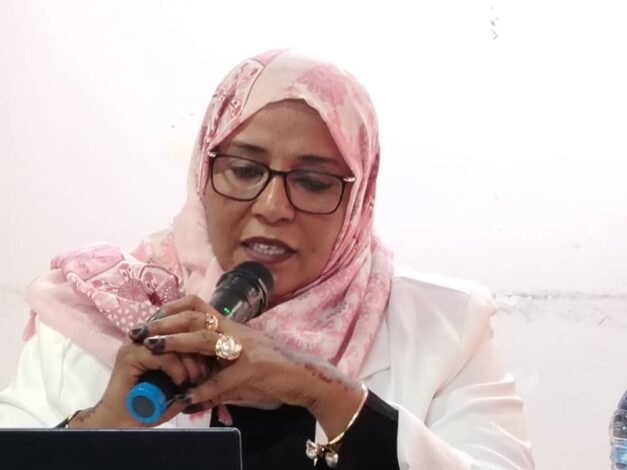
The Technical Committee on Maternal and Perinatal Death Surveillance and Response held its regular meeting today at the Saudi Hospital in Omdurman. The meeting reviewed the current status of the Maternal and Perinatal Death Surveillance and Response system, assessed achievements made during the past period, and discussed the key challenges and opportunities for improving performance.
The committee also reviewed and approved the Standard Operating Procedures (SOPs), discussed technical aspects related to implementing the surveillance system, and endorsed a number of technical and administrative recommendations.
Dr. Asmahan Al-Khair, Director of Maternal and Child Health, stated that the causes of maternal and perinatal deaths are largely preventable, emphasizing the need for collective action supported by available clinical protocols, training, and other interventions. She called for identifying and addressing any obstacles affecting the surveillance and reporting system in order to improve health indicators.
She also urged greater use of opportunities offered through other health programs within a framework of integrated roles and shared responsibilities.
Sister Amal Mahmoud, Director of the National Reproductive Health Program, stressed that Maternal and Perinatal Death Surveillance and Response is a critical issue. She noted that the presentation of ongoing efforts and the semi-annual report demonstrated that the system operates through an integrated approach.
She explained that reducing maternal and newborn deaths is not solely the responsibility of the Maternal and Child Health Directorate, but requires the involvement of all departments within the Ministry of Health, as well as coordination with other relevant ministries to address social factors and improve access to healthcare services.
She highlighted important achievements, including updating clinical protocols, strengthening the network of Emergency Obstetric and Newborn Care (EmONC) hospitals, and implementing several other interventions.
Mahmoud added that the purpose of presenting mortality reports is to strengthen response mechanisms, identify the underlying causes of deaths, and prevent similar incidents in the future.
She also announced that the 2025 annual report is currently being prepared and expressed hope for stronger advocacy and coordinated action to further reduce maternal and newborn mortality.
Dr. Sanaa Jamal, Head of the Maternal and Newborn Death Surveillance and Response Unit at the National Reproductive Health Program, said in a press statement that the meeting focused on reviewing the situation of mothers and newborns. She noted that senior Ministry of Health officials are active members of the Technical Committee and that the meeting reviewed achievements, challenges, and recommendations.
She concluded by expressing appreciation to the international, UN, and national organizations supporting the program.