
Higher Committee for the Rehabilitation of Health Facilities in Khartoum State Holds Fourth Meeting Chaired by the Federal Minister of Health
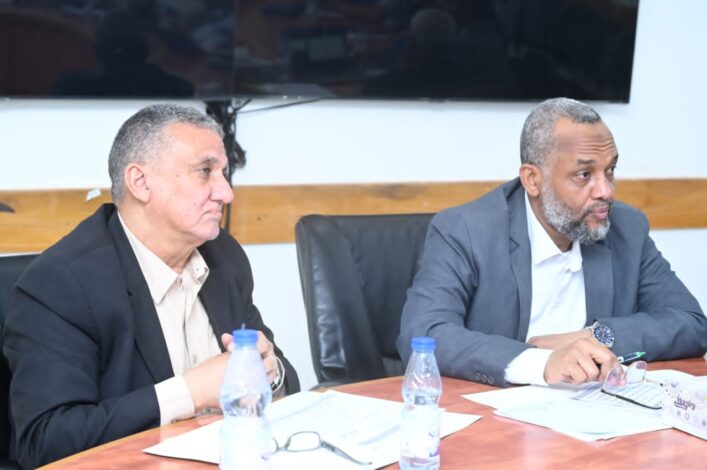
The Higher Committee for the Rehabilitation of Health Facilities in Khartoum State held its fourth meeting on Sunday at the Nutrition Hall of the Federal Ministry of Health. The meeting was chaired by the Federal Minister of Health, Prof. Haitham Mohamed Ibrahim, and attended by the Director General of the Khartoum State Ministry of Health, Dr. Mahmoud Al-Badri.
At the outset of the meeting, the Minister congratulated the country, the Sudanese Armed Forces, and the Joint Forces on their recent victories in North Kordofan. He directed the committee to accurately identify shortages of medical equipment and devices in primary health centers and to address the shortage of intensive care unit (ICU) beds in hospitals. He also pledged to seek funding to strengthen intensive care services.
The Minister stressed the need to prepare a comprehensive report on the actual demand for medical oxygen and to conduct a feasibility study for establishing an oxygen production plant. He further proposed exploring the establishment of medical waste incinerators as investment projects. Regarding the retention of healthcare professionals, he emphasized the importance of improving the working environment and adopting innovative approaches to address workforce challenges.
For his part, the Director General of the Khartoum State Ministry of Health, Dr. Mahmoud Al-Badri, highlighted the uneven performance of health services across primary healthcare centers, attributing this to shortages of equipment and deficiencies in essential services such as water and electricity. He announced that a roadmap has been developed to restore all health centers, recognizing them as the first line of defense in delivering healthcare services.
The meeting also reviewed the major challenges facing intensive care units, including limited bed capacity, inadequate funding, and shortages of medical oxygen. Participants emphasized the need to secure a sustainable oxygen supply, establish a joint supervisory body between the Federal and State Ministries of Health, strengthen staff training, and implement other practical solutions to improve critical care services.