
American Expert Supports Sudanese Government’s Description of US Sanctions as Illegal
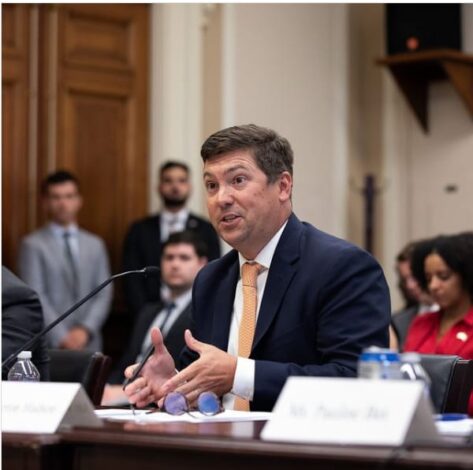
American political analyst and expert on African and Sudanese affairs, Cameron Hudson, sided with the Sudanese government, which rejected the US sanctions imposed on it. He believes the sanctions are aimed solely at pressuring Sudan and complicating political and bilateral relations between the two countries, and may even lead to a hardening of the Sudanese government’s stance.
Hudson, a former White House official, pointed out the irony that the US administration refuses to provide any concrete evidence to support its claims, insisting instead on sending an international organization to Sudan, while it no longer recognizes the work of international organizations in matters concerning the United States.
The Sudanese Ministry of Foreign Affairs and International Cooperation announced yesterday (Sunday) Sudan’s categorical rejection of what it described as “unilateral and illegal sanctions” imposed by the US administration following allegations that the Sudanese Armed Forces used chemical weapons in the conflict with the Rapid Support Forces militia in April 2014.
In its statement issued on this occasion, the Sudanese Foreign Ministry explained that the US sanctions are based on false claims regarding the Armed Forces’ use of chemical weapons, considering the decision a violation of relevant international mechanisms and a disregard for the requirements of international law.
An American expert wrote on his X-Men account today (Monday) that the statement issued by the Sudanese Foreign Ministry “embodies a long history of failed diplomatic relations between Washington and Khartoum.” He added that the chemical weapons issue is yet another link in a chain of diplomatic missteps that have led to the fragmentation of efforts and hindered any progress in normalizing relations.
In a sarcastic tone, Hudson reminded everyone that it was the Biden administration that initiated this process, “yet the Trump administration is now using it as leverage against Khartoum, but this will backfire and make Sudanese officials less willing to reach a ceasefire agreement.”
He pointed out that “this process is political in this respect, as the Trump administration also refused to release the evidence it possessed regarding the use of chemical weapons and refused to send an American team to investigate on the ground, as the Sudanese had offered.”
It is worth noting that the ministry’s statement affirmed that the Sudanese government, within its responsibilities, is committed to cooperating and engaging positively with Washington to investigate any suspicions, following the necessary technical and procedural steps to verify the claims. However, according to the Sudanese Foreign Ministry statement, the American side failed to provide any credible evidence and completely disregarded the technical mechanisms stipulated in the international convention before issuing the sanctions decision.
The Foreign Ministry stated that the Sudanese government believes the motives behind these sanctions are purely political and do not reflect genuine concerns about preventing the use of chemical weapons. This is reminiscent of past instances where the United States exploited allegations of possessing prohibited weapons to advance its political objectives.
Meanwhile, Hudson asked, “Since when has the Trump administration authorized any UN agency to act on its behalf? Never. So why is it now insisting that only the Organization for the Prohibition of Chemical Weapons (OPCW) is authorized to conduct an investigation?”
The American expert explained that this is “because subjecting any UN agency to investigating crimes committed in the country has become an understandable, if not justifiable, red line for Sudanese officials.”
He added, “This is the same Trump administration that declared war last week on the International Criminal Court (ICC), the only international body that can deliver justice for any crimes committed in Sudan. The inconsistency and hypocrisy of this policy are glaringly obvious.”
He continued, saying that some might argue the administration is simply applying US law regarding chemical weapons, as well as international agreements concerning their use. But I reiterate my question: Since when has the Trump administration cared about international law or even legislation passed by Congress?”
He concluded by saying, “In short, they could have easily eased the chemical weapons sanctions and cooperated with the Sudanese authorities to find another way to investigate, but they didn’t, because I think they are more interested in punishing Sudan as a means of exerting pressure than in resolving the real challenges in the relationship. Unfortunately.”