
The Abraham Accords and Their Repercussions on the War in Sudan
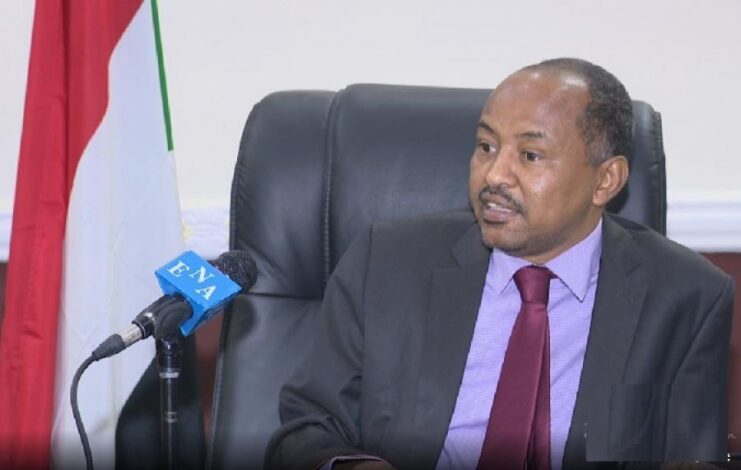
By: Dr. Mukhtar Bilal Abdel Salam
President Trump recently stated that more countries should be required to join the Abraham Accords as part of the nuclear agreement with Iran. In this regard, the US president urged countries such as Saudi Arabia, Turkey, Qatar, and Egypt to sign these agreements “immediately.” The question now is: Have these agreements been beneficial to the countries that have already signed ?
In this article, we will attempt to answer this question and connect these agreements to the ongoing war in Sudan.
In fact, the Abraham Accords are a series of normalization agreements for diplomatic relations and peace, signed under US auspices in late 2020. These normalization agreements with Israel included the United Arab Emirates, Bahrain, Morocco, and Sudan.
The agreements are based on several fundamental principles and pillars, including the normalization of relations, the cessation of hostilities, the establishment of diplomatic, economic, and cultural ties, coexistence and tolerance, the promotion of interfaith and intercultural dialogue, the rejection of extremism, and regional cooperation. This is in addition to partnerships in vital sectors such as security, investment, health, energy, and water.
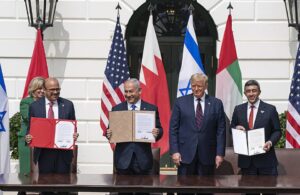
The United Arab Emirates was the cornerstone of these agreements, signing a “Declaration of Peace” with Israel in Washington in September 2020, followed by bilateral agreements for cooperation in aviation, tourism, trade, and technology. The Kingdom of Bahrain followed suit in the same month.
Morocco announced the normalization of relations with Israel in December 2020. The agreement included reopening liaison offices, launching direct flights, and developing economic cooperation.
Sudan signed “The Abraham Accords Declaration” in Khartoum in January 2021 to begin normalizing diplomatic relations. This occurred during a visit by then-US Treasury Secretary Steven Mnuchin, who signed the Abraham Accords with Sudan. The Sudanese side was represented by then-Minister of Justice Dr. Nasr al-Din Abdel Bari. This signing was a US condition for completing the process of removing Sudan from the list of state sponsors of terrorism.
The reader might be surprised to find Sudan among the countries normalizing relations with Israel, but the context in which Sudan agreed to the Abraham Accords makes it more plausible. Sudan has never been enthusiastic about establishing any ties with Israel, but Israel has likely never forgotten Sudan, which it has consistently accused of facilitating the transfer of Iranian military equipment and missiles through its territory to Hamas. This situation is reminiscent of an Israeli airstrike that targeted a civilian vehicle in April 2011 near Port Sudan, killing two civilians.
Sudan had been suffering under crippling economic sanctions due to its inclusion on the US list of state sponsors of terrorism since 1993. The Trump administration at the time conditioned the removal of this designation and the opening of international aid to Sudan when joining the Abraham Accords. Since the power to grant financial and political amnesty lay with Washington, US Treasury Secretary Steven Mnuchin was the legally authorized party to finalize this exchange in Khartoum.
In a subsequent development in February 2023, an Israeli delegation, headed by Israeli Foreign Minister Eli Cohen, visited Khartoum, and the two sides announced reaching a final agreement on normalization. Sudan stipulated that the agreement would not come into effect until a civilian government was formed and it was ratified by an elected parliament.
It is worth noting that the normalization process and the Abraham Accords in general face widespread popular rejection in most Arab and Islamic countries. Opinion polls show that the vast majority of citizens refuse to recognize Israel, maintain the priority of the Palestinian cause, and consider the occupying state the primary threat to the region. The Arab public believes that, years after their signing, the agreements have not improved the Palestinians’ situation. On the contrary, they have coincided with continued settlement expansion and attacks on holy sites, as seen in Gaza and southern Lebanon, proving the failure of the “peace for peace” approach.
Despite the subsequent US intervention and adoption of the Abraham Accords, the idea originated with Israel and the UAE. The US role was merely to promote the agreements, which is why it made normalization with Israel a condition for removing Sudan from the list of state sponsors of terrorism.
This demonstrates that the idea did not originate with the US. Israel, in cooperation with the UAE, initiated and formulated it, while the US role was initially limited to that of “mediator and facilitator” before Washington fully adopted the project and marketed it as its own achievement.
Regarding Israeli–Palestinian conflict, the “land for peace” theory remained prevalent in the Middle East for decades. This theory stipulated that there would be no Arab normalization with Israel until Israel withdrew from the Palestinian territories and enabled the Palestinians to establish their state. But Israeli Prime Minister Benjamin Netanyahu developed a different political doctrine based on “peace for peace.” Netanyahu believed that Israel, through its military, technological, and economic superiority, could build direct alliances with Arab states based on shared interests and a common animosity toward Iran, thus bypassing the Palestinian issue entirely.
«Land for peace» is the central principle of the Oslo Accords signed in 1993, sponsored by the international community. It stipulates that Israel withdraw from the occupied Palestinian territories (West Bank, Gaza) in exchange for an end to hostilities and recognition of its right to exist. Meanwhile, the “peace for peace” approach and its proponents argue that territories (considered crucial for history or national security) should not be sacrificed to achieve a conditional or uncertain peace. According to this view, only a sincere and definitive acceptance of Israel’s right to exist as a sovereign state by its neighbors can guarantee lasting peace, without prior territorial compromises.
For years, the Israeli Mossad worked behind the scenes to pave the way for rapprochement with the Gulf states, guided by this vision. In mid-2020, Netanyahu intended to implement a plan to annex large parts of the West Bank and the Jordan Valley. This move nearly derailed any chance of rapprochement with the Arab world. It was in this context that the joint Israeli-Emirati initiative emerged.
in June, 2020, the UAE Ambassador to Washington, Yousef Al-Otaiba, published a rare article in Hebrew in the Israeli newspaper Yediot Aharonot, titled “Annexation or Normalization,” in which he clearly presented the trade-off. Israeli security and political circles immediately picked up on this signal, and the proposal was formulated through direct coordination between the Emirati and Israeli sides.
The proposal to freeze annexation in exchange for full normalization via the Abraham Accords was submitted to the White House, specifically to Jared Kushner, advisor and son-in-law of President Trump. The Trump administration welcomed the idea, as it was seeking a major diplomatic achievement in 2020, which coincided with the presidential elections. The American role shifted from that of a mere recipient to that of an executive architect and guarantor. The United States used its international influence and employed a carrot-and-stick approach, offering substantial sovereign and financial incentives to persuade other countries to join. Sudan, which had just emerged from a popular revolution and a long period of international isolation, was among these countries.
Through these agreements, Washington seeks to build a new security and defense system in the Middle East that integrates Israel with its Arab allies. This informal alliance aims to share security burdens and counter Iranian influence and its network of allies in the region, allowing the US to reduce its direct military presence and focus on competing with China and Russia. Washington views the agreements as a tool to link Israeli technology and investments with Arab capital, creating a strong regional market connected to the US economy and blocking Chinese economic expansion in the region’s infrastructure and telecommunications sectors.
The shift between successive US administrations has demonstrated that the Abraham Accords represent a consistent, cross-party strategic priority in Washington. They evolved from a “quick-deal” approach under Trump to an “institutionalized security and economic project” under Biden, culminating in a renewed surge of momentum with Trump’s second term. The Biden administration initially tried to avoid using the term “Abraham Accords,” opting instead for “normalization agreements.” However, it quickly embraced the entire process, employing its diplomacy to advance it and transforming the agreements from mere words on paper into practical projects and sustainable institutions. A prime example is the establishment of the Negev Forum in 2022 to coordinate security and economic cooperation. The Biden administration also succeeded in formally integrating Israel under the umbrella of the US Central Command (CENTCOM), alongside Arab states, enabling direct defense and air coordination (which proved relatively effective in countering regional missile attacks).
The Biden administration focused its full diplomatic weight on attempting to broker a historic normalization agreement between Saudi Arabia and Israel, considering it the cornerstone for reshaping the Middle East. This path was disrupted and directly impacted by the events of October 7, 2013, and the Gaza War. The second Trump administration returned with a renewed focus on completing what it had begun in its first term.
Sudan’s current position on the Abraham Accords has changed completely. Accusations against Israel and the UAE of supporting the rebel Rapid Support Forces (RSF) have frozen the Abraham Accords process and jeopardized the Sudanese government’s prospects for normalization with Israel. This comes amidst the ongoing battle (of dignity) between the Sudanese army and allied forces against the RSF militia.
The Sudanese government now views the Abraham Accords as a political framework linking parties it openly accuses of threatening its national security, leading to a breakdown in political trust among the parties involved. International reports have confirmed that the UAE supplied the RSF with weapons via neighboring countries such as Chad, Libya, and more recently, Ethiopia. the UAE serves as a transit point and supply hub for mercenaries and military hardware entering Darfur to support the RSF. These reports, along with allegations of Israeli surveillance technology being smuggled to the militia, have transformed potential partners in the agreement into adversaries.
In an unprecedented legal and diplomatic escalation, tensions reached a peak when Sudan filed a lawsuit against the UAE at the International Court of Justice, accusing it of supporting the militia and facilitating genocide. This makes a return to a warm peace with the parties to the agreement highly unlikely under the current situation. When war broke out in Sudan in April 2023, the Biden administration focused on humanitarian ceasefire efforts and negotiations (such as the Jeddah and Switzerland tracks) rather than pushing for the completion of normalization and froze, without canceling, incentives such as direct economic aid and debt relief promised to Khartoum, given the absence of a civilian government from its point of view and the continuation of the military war.
The Sudanese government’s priorities have shifted from seeking economic openness through the United States and Israel in the post-revolution period to seeking military allies who can provide direct support in the war (such as Iran and Russia). This shift is entirely at odds with the philosophy and objectives of the Abraham Accords, which aim to contain Iranian influence in the region.
The Sudanese position is no longer merely a “temporary suspension,” as perceived by the West. Sudan has become a victim of normalization itself, and relations between Sudan and the signatories of the agreement have transformed from a framework of rapprochement and normalization to one of regional proxy conflict, with Sudan serving as the stage for exploiting its resources and undermining its political will.
Many analysts believe that the Abraham Accords have moved beyond the emotional and economic impulse that characterized their launch in 2020 and have entered a phase of harsh political realism. The signatory states now view them as back channels for crisis management rather than as instruments for achieving comprehensive regional peace. This is due to widespread popular rejection of these agreements within Arab and Muslim societies, which view them with suspicion and distrust, as the Palestinian issue remains the primary driver and determinant of the Middle East’s future. The Palestinian issue has proven to be a pivotal issue that cannot be bypassed through political maneuvering and deception led by Israel, no matter how strong the incentives of its American ally or how powerful its stick may be.
References:
1/ The Mideast is Baffled by Trump’s Call to expand Abraham Accords. The New York Times, 28/05/2026.
2/ The text signed by former US Treasury Secretary Steven Mnuchin with the Sudanese side in Khartoum on January 6, 2021, is called “the Abraham Accords Declaration”.
3/ Sudanese evidence confirms Israeli raid, Al Jazeera News website, 11/04/2011.
4/ The US Treasury Secretary also signed a memorandum of understanding with the then Sudanese Finance Minister, Heba Mohamed Ali, for a bridge loan. This agreement stipulated that the United States would assume more than $1 billion in arrears owed by Sudan to the World Bank, thus paving the way for Sudan’s access to international financing for its development.
5/ Yousef Al-Otaiba, UAE Ambassador to the U.S, “Either Annexation or Normalization”, Yedioth Ahronot, 12/06/2020.
6/ The Negev Forum (also known as the Negev Summit) was established on March 28, 2022. It was established at the conclusion of a meeting hosted by Israel in the Sde Boker area of the Negev desert, which included the foreign ministers of Israel, the United States, Egypt, Morocco, the United Arab Emirates, and Bahrain.
7/ Assaf Orion, Mark Montgomery, “Moving Israel to CENTCOM: Another Step Into the Light”, The Washington Institute for Near East Policy (WINEP), 28/01/2021.
8/ Before the International Court of Justice: Sudan accuses the United Arab Emirates of perpetrating “genocide” in Darfur, despite Abu Dhabi’s denials. France, 24, 10/04/2025