
National Memory and National Security
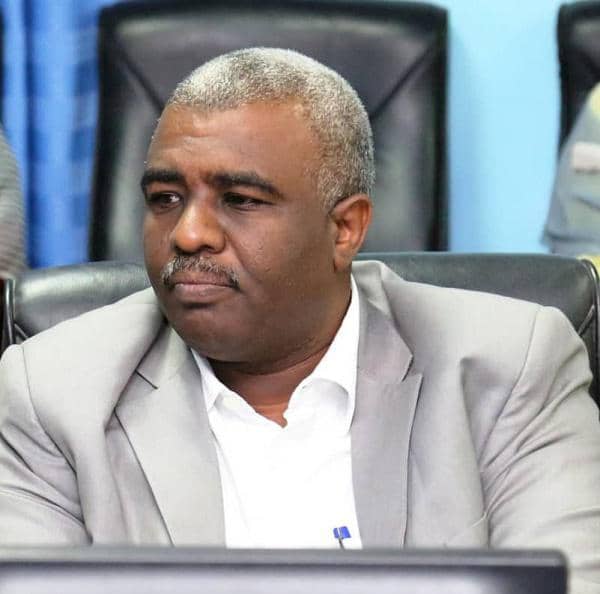
By Dr. Ibrahim Shiglawi
A few days ago, the General Intelligence Service in the River Nile State announced that it had foiled another attempt to smuggle a number of archaeological artifacts out of the country. This security success adds to the record of achievements by Sudan’s regular forces during the war, while also reminding us that Sudan is fighting a battle greater than merely reclaiming its territory. It is a battle to defend its history and national memory.
National security is not confined to defeating rebellion or protecting borders. It also extends to safeguarding the national memory that gives the state its historical depth and enduring presence, and instills in society a sense of belonging. It is the first line of defense for the nation. Sudan, whose civilizations span more than seven thousand years, is defending its historical experience against attempts at erasure and distortion.
This war has revealed one of the most dangerous patterns of conflict in the twenty-first century. It has not been limited to destroying infrastructure and weakening the economy, but has also targeted institutions of culture and knowledge, foremost among them the Sudan National Museum, the National Records Office, the Ethnographic Museum, the Khalifa House Museum, in addition to libraries, theaters, universities, and archaeological sites.
What these institutions have suffered was not merely looting driven by greed, but a direct assault on knowledge, history, and existence itself, because controlling history means possessing the ability to shape consciousness and redefine the future.
The experiences of nations have demonstrated that the destruction of museums, libraries, and archives never happens by chance. Rather, it is a deliberate policy aimed at severing the connection between society and its past, making it more susceptible to having its identity reshaped according to new narratives. We know that nations are not defeated only when their cities fall, but when their memory is erased.
Although 570 archaeological artifacts have been recovered in recent months, and the General Intelligence Service has thwarted another smuggling attempt, this does not diminish the scale of the disaster. What has been lost from the Sudan National Museum alone, along with the collections of other museums, is estimated to amount to thousands of artifacts in one of the largest assaults on Sudan’s cultural heritage.
The footage broadcast last Friday by Blue Nile TV from inside the Sudan National Museum in Khartoum revealed the magnitude of the tragedy. What appeared was not merely destruction, but a national memory subjected to an organized assault. This underscores the importance of adopting a genuine vision that goes beyond counting the stolen artifacts to addressing the kind of Sudan we wish to rebuild after the war, and the memory we intend to pass on to future generations.
Sudan is not unfamiliar with such awareness. During the implementation of the Merowe Dam Project, planning was not limited to engineering aspects. A scientific committee chaired by Professor Yusuf Fadl Hassan was established, bringing together a distinguished group of scholars and historians to document local communities and rescue endangered antiquities. Earlier still, Sudan, in cooperation with UNESCO, led one of the world’s most significant international campaigns to save the monuments of Nubian civilization during the construction of the Aswan High Dam. This reflected a clear understanding that history is not a marginal aspect of development, but one of its pillars and a cornerstone of national identity.
Today, after the devastation inflicted upon the Sudan National Museum, there is an urgent need to revive that vigilant way of thinking with renewed spirit and effective tools. Rebuilding Sudan should not be confined to constructing roads, bridges, and power stations. It must also include rebuilding the institutions of national memory, because reconstructing stone without reconstructing consciousness remains an incomplete process.
Within the framework of reconstructing central Khartoum and Nile Street, as previously announced by Lieutenant General Ibrahim Jaber’s committee, the Sudan National Museum should occupy a central place in the vision for the future capital. It should not merely be restored to its previous condition, but reintegrated into a broader cultural space extending westward to include the National Library site and its surroundings—an area that has suffered neglect, with parts of it transformed into vacant land surrounded by disorder and resembling a garbage dump.
In this regard, the Egyptian experience offers a lesson worthy of reflection. The Grand Egyptian Museum was not merely a massive construction project, but a state project in the fullest sense. It evolved into a national vision shaped by state institutions, supported by an independent authority, a board of trustees, and the largest conservation center for antiquities in the region. It became a platform for scientific research, cultural diplomacy, tourism, and the creative economy—not merely a place to display artifacts. Egypt recognized that civilization is not only a cultural legacy, but also a resource for the future.
Sudan deserves no less an ambitious project. Indeed, the post-war period calls for a new national museum worthy of the civilizations of Kerma, Napata, and Meroe, as well as the heritage of the Blue Sultanate and Darfur, while incorporating the latest exhibition technologies. It should become a center for research, education, cultural diplomacy, and a driver of tourism and the creative economy, transforming heritage into an investment in the future rather than merely an inheritance from the past.
The museum’s surroundings could also be developed into a cultural complex featuring libraries and gardens inspired by the relationship between the Sudanese people and the Nile, becoming a vibrant public space that narrates the national identity rather than simply a building housing collections. Protecting memory is a shared responsibility borne by the state, universities, researchers, the media, and society alike.
The present moment represents an opportunity to launch an international architectural competition under the sponsorship of UNESCO and the International Union of Architects to design a new Sudan National Museum within the framework of a vigilant national vision. This is not merely a ministry project, but a state project that reconnects the present with its civilizational roots stretching back thousands of years and lays the foundation for the image of a new Sudan.
Wishing you continued health and well-being.