
International Investigation Reveals UAE’s Involvement in the Wars of Sudan, Libya, and Yemen
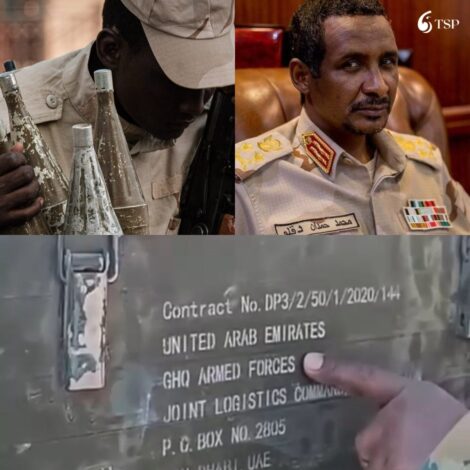
A new international investigation has revealed alarming indicators linking the UAE to the transfer of advanced Western weapons to active war zones, including Sudan, Libya, and Yemen. This development sheds new light on the UAE’s role in supporting armed militias within the region, most notably the Rapid Support Forces, which has been waging war against the Sudanese army since April 2023.
Sniper Rifles
According to the investigation published by the Canadian network CBC News, Canadian-made XLCR sniper rifles have appeared in the hands of fighters These weapons have been found in the possession of members of the Rapid Support Forces (RSF) in Sudan, as well as with armed groups in Libya, and some have even been offered for sale on online platforms in Yemen. This recurring presence raises serious questions about how these weapons are being transferred from official export channels to areas subject to international arms embargoes or strict restrictions on the transfer of military equipment.
The Visual Investigations Team documented a video showing a RSF fighter in Sudan carrying a Canadian-made sniper rifle while assaulting detainees inside a truck, an incident that highlights the connection between this modern weapon and potential abuses against civilians and prisoners.
CBC News confirmed that the weapon seen in the recording is a Sterling Cross XLCR rifle. Researchers from Bellingcat considered the footage to be one of the clearest pieces of evidence linking this type of weapon to potential human rights violations. The video was located in the Jebel Moya area, which witnessed violent clashes after the Rapid Support Forces (RSF) took control in 2024.
Growing Evidence
This revelation comes at a time of increasing evidence regarding the UAE’s role and support for the RSF in its war against the Sudanese army, whether through direct or indirect arms shipments, or through regional supply networks that include weapons, equipment, and mercenaries. Numerous international reports and investigations have documented and revealed indications of Abu Dhabi’s involvement in fueling the Sudanese war, which has contributed to prolonging the conflict and complicating political and humanitarian efforts.
According to the Canadian investigation, government data in Ottawa revealed the export of 113 sniper rifles of the same model to the UAE during 2019 and 2020, before similar weapons later appeared on the battlefields of Sudan, Libya, and Yemen. Experts believe this timeline raises serious questions about the fate of this military equipment after its arrival in the UAE, and the extent to which the conditions prohibiting its re-export or transfer to third parties were adhered to.
The network quoted experts as saying that the UAE represents the “common denominator” in all three cases, given its relationships and alliances with active military and political actors in these conflicts. Wolfram Lacher, a researcher specializing in Libyan affairs, stated that the most prominent link between these cases is the UAE’s support for its allies on the battlefields, noting that Abu Dhabi’s name has repeatedly been associated with controversial arms deals.
Widespread Violations
The investigation raises more sensitive questions for the UAE, given that the Rapid Support Forces militia has committed widespread violations against civilians in Sudan, including murder, looting, forced displacement, and attacks on detainees, in addition to destroying civilian infrastructure in large areas of the country. The presence of advanced weapons in the hands of these militia members means that military supply routes are no longer merely a political issue, but have become a direct factor in deepening the humanitarian catastrophe.
The investigation also reveals serious gaps in the international arms export control system. The transfer of Western military equipment to armed groups in war zones raises questions about the effectiveness of export licenses and the mechanisms for tracking weapons after their sale to importing countries.
In Canada, the investigation’s findings have generated political and human rights pressure. Foreign Minister Anita Anand expressed concern about Canadian military equipment reaching conflict zones, emphasizing that the transfer of weapons to environments experiencing war and violations is unacceptable. She indicated that the case may reveal loopholes in the export licensing system and could necessitate investigations by law enforcement agencies to determine how these weapons were transferred. Lack of Oversight
Global Affairs Canada reaffirmed Ottawa’s commitment to the arms embargo on Sudan, emphasizing that its military export risk assessment procedures do not permit sending equipment to restricted areas or to parties that might use it for serious violations.
The investigation concludes that the lack of strict oversight of arms movement after export allows them to be diverted to conflict zones, transforming from licensed military equipment into tools used to fuel wars and abuses. The appearance of these rifles in the hands of the Rapid Support Forces in Sudan reinforces concerns that external support, particularly from the UAE, is a major factor prolonging the war and exacerbating the suffering of civilians.