
Geological Research Authority: Petrified Trees in the 90 Area Are a Known Geological Phenomenon, Not a Rare One
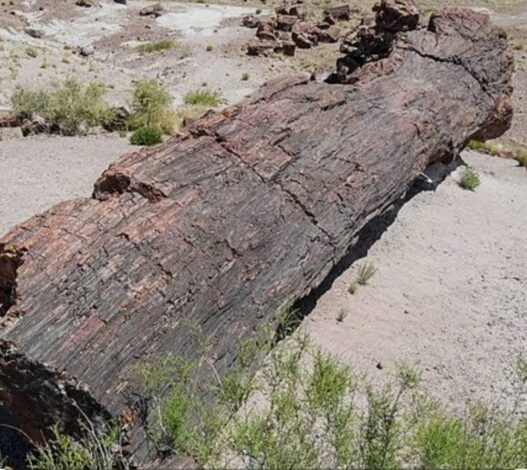
The General Authority for Geological Research has clarified that the petrified trees observed in the archaeological Area 90 in northern rural Omdurman are a well-known natural geological phenomenon and not a rare occurrence.
Mohamed Abdelrahman Aqid, Geological Consultant at the General Authority for Geological Research, explained that petrified trees (Petrified Trees) or fossilized wood (Fossilized Wood) are a type of plant fossil formed through geological processes that took millions of years.
He noted that this phenomenon occurs when tree trunks are buried beneath sediments during ancient geological eras, particularly during the Oligocene Epoch, approximately 35 million years ago. Under specific conditions of pressure and temperature, the organic components of the wood gradually decompose and are replaced by minerals present in the surrounding soil, most commonly silica (SiO₂) or iron compounds. This process results in the formation of rock that preserves the original external shape and structure of the tree trunk.
Aqid emphasized that the presence of petrified trees in Sudan is not exceptional, as such sites are found in several regions across the country. One of the most notable locations is the Kurru Petrified Forest in Merowe Locality, Northern State. In addition, the General Authority for Geological Research Museum houses a variety of specimens collected from different sites, providing an important scientific resource for researchers and enthusiasts.
He added that the scientific significance of petrified trees lies in their value as geological records that help scientists determine the relative ages of associated rock formations and understand ancient environments, climatic conditions, and vegetation cover that existed during past geological periods.
Aqid further explained that petrification is not limited to plants; it also affects many other living organisms. Fossils of various animals dating back to ancient geological eras have also been discovered.
The General Authority for Geological Research affirmed that plant and animal fossils represent valuable scientific and cultural heritage. They are considered important assets for developing geotourism and establishing geological parks, thereby supporting scientific research and promoting awareness of Sudan’s natural heritage.
The Authority called for consulting specialized scientific and technical institutions when describing geological phenomena and assessing their significance, in order to ensure the accuracy of information and enhance public awareness of Sudan’s national geological heritage.