
A Sound Sacrifice, a Clean Environment, and an Economy Not Wasted

A Dialogue with Professor Faisal Al-Zubair on the Golden “Prescription” for Eid
Prepared by:
Eng. Abdelrahman Mohamed Zain (Magdi)
Health, Safety & Environment Editor – The Citizen
Member of Society of Environmental Engineers (SEE-3469-UK)
Associate Member of the American Society of Heating, Refrigerating and Air-Conditioning Engineers (ASHRAE-USA)
mr.zainrac@gmail.com
As the blessed Eid al-Adha approaches, every Sudanese family faces crucial questions: How do we choose our sacrifice to be sound both religiously and health-wise? How do we protect our families from common mistakes? And where does the environment fit into all this? To discuss these critical issues, we sat down with the distinguished academic Professor Faisal Al-Zubair Ahmed Omar, Professor of Theriogenology at the Faculty of Veterinary Medicine, University of Khartoum, and Advisor to the Minister of Animal Resources for Genetic Improvement, who has spent decades in field diagnosis and academic work.
First: What is Professor Faisal’s Golden “Prescription” for Buying a Sacrifice?
Eng. Abdelrahman:
Let me start with a direct question: On the occasion of Eid, how do you personally choose your sacrifice without falling into confusion?
Professor Faisal Al-Zubair:
With pleasure. First, let me remind everyone that there is a difference between religious (Sharia) conditions and health conditions.
· Sharia conditions: The animal must have reached the specified age (for sheep: a minimum of 8–10 months) and be free from obvious defects such as lameness, blindness, or extreme emaciation.
· Health-wise: The best choice is “Al-Jadha” (which has not yet replaced its milk teeth – about one year old or slightly less) or “Al-Thani” (which has replaced its central incisors – about one and a half years old). The younger the animal, the more tender and delicious the meat.

Eng. Abdelrahman:
What about the animal’s appearance? Are there signs that indicate its health?
Professor Faisal:
Absolutely. The fleece (coat) is the animal’s mirror. Shiny, orderly hair indicates good health, while falling-out or tangled hair is a sign of internal parasites. Also:
· Eyes: The mucous membranes should be pink (pale , anemia, yellow , jaundice, deep red , inflammation).
· Nose (muzzle): Slight moisture is normal; mucous discharge indicates an upper respiratory infection.
· Under the jaw: Any watery swelling means chronic infection with roundworms.
· Hindquarters: Diarrhea or soiling around the tail may indicate starch poisoning or parasites.
A Firm Stance: Should We Inject the Sacrifice with Drugs Before Eid?
Eng. Abdelrahman:
We have heard about a harmful practice – injecting the lamb a day or two before Eid “to make it stronger.” What is your opinion?
Professor Faisal (firmly):
I completely reject this. Any veterinary drug has a withdrawal period (usually one to two weeks) that the animal’s body needs to eliminate residues. Slaughtering the animal before that period ends means those drug residues transfer into the meat and then into your family. This is a clear danger to human health, especially for children and pregnant women.
Eng. Abdelrahman:
So, when is the best time to buy the sacrifice?
Professor Faisal:
I advise buying the sacrifice no more than 72 hours and no less than 24 hours before Eid. Buying too early increases the risk of illness or sudden death, especially given the current economic situation. I also advise not feeding the lamb during the 24 hours before slaughter, only providing clean water, to reduce rumen contents and ensure better meat quality.
After Slaughter: How Do We Protect Ourselves from Diseases?
Eng. Abdelrahman:
Sudanese people are very fond of eating raw liver and grilled meat immediately after slaughter… Is this safe?
Professor Faisal (smiling):
It is a beautiful social tradition, but it should be done after veterinary inspection, not before.
· At slaughter, inspect the liver: Its natural color is deep red, with sharp edges. Any calcifications, yellowish color, or change in texture calls for total or partial condemnation – the Sudanese love of liver does not justify taking risks.
· Inspect the lungs: Their natural color is pink. If they look like the color of the liver (brownish-red), that indicates chronic inflammation, and they must be condemned.
· As for the rumen and intestines: Wash them thoroughly. You may sometimes find roundworms – no problem after proper cooking, but avoid eating them raw.
The Truth Behind the Rumored Epidemic: Is There a Disease Affecting Sacrifices This Year?
Eng. Abdelrahman:
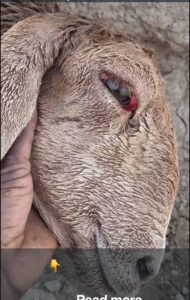
Activists have circulated pictures of a lamb with severe eye redness and discharge, describing it as “infectious conjunctivitis” or “Peste des Petits Ruminants (PPR).” What is the truth?
Professor Faisal (reassuringly):
I reassure you, Engineer Abdelrahman, and reassure all citizens: There is no epidemic disease in sheep these days in Sudan. What is being circulated concerns only very limited, individual cases that have no impact on the national flock or on human health.
Yes, conjunctivitis may appear in one animal here or there, but it is not an epidemic, nor does it disqualify the sacrifice from a Sharia perspective after treatment. Again, no need for fear or panic.
Eng. Abdelrahman:
If a citizen sees such symptoms, what should they do?
Professor Faisal:
Simply: Do not buy that animal, and contact the nearest veterinarian (there are free inspection points in major markets). The Sudanese General Union of Veterinarians and the Sudanese Veterinary Council are following up on any reports seriously.
Hides: A Wasted Economic Resource or an Environmental Pollutant?
Eng. Abdelrahman:
May I ask you about the hides of sacrifices? Everyone handles them randomly.
Professor Faisal (displeased):
This is a silent disaster. A good hide, if skinned properly (without tearing) and stored in a cool, dry place with table salt, can be sold at good prices to tanneries, providing income for families. But what happens is that hides are thrown in the garbage or left to rot, causing:
1. Environmental pollution with foul odors and insects.
2. A huge economic loss for the family and the national economy.
I appeal to citizens: treat the hide as a resource, not as waste.
Summary and Recommendations (Professor Faisal’s Prescription):
At the end of our dialogue, Professor Faisal Al-Zubair recommends that every Sudanese family:
1. Do not buy a sacrifice more than 72 hours before Eid, and do not inject it with any drug.
2. Examine the sacrifice yourself (eyes, nose, coat, hindquarters, under the jaw).
3. Consult a veterinarian if in doubt – examination is free.
4. Do not feed the lamb during the 24 hours before slaughter, only clean water.
5. After slaughter, inspect the liver and lungs before eating, and avoid consuming diseased organs.
6. Skin the hide professionally and salt it immediately, then sell it instead of throwing it away.
7. Do not slaughter in non-designated areas, and avoid polluting soil and water with blood and waste.
A Final Word from the Editor:
Your health comes first. The safety of your family, your sacrifice, and your land is a trust in your hands.
Blessed Eid to you, and may you be well every year.
Editor’s Note – Upcoming Special Dialogue
As part of our continued commitment to public health, environmental protection, food safety, and sustainable economic awareness during Eid al-Adha, The Citizen will publish an upcoming special extended feature presenting a four-way professional dialogue with four distinguished experts from complementary fields:
Professor Faisal Al-Zubair Ahmed Omar – Professor of Theriogenology and Advisor on Animal Genetic Improvement.
A leading specialist in leather production and tanning industries.
An expert in standards, specifications, and quality control.
A specialist in animal feed and livestock nutrition.
The forthcoming discussion will address critical issues related to: animal health, meat safety, hides and leather economics, environmental impacts of slaughter waste, feed quality and livestock production, standards and inspection systems, and the future of sustainable livestock industries in Sudan.
This upcoming feature aims to provide Sudanese families, livestock producers, technicians, environmental specialists, and policymakers with practical scientific guidance that connects public health, environmental responsibility, and national economic value.
Prepared by: Eng. Abdelrahman Mohamed Zain (Magdi)
Health, Safety & Environment Editor – The Citizen
Member of the society of the Environmental Engineers (see3469)–uk Associate Member of ASHRAE
Email: mr.zainrac@gmail.com