
Three Years of War in Sudan: From Ruin and Destruction to Reconstruction and Return
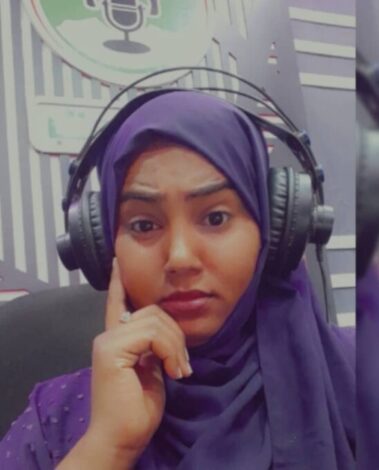
By: Abeer Ibrahim
Three years have passed, and Sudan is still being battered by the winds of war, uprooting its security and peace. War was not the people’s choice, but the people were chosen to pay the price in displacement, loss, and suffering.
The war enters a new year, or rather, a new darkness and injustice, witnessed by the world in deliberate silence and empty slogans played out on the stage of the international community.
Politicians squabble over the rotation of power, while the people groan under the pain of war’s fires, but the ears of humanity remain deaf. April 15, 2023, a day that witnessed history tell the story of a country burning, lives being lost, and wealth being stolen. Year after year, history records that this country is Sudan, forgotten by humanity, politically hijacked, and internationally violated, while its political elite dances on the cries of its people.
April 15 was not merely a passing date in Sudan’s memory; it was a sharp turning point, a moment when the earth split open, revealing its true nature, and masks fell away all at once, like autumn leaves swept by the fierce winds of truth. On that day, we did not awaken to a fleeting disagreement, but to a resounding moral shock; a shock written in blood, its headline: betrayal. There, where the voices of the politicians who had filled the air with empty noise faded, and their speeches dissipated like a mirage, the armed forces advanced in majestic silence, a silence that rose above all the clamor. They stood facing the guns, not to issue a fleeting statement, but to write a history of steadfastness and pride. Men stood at the borders of the homeland, defending it with their lives, as if redefining courage in its purest form.
At that very moment, the Sudanese people emerged from behind them, not as mere spectators, but as active participants, as if they had reclaimed their primal voice, their pure voice, echoing from the depths of their being: I am Sudanese, I am… and raising the slogan that had become a living conscience: One people… One army.
The scene was awe-inspiring; a people supporting their army, and an army drawing its strength from its people, a rare equation forged only by living nations.
That war was more than just a military confrontation; It was a violent earthquake that struck the very core of the state and its collective consciousness, exposing the flaws in its politics, revealing the fragility of the preceding arrangements, and demonstrating how far removed some of the bets were from the pulse of the people. It was a moment of great reckoning, a moment when ranks were clearly defined, and the illusions that had long been adorned with slogans crumbled.
Today, three years after the outbreak of war in Sudan, the capital, Khartoum, is beginning to witness the gradual return of life and people, despite the significant challenges that remain. Some of the activity that had been absent for so long has returned to the city’s streets, and a number of citizens have begun returning to their homes, driven by the hope of restoring stability and starting a new chapter. Some government institutions and ministries have also begun to partially resume their operations, attempting to restore essential services to the citizens.
Markets, too, have begun to gradually recover, and individual and community initiatives have emerged for reconstruction and neighborhood clean-up, in a scene that reflects the Sudanese people’s determination to live despite the harsh circumstances. However, despite these positive indicators, Khartoum is still far from fully returning to normal, given the security and economic challenges, in addition to the extensive damage inflicted on its infrastructure.
Hope remains that the recovery process will proceed more rapidly and that efforts to achieve peace will succeed, so that Khartoum can once again become a vibrant and bustling city.