
The Road to the Presidential Republic
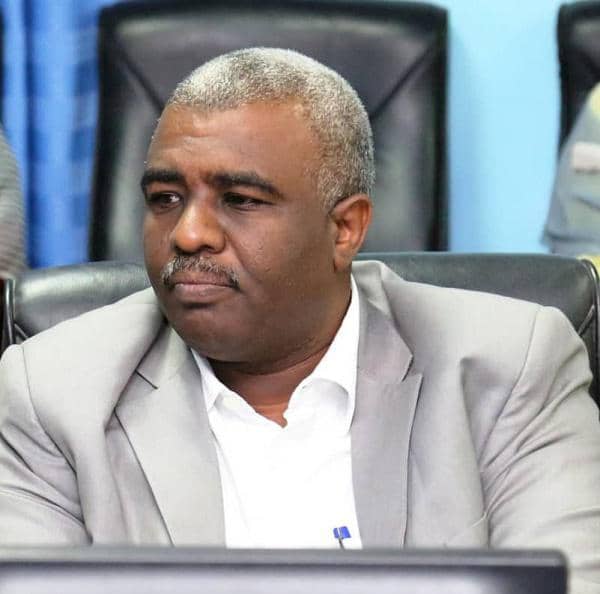
By: Dr. Ibrahim Shaglawi
In our country, military decisions are always regarded as political signals, read within the context of redrawing the stage of power. Therefore, what took place yesterday in the leadership of the Armed Forces General Command—namely the appointment of Lieutenant General Yasir Al-Atta as Chief of Staff and his deputies—is viewed through a lens that goes beyond the limits of “routine military procedures” into a broader space: the space of engineering the next phase.
In this article, we attempt to read the scene from its political dimension, considering the challenges of transition, the evolution of military operations, the unity of decision-making within the leadership institution, and the preparation for the upcoming phase in which a vision for governing the country is taking shape.
In this context, the appointment of Al-Atta, which was met with wide acceptance and notable resonance among Sudanese citizens, can be read as a first step within arrangements aimed at re-engineering power in preparation for a more centralized phase.
The appointment of leaders with field presence and moral influence among Sudanese further reinforces this direction, both in terms of competence and in reshaping the relationship between the state and society at a moment when the country aspires to rebuild trust in its institutions.
This step, beyond its military dimension, also represents a clear signal toward a potential restructuring of power at the level of the head of state, where executive authority converges with military systems at a single point.
Therefore, it is not surprising; rather, it is an extension of a long Sudanese experience throughout history that has affirmed the importance of unified decision-making at the top of the state, especially during crises, where such unity enhances the effectiveness of leadership in decisive moments.
Accordingly, if we apply this to the Sudanese case, the current changes can be interpreted as a move toward greater centralization of governance, where the army becomes not merely an instrument of the state but a direct حامل of its political project. This may indicate a possible shift toward a “presidential republic.” The answer is not definitive, but it is visible on the horizon.
Speculations circulating about the dissolution of the Sovereign Council, even if not officially confirmed, reflect a general climate trending toward simplifying the transitional structure that has been complex since its inception.
The Sovereign Council, in its collective form, represented a balance between military and civilian actors and political forces that have since aligned with the rebellion. Therefore, in times of war, such structures tend to fragment in favor of a more concentrated model.
Here, a transition from “collective leadership” to “individual military leadership” becomes likely. This does not necessarily mean a replication of the Egyptian experience, as is often suggested in popular comparisons; each case has its own context and conditions.
However, the similarity lies in the mechanism of transition: from a strong military institution to a single political center supported by it.
In a country like Sudan, where political history is burdened with cycles of military rule, any move toward centralization is approached with caution, even if driven by necessity and the developments of war. Nevertheless, a critical question remains: are these changes built upon a vision for the state, or merely upon the necessities of the moment?
If these measures are part of an integrated transformation project to rebuild the state—its institutions, economy, and political legitimacy—they may represent the beginning of a real transition.
However, to understand this transformation, it is necessary to consider the constitutional framework governing the current phase. The country is currently administered under an amended Constitutional Document of 2025, which has evolved from a transitional framework into something resembling a de facto constitution, reflecting the existing balance of power more than a comprehensive political consensus among Sudanese. In contrast, public discourse increasingly invokes the 2005 Constitution, as it represented a phase marked by a degree of political partnership following the Comprehensive Peace Agreement for South Sudan, in which most Sudanese political parties and entities participated.
Here, a sharp paradox emerges between two visions, where reconciling them represents a leap between two opposing logics. Reinstating the 2005 Constitution explicitly may not be possible, as it arose in a fundamentally different political context. Conversely, continuing with the current amended document entrenches a reality that lacks broad consensus.
From this point, a more realistic scenario emerges: the production of a hybrid constitutional formula that draws from both the current document and the 2005 Constitution, reformulating them in line with the prevailing balance of power while granting broader authority to the executive center. If realized, this formula would constitute the legal expression of a political trajectory moving toward a presidential republic, where political will converges with military backing at a single center to confront security and political risks and adapt to the challenges of transition.
However, the strength of a constitution alone is not sufficient. The absence of legislative institutions places both military and political leadership in a difficult position when making critical decisions related to war, foreign policy, and regional and international balances.
Here emerges the necessity of establishing a legislative council, even in a temporary or partially appointed form, to serve as the voice of the people and provide legitimate cover for every governmental initiative or decision.
A legislative council does not merely add legitimacy to decisions; it enhances the government’s negotiating capacity, reduces friction between leadership and the public during crises, and makes the center of decision-making stronger and more acceptable both domestically and internationally.
Therefore, according to #Face_of_Truth, the fundamental question is not whether Sudan is moving toward a presidential republic, but rather what kind of republic is taking shape. Will it be a model that balances power, legitimacy, and the requirements of a national project, or one that contracts into a single center of decision-making? Within this delicate space, the fate of the state is drawn, and the hopes of Sudanese people for restoring security are tested.