
Our Forests Is our Life

Visions and Outcomes of the 15th Conference of the Parties to the Convention on Migratory Species (CMS COP 15) and Their Implications for Sudan
By: Prof. Talaat Dafallah
The 15th Conference of the Parties to the Convention on the Conservation of Migratory Species of Wild Animals (CMS COP 15) recently concluded in Campo Grande, Brazil, from March 23 to 29, 2026.
The conference, held under the theme “Connecting Nature for Sustainable Life,” brought together more than 2,000 participants representing governments, scientists, and civil society organizations.
Discussions focused on the pressing challenges facing animals that cross international borders and the importance of protecting their migration routes in light of habitat fragmentation and the impacts of climate change, especially given that the movement of these creatures is a vital indicator of the health of global ecosystems.
The conference resulted in a set of crucial decisions and recommendations to chart a roadmap for global conservation, most notably:
• The adoption of high-level ministerial declarations renewing the political commitment to funding and supporting programs for the protection of migratory species.
• Approval of amendments to the treaty annexes to include new threatened animal species, providing them with robust legal protection.
• Adoption of 16 Concerted Actions to address immediate threats such as poaching, habitat loss, and infrastructure impacts.
• Strong emphasis on supporting ecological connectivity and securing transboundary corridors to facilitate the safe movement of wildlife.
Urgent guidance for policymakers and stakeholders in Sudan:
Sudan is a crucial geographical crossroads in the global migration routes of birds and large mammals; however, armed conflict has caused systematic destruction to this ecosystem. In line with the outcomes of COP 15 in Brazil—which placed “restoring degraded habitats” and “ecological interdependence” at the forefront of the international agenda—we present the following urgent recommendations for immediate action:
An international project to rehabilitate the Acacia Forest in Khartoum:
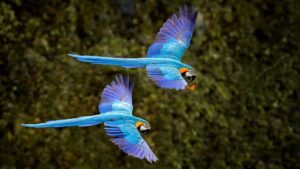
The Acacia Forest at the confluence of the two Niles has long been a strategic haven and a vital resting point for millions of migratory birds. The destruction and devastation of this historic environmental landmark due to war constitutes an environmental crime amounting to an international catastrophe, severing a vital lifeline for migratory birds.
Required action: The immediate formulation of a national strategic project, supported by field studies, and its submission to global environmental funding bodies and the CMS Secretariat, with the aim of mobilizing financial and technical resources for the forest’s reforestation and rehabilitation, restoring its pivotal role as a safe international flyway for wildlife.
Establishing Safe Corridors as Part of Reconstruction Plans:
As any national recovery and infrastructure rehabilitation efforts commence, the rule of environmental law must be enforced. Reconstruction projects (roads, dams, and large-scale agricultural projects) must not encroach upon remaining migration routes. The design of “environmental corridors” must be mandated to guarantee the free movement of wildlife herds, in accordance with the coordinated action plans adopted by the conference. Deterrent laws must be exceptionally enforced, and emergency response teams and cross-border coordination with neighboring countries must be established to curb these crimes that deplete the national natural resources.
Combating the Shadow Economy and Wildlife Trafficking:
The current security vacuum has led to a dangerous escalation in poaching and the illegal trafficking of migratory species to finance the shadow economy. Joint wildlife protection units must be activated, and border smuggling routes must be secured through strict cooperation with neighboring countries and Interpol to implement the protection provisions added to the new annexes of the Convention.
Securing Compensatory Funding for Environmental War Damage:
Building upon the ministerial declarations issued by the conference to demand the allocation of urgent grant funds to “conflict zones.” Strong concept notes must be prepared documenting the extent of the damage inflicted on Sudanese habitats and obligating the international community to its responsibilities in supporting conservation programs and repairing the extensive damage.
Conserving wildlife and restoring its habitats at this historical juncture is a security and economic imperative on par with rebuilding cities. This action is a sovereign imperative to ensure the survival of the natural resources upon which life in Sudan depends, and a practical affirmation of the state’s ability to fulfill its international obligations as a responsible custodian of global migration routes.