
Forced Retirement of Scientists… Academic Suicide by Administrative Decision!
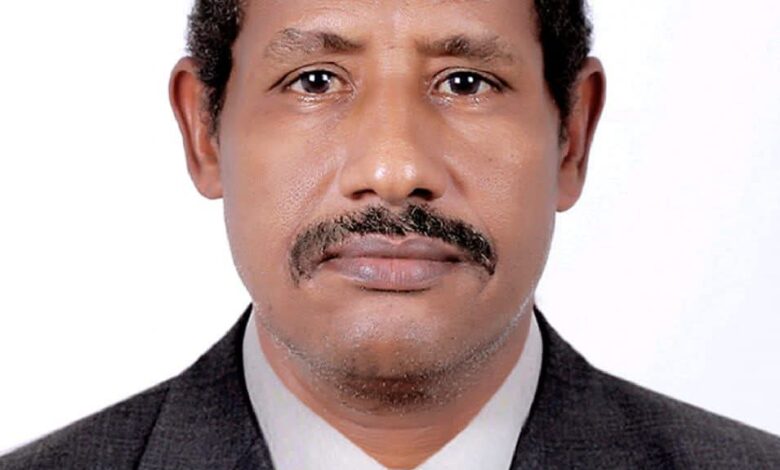
By: Abubakr Mutasim Mohammed
While nations are racing to extend the working life of their scientists, higher education in Sudan faces the dilemma of brain drain. University professors are forced to retire at the age of 65, the age at which academic maturity reaches its peak and their experience transforms into an invaluable intellectual asset.
The age of 65 is not a measure of inability to contribute; rather, it is the age of culmination, not farewell. It is a strategic mistake to confine a university professor’s contribution to a timetable of forced retirement.
In academia, the rules differ entirely from those of administrative professions.
Years of service are considered an irreplaceable accumulation of knowledge. Every day a professor spends in classrooms and on campus adds to their intellectual capital. Upon their departure, the university loses the compass that guides scientific research and curriculum development. Undoubtedly, a professor who has witnessed curriculum transformations and generational shifts is best equipped to create an education that keeps pace with modern developments. This is because they don’t simply transmit texts, but rather summaries crafted with years of patience. This makes the retirement law a losing proposition.
As soon as a professor reaches the required age and retires, the educational field and students lose an academic asset that could have filled significant scientific gaps.
The forced retirement of university professors creates several gaps, including the absence of a reference point to impart the accumulated knowledge of years of service to the minds of the new generation, and the loss of experience coupled with cumulative expertise in teaching methods that meet the aspirations of young generations and keep pace with their evolving capabilities. This necessitates that those in charge of the state and the Ministry of Higher Education reformulate the laws regulating service and move towards abolishing the forced retirement of intellectuals and establishing flexible contractual arrangements (such as for professors). Full-time professors with full benefits allow them to continue their careers as long as they are able to contribute. The essence of the solution lies in how to do justice to intellectual talent and save education.
Instead of forced retirement, we propose transforming the relationship with university professors into a merit-based and sustainable contract based on a consultative transformation. This involves shifting professors from routine teaching staff to national consultants for curriculum development and quality assurance. A full-time professorship system should be established, allowing them to continue supervising doctoral and master’s theses (to bridge the generation gap) with full financial benefits. Their expertise should be utilized in addressing national crises (agriculture, water, economy), with impact assessments based on merit rather than age. Scientific productivity and the ability to contribute should be the criteria for retention, not birth date.
University professors are an inexhaustible resource, and investing in them is a safeguard for Sudan’s intellectual sovereignty. Investing in and transforming these intellectuals into consultants for curriculum development and quality assurance ensures the continued flow of the educational process, enriched with accumulated experience, for future generations.
University professors are like candles that burn brighter the more they burn; they are a treasure that never retires but grows ever more valuable and profound. Losing them through administrative decisions is a waste of the nation’s intellectual sovereignty. University professors are the backbone of the nation. Any genuine renaissance in Sudan, and viewing it as a national treasure, requires the courage to revise legislation.
The human mind does not retire, experience cannot be bought, and quality is the product of years of practice and fruitful contribution that ends only when the capacity for creativity ceases. Age, however, is merely a number in the civil registry.