
Redefining the War in Sudan
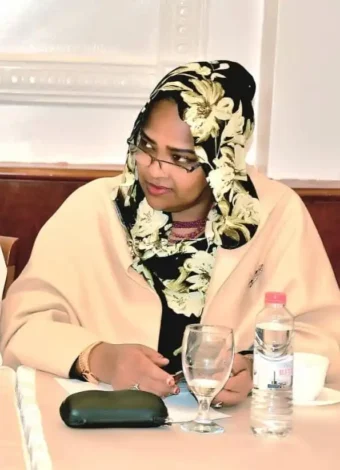
By: Maryam Al-Hindi
Since the outbreak of war in Sudan on April 15, 2023, this confrontation has transcended the traditional military conflict between two sides. It has transformed into a multidimensional war, carrying meanings that extend beyond weapons to encompass values, destiny, and identity.
It is a war between good and evil, between sovereignty and subservience, between dignity and submission, between peace that preserves honor and surrender that imposes defeat. It is also a confrontation between the people of the land and their adherence to their right to their homeland, and forces accused of seeking to reshape the demographic and population landscape, in a scenario reminiscent of displacement and substitution.
This war is not isolated from its international context; it is also a conflict with external ambitions that covet the country’s resources and wealth and seek to influence its national decisions.
Furthermore, it is a battle between deeply rooted moral values and attempts to obliterate or replace them, between truth and falsehood, and between transparency and the political hypocrisy that hides behind slogans of freedom and democracy.
In this context, there is no room for neutrality or ambiguous stances. Major national issues cannot tolerate hesitation or compromise; rather, they demand clarity of vision and steadfastness, especially when sovereignty, dignity, and values are at stake.
However, advocating for this principled position does not contradict the belief in the necessity of achieving a just, comprehensive, and sustainable peace—a peace that preserves the state and safeguards society, and is based on clear foundations that do not diminish sovereignty or compromise fundamental principles.
Maintaining the unity of Sudan and the independence of its national decision-making remains a non-negotiable priority. The Sudanese people are capable of correcting their course and building their state without the need for external tutelage, regardless of its label, especially given international experiences that have demonstrated its limited integrity and effectiveness.
The desired peace rests on a number of essential foundations: national unity, preserving the sovereignty and prestige of the state, the cohesion of state institutions, foremost among them the armed forces, and the rejection of any external interference that affects national decision-making or directs its course. Aligning with the armed forces, led by Lieutenant General Abdul Fattah al-Burhan, is a choice stemming from a vision that considers this stage an existential battle, not merely a passing political disagreement.
Conversely, some political forces and their alliances are waging their battle from a different angle, one that—in this view—is linked to a struggle for power and influence, which contradicts the essence of the national struggle as it is seen here.
Ultimately, what is happening in Sudan is a true test of the meaning of the state, its future, and the extent to which its people are able to protect their identity and sovereignty in a world where attempts to reshape states according to the interests of major powers are accelerating.