
Orbits: Towards Upgrading Technical and Vocational Education

By: Muawad Mustafa Rashid
Sudan is passing through a pivotal stage in its history.
Following the victories achieved by the armed forces on the battlefields, a battle no less important than the armed struggle has emerged: the battle for reconstruction and rebuilding.
The war has left widespread destruction of infrastructure, burdened the economy, and increased unemployment rates among young people.
The undeniable truth is that reconstruction is not based on theoretical degrees alone, but on skilled hands and practical skills. Today, Sudan needs builders to construct schools and hospitals, carpenters to repair doors and windows, electricians to restore electricity to the cities, blacksmiths to restart factories, and farmers to revive agricultural production. These are the true soldiers in the battle for reconstruction.
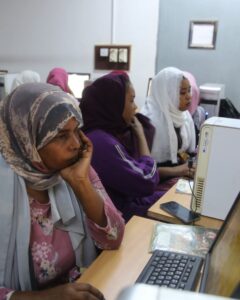
However, reality reveals a deep crisis. Technical education has been marginalized for decades in favor of the unplanned expansion of academic education, resulting in thousands of young people graduating with theoretical degrees at a time when the market needs practical skills. This gap has become one of the greatest challenges facing the reconstruction process.
Therefore, revitalizing technical and vocational education is no longer an option, but an urgent national necessity requiring a clear vision and practical steps. Foremost among these steps is the establishment of modern vocational training and rehabilitation centers in various states, dedicated to training young people in basic crafts and industries such as electricity, mechanics, carpentry, blacksmithing, and modern agricultural technologies. These centers can offer intensive training programs that contribute to rapidly preparing young people to participate in the reconstruction process.
Furthermore, encouraging investment in technical and vocational education is a crucial step in building a robust training system. This can be achieved by opening the field to the private sector and business leaders to establish technical institutes and schools, while providing government incentives and facilities. This will create a genuine partnership linking education to the demands of the labor market and production.
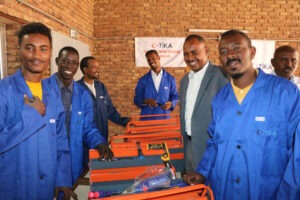
It is also important to utilize the energies of the young people who answered the call of duty in the battle to defend the nation by integrating them into vocational training and rehabilitation programs after the completion of their military service. These young people possess a spirit of discipline and commitment, and they can be transformed into a significant productive force contributing to the reconstruction of cities and villages, participating in construction, agricultural, and industrial projects, becoming soldiers in the battle for building and development just as they were soldiers in the battle to defend the homeland.
Equally important is the role of media, digital platforms, and websites in changing the prevailing perception of technical education. Today, media institutions must adopt awareness campaigns and specialized programs that highlight the importance of technical and vocational professions and showcase success stories in this field, so that society understands that skilled workers are a fundamental pillar in economic revival and nation-building.
Sudan today has a historic opportunity to transform the effects of war into a launching pad for genuine renaissance. This will only be achieved if we invest in building a productive individual capable of work and innovation. Technical education is not merely an educational path; it is a productive force, an economic engine, and a lifeline for a nation striving to rise from the rubble.