
Statement on Sudanese-Egyptian Talks
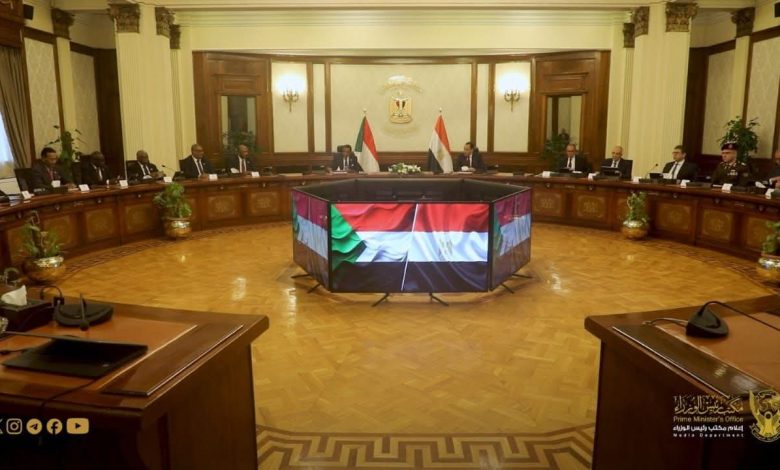
An expanded official meeting was held at the Egyptian Cabinet headquarters on Thursday between a Sudanese delegation headed by Prime Minister Kamil Idris and an Egyptian government delegation headed by Prime Minister Mostafa Madbouly, with the participation of several ministers and officials from both sides. The two sides issued a joint statement following the meeting, the text of which follows:
Within the framework of the deep-rooted fraternal and historical relations between the Arab Republic of Egypt and the Republic of Sudan, Dr. Mostafa Madbouly, Prime Minister of the Arab Republic of Egypt, and Professor Kamil Idris, Prime Minister of the Transitional Government of the Republic of Sudan, met in Cairo on February 26, 2026, to discuss ways to strengthen bilateral relations and consult on regional issues of common interest.
In this regard, both sides emphasized the depth of the ties that bind the two brotherly peoples and the keenness of the leadership of both countries to enhance cooperation and continuous coordination in a way that achieves common interests and supports the paths of security, stability, and development. The two sides also discussed developments in Sudan, with Egypt reaffirming the red lines set by the Egyptian political leadership and its full support for the unity of Sudan, its territorial integrity, and its national institutions.
The Egyptian side emphasized its firm and unwavering support for the legitimate institutions of the Sudanese state, including the Transitional Sovereignty Council headed by Lieutenant General Abdul Fattah al-Burhan, the government of Professor Kamil Idris, and the Sudanese Armed Forces, considering them essential pillars for preserving the state’s integrity and unity, safeguarding the Sudanese people’s resources, and restoring security and stability.
Both sides affirmed the importance of enabling Sudanese state institutions to fully assume their roles and supporting the Sudanese government’s efforts to extend state authority, restore normalcy, and alleviate the humanitarian suffering endured by the Sudanese people as a result of the imposed war.
Kamil Idris expressed his appreciation for Egypt’s supportive stances towards Sudan on various levels, within the framework of the fraternal relations of the Nile Valley that bind the two brotherly countries.
The two sides also discussed prospects for developing bilateral relations and affirmed their commitment to strengthening economic, trade, and investment cooperation, as well as supporting reconstruction efforts in Sudan as a national priority and an urgent necessity for achieving sustainable stability. In this context, the Egyptian side expressed its interest in supporting reconstruction projects throughout Sudan, particularly in the infrastructure, electricity, and water sectors. It also expressed its readiness to share its distinguished expertise in construction, infrastructure rehabilitation, and development, emphasizing the importance of activating the joint working group on Sudan’s reconstruction and expediting the development of its implementation programs.
The two sides also agreed on the importance of holding upcoming bilateral meetings, including the Egyptian-Sudanese Business Forum, joint committee meetings, the exchange of official and technical delegations, and the transfer of development expertise, all in service of the interests of both countries and their brotherly peoples.
The two sides also discussed developments concerning the River Nile, agreeing on the necessity of protecting the water security of Egypt and Sudan as downstream Nile countries. They agreed to work together to preserve the full water rights and uses of both countries in accordance with the 1959 Nile Waters Agreement and international law. Furthermore, they agreed on the need for complete coordination and alignment of positions in all regional and international forums concerned with River Nile issues.
Both sides emphasized the inseparable link between Sudanese and Egyptian water security, reaffirming their categorical rejection of any unilateral actions or movements in the Eastern Nile Basin that could harm the water interests of downstream countries or threaten their water security. They stressed that such actions, which violate international law, constitute a persistent source of instability in the region. They called upon Ethiopia to abandon its unilateral approach and adhere to the rules of international law governing the utilization of shared rivers, particularly the principles of prior notification, consultation, non-harm, and consensus, in order to preserve the sustainability of this great river, which should be a source of cooperation and prosperity for all.
The two countries also affirmed their continued joint commitment to working with fellow Nile Basin countries to restore consensus within the Nile Basin Initiative (NBI) framework, in consultation with non-party states to the Cooperative Framework Agreement (CFA).
In this context, both countries welcomed the results achieved thus far in the consultative process, particularly the report submitted by the NBI Initiative’s subcommittee, which recommended continuing consultations to reach solutions, including the possibility of amending or adding protocols to the Framework Agreement to address the concerns of all Nile Basin countries. Both countries expressed their rejection of any unilateral attempts to obstruct the consultative process, which contradicts the shared desire of all Nile Basin countries to cooperate and achieve mutual benefit within a framework of solidarity and fraternity.
The two sides agreed to continue coordination and consultation through the Permanent Joint Technical Commission for Nile Waters, established under the 1959 Agreement, as the body responsible for studying and formulating a unified position adopted by both countries on matters related to the Nile waters. They emphasized the importance of ensuring the Commission’s regular operation and providing it with technical and logistical support to enable it to fulfill its tasks effectively in order to protect the shared interests of the two downstream Nile Basin countries.
The Sudanese side expressed its appreciation for the support and care provided by Egypt to the Sudanese community in Egypt and for the continuation of this valued support. Based on the enduring and fraternal ties between the Arab Republic of Egypt and the Republic of Sudan, the Prime Ministers of the two brotherly countries agreed to enhance joint cooperation and further utilize Egyptian expertise in the fields of reconstruction, construction, and building. The Egyptian side welcomed the Sudanese side’s request to benefit from Egyptian experience in establishing a new administrative city, drawing on Egypt’s distinguished experience in this area, and supporting reconstruction efforts in the sisterly Republic of Sudan. Both sides also agreed to continue close coordination and consultation at various levels, strengthen mutual visits, and intensify cooperation on issues of common interest, reflecting the strategic relations and deep ties between the two countries and serving the aspirations of the two brotherly peoples for security, stability, and sustainable development.