
How Volker Türk Redefined the War in Sudan
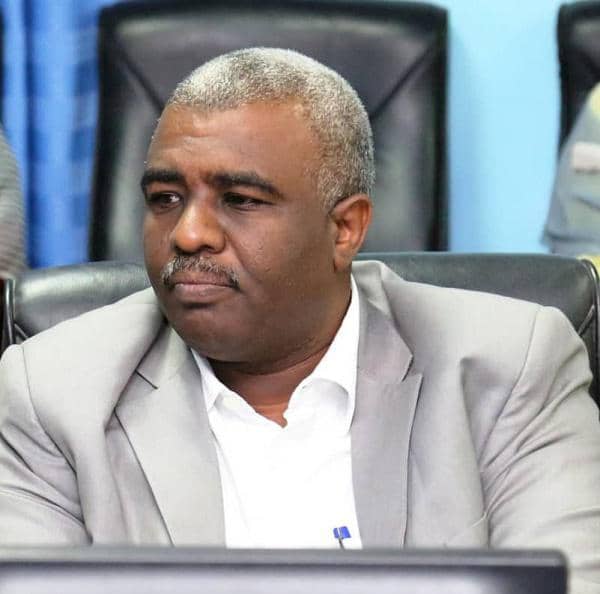
By: Dr Ibrahim Shaglawi
A war over resources, not a conflict of generals—that is how the visit of the United Nations High Commissioner for Human Rights, Volker Türk, to Sudan came to be framed.
As the first UN official who did not hesitate to define what is happening as “a proxy war over the control of natural resources,” the man confronted the world with a truth that had long been deliberately ignored or evasively avoided: what is unfolding is not internal chaos, but a fully fledged political and moral tragedy, with its own actors, networks of interests, and borders open to the region and the world.
Politically, the visit reshuffled the balance of the international narrative on Sudan. When the High Commissioner says that the international community “pretends to care but does little,” he places regional and international powers before a direct responsibility—especially those whose silence or narrow calculations have contributed to prolonging the war.
Describing the conflict as a proxy war strikes at the core of known regional interests, pulling them out of the shadows and from behind the façade of the Quartet into the arena of moral accountability, even if these parties later attempt to shield themselves with rhetoric about de-escalation, peace, or political solutions detached from justice.
Politically, this visit represents a break from the state of regional and international blackmail that has long besieged the Sudanese file. The High Commissioner did not arrive burdened with ambiguous positions or appeasing calculations; rather, he came with a firm legal and moral discourse, grounded in field documentation of violations by the Rapid Support Forces militia, described as “shocking atrocities amounting to war crimes.” These include ethnically motivated executions, mass rape, arbitrary detentions, and the targeting of medical and educational facilities. Most importantly, he linked these crimes to their political and economic context—one that certain internal political forces claiming neutrality have sought to leap over.
Türk’s visit to Al-Afda camp in the Northern State, and his meeting with displaced persons fleeing Darfur and Kordofan, carries profound significance. It brings human rights discourse down from the tower of statements to the ground of living testimony, placing official narratives and accusations—especially attempts to cast doubt on reports of rape and violations—under the microscope of direct observation. Here, the body becomes a document, and the suffering of the displaced transforms into political testimony that cannot be circumvented.
Conversely, the Sudanese government, through a statement by the Ministry of Foreign Affairs regarding the visit, affirmed the priority of human rights and its readiness to cooperate with UN mechanisms, whether through the National Committee for Investigating Crimes and Violations or through civilian protection mechanisms. This convergence between the government’s discourse and that of the High Commissioner is not devoid of political calculations, but it reflects an official awareness that Sudan’s battle today is not only military, but also a battle of narrative, legitimacy, and accountability.
Türk’s meeting with representatives of civil society in Port Sudan carries another equally important message: despite exhaustion and scarce resources, civil society remains a moral and political actor, and an indispensable partner in protecting the human rights memory and preventing the erasure of crimes. The Commissioner’s praise for the role of these groups restores to the voices of national civilians at a time when the sounds of weapons dominate.
As for the objection raised by the Rapid Support Forces militia, represented by the Foundational Sudan Alliance, to the course of the visit and its confinement to specific areas, it reveals the depth of its political and legal predicament more than it reflects a genuine concern for inclusivity of the narrative.
Preemptive questioning of the visit’s outcomes and accusations that it listened to “one narrative” are inseparable from fears that the field testimonies of displaced persons and survivors may turn into UN documents of indictment that are difficult to deny or dilute later. Here, the battle shifts from the battlefield to the field of narrative, where the militia seeks to undermine the credibility of the witness rather than confront the accusation.
Regionally and internationally, the visit is expected to have a cumulative impact that goes beyond immediate reactions. Some powers will handle it cautiously and seek to contain its outcomes, fearing exposure of their roles or threats to their interests, while other parties will find in Türk’s discourse a legal and moral support to strengthen the path of accountability—whether through the Human Rights Council or through sanctions targeting individuals and networks that fuel the war machine.
More importantly, the visit contributes to reshaping the international perception of the conflict—from an ambiguous internal dispute to a war over resources and systematic violations—gradually weakening the narrative of “neutrality between the parties” and strengthening alignment with the rights of victims.
According to The Truth Unveiled, Volker Türk’s visit represents a decisive moment in the trajectory of the Sudanese war—a moment in which the conflict is redefined by the scale of international law and human ethics, not by calculations of power. This visit may not stop the war, but it raises the cost of its continuation without accountability, placing Sudan, the region, and the world before two clear choices: either a fragile peace managed through crises and postponing justice, or a difficult path that acknowledges the truth and paves the way for sustainable peace.