
Health Minister, Dr. Haitham Mohamed Ibrahim Speaks out on the country’s health Situation
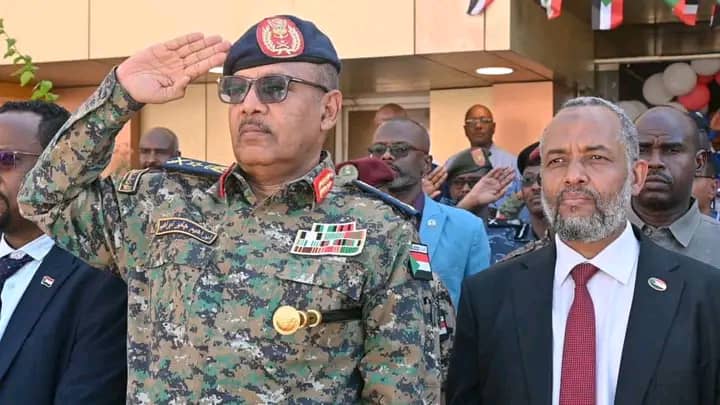
The health situation is witnessing significant improvement and the stability of health services
Interviewed by: Haffiya Elyas
Sudan’s health situation during and after the war is catastrophic, with the healthcare system near collapse due to destroyed infrastructure (over 70% of hospitals non-functional), frequent attacks on facilities and staff, and massive displacement. This has led to widespread disease outbreaks (cholera, measles, malaria, dengue), severe malnutrition, reversed health gains, and profound mental health trauma, with millions lacking basic care and facing a surge in preventable illnesses and deaths amidst extreme insecurity and resource shortages. The Citizen interviewed the Federal Health Minister, Dr. Haitham Mohamed Ibrahim, to highlight the health situation, the destruction of hospitals, rising epidemics, and efforts to rebuild the healthcare system amid war , What did he say…?
Q: Tell us about the health situation in the country during the war and now?
The health situation in the country during the second week of 2026 showed that cholera cases were recorded in limited numbers in North Kordofan, with some suspected cases in the Long Camp, while no deaths were recorded during the last few weeks. Reports indicated an increase in dengue infection rates in the four states of Khartoum, Gezira, the Nile River, and White Nile, which also recorded malaria infections. Additionally, the state of Gezira continues to report infections with hepatitis E, especially in Um al-Qura, while measles cases have been noted in White Nile and South Darfur states, with no deaths reported.
The Cabinet has directed that the malaria control program be made one of the priorities of the state, with an integrated project to combat malaria over five years, in addition to the preparation of a national strategy to combat disease vectors.
The health situation is witnessing significant improvement and the stability of health services during the current period.
The state has committed to providing free treatment within the 2026 plan, and the availability of essential medicines is at 70%. The Ministry has early sensing mechanisms and forecasts for the probabilities of epidemic outbreaks, especially malaria and dengue fever, in addition to the current decline in epidemiological curves, thanks to the efforts made. However, funding remains the biggest challenge, despite the Ministry’s success in attracting global support.
The Ministry of Health is following up on the epidemiological situation, with reports indicating that no cholera cases have been recorded so far. The Ministry is working to implement the protection program against health threats in coordination with the relevant authorities, especially the water, nutrition, and environment sectors, through a number of joint committees.
Forty health projects have been launched, including ten priority projects, such as pharmaceutical security, solar energy, and digital transformation, in addition to developing a plan to decentralize health services through the establishment of medical cities, and that 7 pharmaceutical factories are currently operating in the country.
Q: To what extent has the Ministry of Health been able to reach and vaccinate children, especially in Darfur and Kordofan?
After overcoming access difficulties, looting, and vandalism, Sudan’s expanded immunization program has been restored thanks to intensive vaccination campaigns and partnerships with various organizations, which have led to increased vaccination rates and a decrease in epidemic rates, despite continued challenges in conflict zones.
We had out-of-reach areas in the first year, where the number of children reached one million unfed children due to difficulties in access, in addition to the complete looting and destruction of supply chains. Therefore, we had to work on restoring the expanded immunization program in the first year. The work started very well; we implemented a special zero-dose campaign in cooperation with the partners Save the Children and UNICEF, along with the cadres of the Ministry of Health, where more than 30 organizations operating in Darfur .
Rates of diphtheria epidemics were numerous, and specific cases of measles were recorded in most states and then in specific states. The Red Zone, South Kordofan, and West Kordofan have become difficult to reach due to the war operations. If the situation continues for a long time, I expect problems facing these children.
Q/ Tell us about the situation in Darfur and the efforts to rehabilitate and provide health and humanitarian supplies after the end of the war in cooperation with the concerned organizations and ministries ?
There are reports on the situation in Darfur and Kordofan states sent by the state health ministers, especially in the field of emergencies and epidemics. There are about 500 sites that send reports on epidemics from Darfur through various organizations. We have the initial information that exists, and then it remains according to the priorities and the current situation. Our interventions focus on urgent health and humanitarian responses.
We have rehabilitated basic emergency departments and the supply system in the states through Save the Children, UNICEF, and WHO.
Q / What is the availability of medicines in Sudan?
Sudan is facing challenges in the field of the availability of medicines, but the pharmaceutical situation today is much better than it was in the past. Twenty-six pharmaceutical factories have gone out of service because they were fully centralized within Khartoum state.
The first year of the war witnessed the dependence on pharmaceutical supplies largely on grants and donations, before state support moved in later, especially with regard to essential and life-saving medicines. During this time, there were partial interruptions in some medicines, such as dialysis solutions and some vital cancer drugs.
By 2025, the availability of essential medicines has been fully stabilized, as more than 700 pharmaceutical items have been secured without any interruption, whether for chronic diseases or life-saving medicines,” he said, pointing out that a number of pharmaceutical factories have returned to work, with the full operation of more than three factories completed, and four more factories ready to start production in the coming days.
Pharmaceutical imports through companies are very active and have increased more than fivefold compared to the first year of the war. This has positively reflected on the abundance of medicines, which has improved from less than 30 to 40 percent at the beginning of the crisis to more than 70 percent now for emergency and essential medicines.
The Sudanese Ministry of Finance, represented by the National Fund for Medical Supplies, is exerting great efforts in this context, in addition to the important role of supporters and donors from brotherly and friendly countries, as well as the contributions of United Nations agencies and international funds in securing vaccines and vaccinations.
Q/ Has the Ministry of Health covered all health facilities and hospitals and provided services in them?
We have not yet covered all health institutions, and a number of centers are partially destroyed, which has led to their non-operation at the moment. All the work at this stage is rehabilitative. In addition, the state budget in 2026 cannot fund the construction of any new facility but focuses on rehabilitating existing health facilities. Furthermore, if the war does not stop, organizations will not begin to establish any health facility. He stressed that the Khojalab center must be built before rehabilitation can begin.
Q/ What is the Ministry’s plan after the end of the period of employment from the supporting bodies to continue its health services?
Any rehabilitation has two stages: the rehabilitation stage of the institution, which includes the provision of devices and equipment and the return of health cadres, and the operation stage, which is the fixed operation. This involves health insurance, as it is the entity that purchases the service and facilitates the flow of funds, in addition to federal support for hospitals until the health insurance system is restored and the health service in medical institutions stabilizes.
The organizations work in medical employment in institutions, which lasts from 3 to 6 months, and it is part of the vision to ensure stability for the state, allowing for future operations. However, if this is not accomplished, there will be pressure on citizens to bear all medical expenses. The plan developed by the ministry is to work on restoring the health insurance system until the situation stabilizes.
Q/Are there statistics on deaths during the war?
There are no statistics from the Ministry of Health, the army, or the media. There was a follow-up by the Ministry of Health for its health cadres, which included statistics on the health facilities treating the injured. However, there was no complete statistic on the deaths that occurred during the war. It is important to note that all those counted were more than 120 cadres, and this was at the beginning of the war. However, this follow-up stopped after the militia took over the health institutions.