
AU: Joint Strategic Investment Task Force with the United States to Support Infrastructure and Economic Growth
The United States and the African Union Commission announced on Wednesday an agreement to establish a joint strategic investment task force focused primarily on infrastructure and investment.
According to a joint statement, the task force aims to strengthen and develop economic partnerships between the United States and Africa, contributing to job creation, inclusive prosperity, and enhanced economic security in both North America and the African continent.
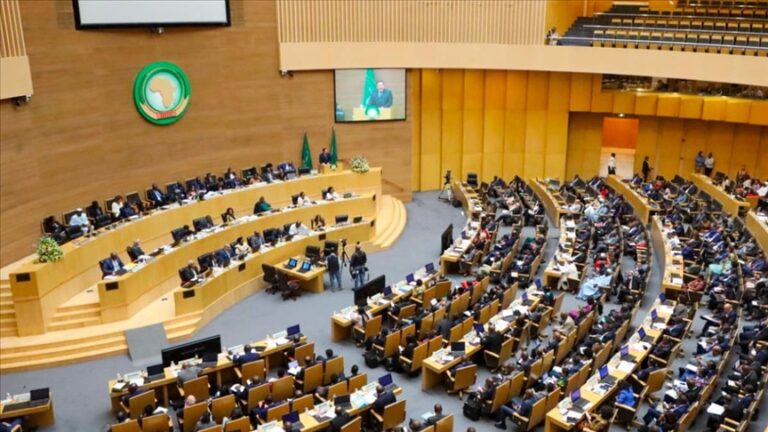
The announcement followed a high-level meeting held Wednesday at the African Union headquarters in Addis Ababa between U.S. Deputy Secretary of State Christopher Landau and African Union Commission Chairperson Moussa Faki Mahamat.
The meeting emphasized the importance of U.S.-African relations through the African Union as a key platform, along with their shared commitment to protecting peace and security on the African continent.
The statement noted that both sides agreed that economic growth is the true foundation for a peaceful and prosperous Africa, stressing that developing high-quality infrastructure that facilitates trade and economic activity is a crucial step toward achieving this.
This approach is based on the African Union’s Agenda 2063 and its key priorities, including the Programme for Infrastructure Development in Africa (PIDA) and its priority corridors, as well as the African Continental Free Trade Area (AfCFTA).
In this context, the United States and the African Union Commission agreed to establish this strategic team as a vital platform for senior officials and technical experts from the U.S. government and the Commission.
It will focus on identifying and promoting opportunities for U.S. private sector investment and participation in African Union-backed infrastructure projects and related initiatives, in a way that serves the shared strategic priorities of the United States, the African Union, its member states, and African regional economic communities.
This includes enabling trade and logistics infrastructure, as well as supporting digital transformation across the continent.
The statement highlighted the anticipated benefits, saying, “These investments will leverage the African Union’s authority to convene meetings and its extensive experience, along with U.S. capital and innovative financing tools, to develop mineral and commodity supply chains, transportation corridors, energy grids, and regulatory frameworks, as well as to increase trade, secure digital infrastructure, and improve health security, thereby enhancing the security and prosperity of both Americans and Africans.”
The statement concluded by strongly affirming that “as the United States and Africa pursue sustainable and profitable investments to achieve economic goals rather than relying on foreign aid, the Joint Strategic Working Group will provide a solid foundation for strategic economic cooperation that will grow and shape the future of the relationship between the two sides for years to come.”