
Sudan’s Silent Genocide: How the RSF Is Turning Violence into a System of Rule
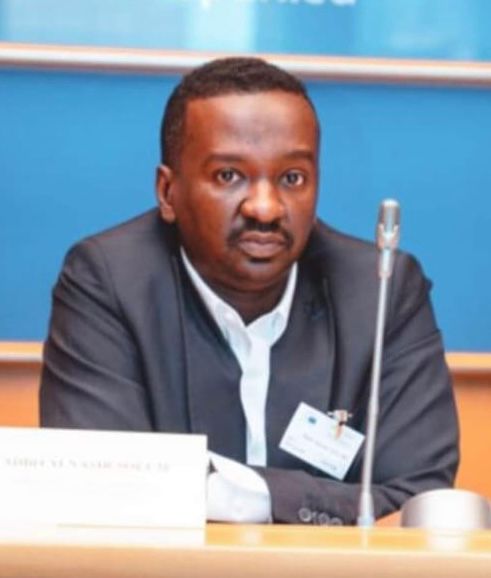
By: Dr. Abdelnasser Selum Hamed
Violence in Sudan has evolved from episodic conflict into a deliberate governing strategy—one that the Rapid Support Forces (RSF) now employ to reorder society, dismantle state institutions, and impose a parallel political order sustained entirely through fear. Since April 2023, the RSF has shifted from waging war against the Sudanese state to attempting to replace it. Their system of control is not improvised; it is structured, intentional, and anchored in mechanisms of coercion, extraction, demographic engineering, and the systematic destruction of civic life. What is unfolding across Sudan is not a conventional war but an experiment in rule through terror, where violence becomes the primary language of authority and the central determinant of survival. In this sense, Sudan is witnessing not merely the collapse of governance but the construction of an alternative, predatory model of rule.
The humanitarian collapse accompanying this transformation is unprecedented in the country’s modern history. According to the 2025 Humanitarian Response Plan, more than 30 million Sudanese—over half the population—now depend on external assistance. Between 13 and 14 million people have been displaced, including nearly 9 million internally displaced persons and close to 4 million refugees, making Sudan the world’s largest displacement crisis. Yet the most tragic statistic remains uncounted: the number of people killed. Independent field assessments, drawing from evidence of mass killings in West Darfur, urban combat fatalities in Khartoum, starvation-related deaths under siege, and bodies buried in unmarked graves, estimate that more than 250,000 Sudanese may have died since the conflict began. This figure is not an official count—none exists—but it reflects the collapse of monitoring and documentation during a war fought largely out of sight. The absence of formal data is not merely an administrative gap; it is part of the violence itself. The dead vanish into unrecorded graves, leaving families without closure and communities without testimony.
Khartoum was the first arena in which the RSF’s governing model appeared in full form. The city’s fragmentation was not a byproduct of conflict—it was deliberate. Entire neighborhoods were forcibly cleared. RSF units seized homes and converted them into military bases, command centers, detention sites, and logistical hubs. Public institutions were stripped of assets, hospitals occupied or forced to shut down, and essential services collapsed. A war economy emerged, governed not by the state but by RSF commanders who controlled movement, fuel, water, food, and protection. Checkpoints multiplied, each functioning as an extortion point. Civilians navigating Khartoum learned that survival required constant negotiation with armed men who monopolized the means of life. What looked like chaos from afar was, in fact, the implementation of a new order—one in which authority is asserted not through law but through arbitrary force.
In West Darfur, the violence adopted an even more destructive and explicitly genocidal logic. Attacks on the Masalit community in Geneina, Kreinik, Misterei, and Serba followed patterns that left little doubt about intent. Residents were hunted down, communities burned, elders executed, women assaulted, and entire urban districts systematically erased. These acts mirrored earlier genocides in Rwanda and Bosnia, where civilians were targeted not for strategic military reasons but to permanently alter the demographic and social landscape. The operations in West Darfur were not designed to control populations but to eliminate them. Survivors were pushed into displacement corridors under fire, forced to cross borders into Chad. The violence reflects an ideological project that treats territory as something to be cleansed and reconfigured. Through these actions, the RSF has advanced a vision of dominance that relies on demographic transformation as a strategic objective.
El Fasher became the most complete manifestation of this governing logic—an experiment in starvation-as-rule. For months, the city endured a suffocating siege designed to dismantle its resilience from within. Supply routes were cut, humanitarian convoys blocked, and displacement camps such as Zamzam shelled and raided. Water infrastructure was destroyed, markets crippled, and hospitals repeatedly targeted. At the peak of the siege, civilians risked being shot merely for attempting to carry food or water into the city. Starvation—explicitly defined as a war crime under the Rome Statute—became a method of political control. The aim was not simply to win a battle but to erode the will of an entire population, reducing survival to a daily struggle dictated by RSF discretion.
On 26 October 2025, El Fasher fell completely to the RSF. What followed was not stabilization but a cascading intensification of violence. The city was carved into zones overseen by RSF commanders who exercised authority through arbitrary force. Within hours, door-to-door raids targeted young men. Extrajudicial executions were reported across multiple districts. Dozens of civilians were abducted; many remain missing. Reports of sexual violence surged. Hospitals were seized, trapping the wounded inside without access to medical care. Checkpoints multiplied, turning El Fasher into a maze of controlled micro-territories where every movement carried risk. Looting was institutionalized, not chaotic: markets were reorganized to channel profits to RSF units; warehouses were emptied in coordinated operations; and public buildings became operational hubs. Enforced disappearances—particularly of males aged fourteen to forty—created a constant atmosphere of fear, reinforced by accounts of torture in unofficial detention facilities.
Humanitarian and human-rights organizations now describe El Fasher as a city governed entirely through coercion and deprivation. The abuses documented—starvation, sexual violence, execution, torture, looting, forced displacement—meet the thresholds of war crimes and crimes against humanity. Yet the most disturbing aspect is not only the brutality but its degree of organization. Violence is not incidental; it is administrative. The RSF has transformed violence into a governing tool, structuring daily life around scarcity, unpredictability, and the ever-present threat of harm. Their rule is not episodic; it is systemic, intentional, and designed to endure.
A similar pattern has emerged in Nyala and Zalingei, where RSF forces have reengineered urban life around surveillance, extortion, and militarized control of commerce. Checkpoints restrict movement and enforce payment; trade routes are blocked, forcing dependence on RSF-managed supply chains; and markets operate under commanders who dictate prices and extract revenue. Disappearances of traders, activists, and young men have become increasingly common. Child recruitment deepens the militarization of civilian spaces. These practices dismantle longstanding social and economic networks, replacing them with structures tied directly to RSF authority. Civilians move through these cities performing constant calculations of risk—where to walk, whom to trust, what roads to avoid. The RSF has transformed cities into fragmented zones of unpredictable danger.
Sexual violence functions as another central instrument of governance. Survivors describe patterns of assault intended not only to inflict harm but to terrorize entire communities, fracture social bonds, and impose long-term psychological trauma. Rape becomes a mechanism for asserting dominance, breaking resistance, and inflicting communal humiliation. These acts mirror patterns documented in conflicts where sexual violence has been deployed strategically—such as Bosnia, eastern Congo, and South Sudan—where control over women’s bodies became instrumental in reshaping political and demographic realities. In Sudan, sexual violence operates as an extension of the RSF’s political project: a means of governing through fear.
The RSF’s system of rule is reinforced by regional networks that supply fighters, weapons, and financing. Gold-smuggling routes link Darfur to Libya, Chad, and the UAE, generating revenue that strengthens RSF autonomy. Cross-border recruitment from Chad, Niger, and the Central African Republic expands its manpower. Arms flows deepen its logistical resilience. These networks embed Sudan’s conflict within a broader regional political economy of violence—one that enriches external actors while devastating Sudanese society. The RSF is not operating in isolation; it is integrated into a transnational ecosystem that sustains conflict at relatively low cost to its external backers.
Taken together, these dynamics reveal a vision of Sudan fundamentally incompatible with the country’s historical understanding of statehood. The RSF’s objective is not merely to overpower its military opponent; it is to replace Sudan’s political architecture with a fragmented system of violent governance rooted in coercion rather than legitimacy. Sudan is no longer fighting only to end a war; it is fighting to defend the very idea of the state—an idea that weakens each day the RSF tightens its structure of fear. If the international community fails to understand the RSF’s strategy as a project of political transformation rather than merely a military campaign, the consequences will be catastrophic and enduring.
Every delay in accountability allows this architecture of violence to harden. As institutions erode further and civilians adapt to rule defined by threat rather than law, the RSF’s model risks becoming entrenched. If unchallenged, Sudan may transition from a collapsing state into a space where the state is not merely weakened but replaced entirely by a predatory system of governance—one designed not to serve its population but to dominate, extract from, and terrorize it. What is at stake is not simply territorial control but the survival of Sudan as a political community.
Sudan now stands at a crossroads more perilous than any moment in its modern history. What is unfolding is not simply the advance of an armed group, nor the collapse of a political order, but the attempted construction of a new reality in which violence becomes the organizing logic of society itself. El Fasher exposed this truth with brutal clarity: a city starved into submission, carved into zones of fear, and reshaped through the systematic targeting of civilians. If the RSF’s model of rule is allowed to consolidate—rooted in coercion, demographic engineering, and the dismantling of civic life—Sudan risks entering a future in which the state is not merely weakened but replaced by a structure designed to dominate rather than govern, extract rather than sustain, and terrorize rather than protect.
What is at stake is therefore not only the fate of one city or one region, but the future of Sudan as a political community capable of defending the dignity, security, and existence of its people. Without accountability, without a decisive interruption of the RSF’s architecture of violence, the country will continue to slide toward a form of governance where atrocity becomes routine and survival depends solely on navigating the whims of armed actors. The world has witnessed the warning signs—genocide in Darfur, starvation in El Fasher, and the engineered collapse of Khartoum. To ignore them is to accept that Sudan’s future will be shaped not by law or legitimacy, but by the most predatory force on the battlefield. The question now is whether Sudanese society—and the international system—will allow this project of violent rule to harden, or whether they will confront it before an entire nation is lost to a silence enforced by fear.