
Arab League Announces Support for the Peace Initiative Proposed by Kamil Idris
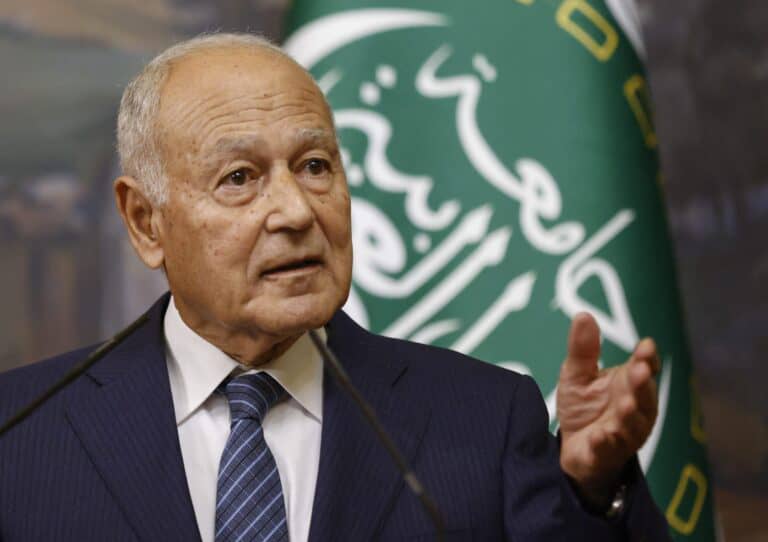
The Secretary-General of the League of Arab States, Ahmed Aboul Gheit, called yesterday (Tuesday) for a positive response to the Sudanese peace initiative, which includes a comprehensive ceasefire, stressing that it is “a serious and viable framework for resolving the crisis in Sudan.”
Aboul Gheit expressed his welcome for the speech delivered by the Prime Minister of the Sudanese Transitional Government, Kamil Idris, before the UN Security Council, and the comprehensive peace initiative it contained. He stated that the initiative reflects a deep understanding of the gravity of the crisis facing Sudan and a clear commitment to ending the war, stopping the bloodshed, and alleviating the humanitarian suffering endured by the Sudanese people, while preserving Sudan’s unity, sovereignty, and territorial integrity, according to a statement from the Arab League.
During his address to the UN Security Council, Idris presented an initiative that includes a comprehensive ceasefire under the supervision of the United Nations, the African Union, and the Arab League, along with guarantees for the disarmament of what he termed “rebel militias.”
Advisor Jamal Rushdi, the official spokesperson for the Secretary-General of the League of Arab States, affirmed that “the Arab League values the highly significant political, humanitarian, and security messages contained in the initiative and considers it a serious and constructive framework that warrants positive engagement. It is a key component of any comprehensive solution and of the efforts aimed at ending the armed conflict and restoring security and stability in Sudan, thus preventing any threat to its national unity or the disintegration of its social fabric.”
Rushdi added that the Arab League “supports the initiative’s call for a comprehensive ceasefire, the protection of civilians, ensuring the flow of humanitarian aid, addressing the situation of internally displaced persons and refugees, disarmament, and the implementation of disarmament, demobilization, and reintegration programs. This will pave the way for rebuilding trust, repairing the social fabric, and strengthening the foundations of a unified Sudanese state.”
The League stressed “the importance of engaging with the initiative’s proposals for confidence-building measures—political, security, economic, and social—based on the principles of transitional justice, reparations, national reconciliation, and inclusivity, thereby strengthening the prospects for sustainable peace, preserving the unity of society and the state, and preventing a resurgence of violence or a slide toward division or fragmentation.”
The spokesperson expressed “the Arab League’s welcome of the initiative’s emphasis on national ownership of the political process and on launching a comprehensive Sudanese-Sudanese dialogue during the transitional period, leading to a national consensus on governance and administration within the framework of a unified Sudan, culminating in free and fair elections under international supervision.”