
The voluntary return project is ongoing, and 131,483 citizens have returned, Interview
Interview by: Mohammed Babiker
Introduction
The voluntary return project for thousands of Sudanese from Egypt to Sudan, adopted by the Defense Industries System, comes as a step that translates the victories of the Sudanese Armed Forces on the ground into tangible progress in the reconstruction process.
With the improvement in security conditions and the army’s regaining control over vast areas, this initiative serves as a practical message that the state and its military institutions are not content with achieving military victory alone, but are working to translate it into stability and a return to normalcy.
The Defense Industries System describes its participation in this project as stemming from its national duty and social responsibility to support stability and build peace. The initiative was launched under the direct patronage of Head of the Sovereignty Council and Commander-in-Chief of the Armed Forces, Lieutenant General Abdul Fattah al-Burhan, and with close follow-up from the Director General of the Defense Industries System, Lieutenant General Mirghani Idris Suleiman. This underscores the strategic importance the leadership places on the return of citizens.
Many returning citizens believe that the voluntary return project has helped alleviate their burdens and reflects the victories achieved by the Sudanese army against the Rapid Support Forces (RSF) militia. The return of displaced persons to their homes, which have been secured, is tangible proof of the success of military operations in establishing security.
The initiative also contributes to building bridges of trust between citizens and state institutions, confirming that their efforts are not limited to combat but extend to reconstruction and the mending of the social fabric.
The return of thousands of displaced Sudanese to their homes represents a powerful message of hope during wartime and a new beginning for families who have suffered from the war and the difficult conditions of displacement.
The role of the Defense Industries System is not limited to organizing free return trips but extends to monitoring the needs of returnees and providing technical support for preparing public facilities and rebuilding institutions damaged by the war.
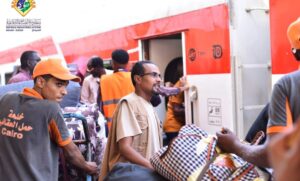
The voluntary return project began with the operation of passenger buses. As the number of those wishing to return increased, coordination was established with Egyptian authorities to allocate weekly trains departing from Cairo to Aswan. This initiative was widely welcomed, and the Defense Industries System covered all travel costs, including fees and meals, to ease the burden on citizens.
The voluntary return project received widespread praise from various sectors of the public and official institutions. It was considered a model of integration between state institutions and society in addressing the effects of war and strengthening national cohesion.
Ultimately, the voluntary return project represents not only a logistical solution to the displacement problem but also carries profound political and moral significance. It links military progress on the ground with the return to normalcy, emphasizing that the ultimate goal is to restore stability to the nation and ensure the safe return of its citizens to their homes, thus paving the way for reconstruction and the revival of life throughout Sudan.
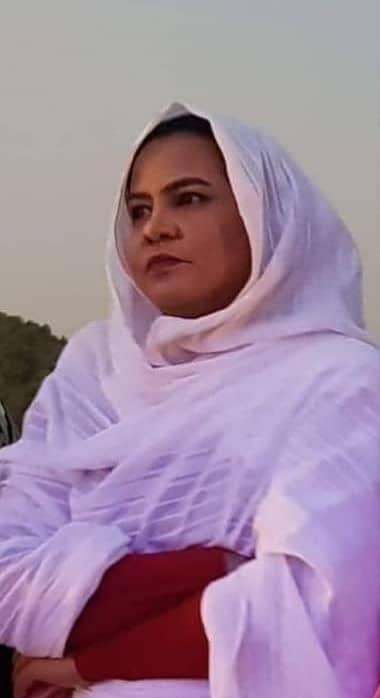
We met with Ms Omaima Abdullah, Director of the Voluntary Return Project at the Defense Industries System, Cairo Office, and presented her with these points about this major project. She answered with ease, and here is the interview:
Q: Voluntary return is the foundation of reconstruction and development, and a manifestation of true victory. Has the Voluntary Return Project achieved this?
A: Perhaps the most important reason for this war is the demographic change in Sudan, meaning the alteration of the Sudanese composition in terms of numbers, distribution, and geographical spread, the replanning of cities with new inhabitants, and the replacement of Sudanese with mercenaries from inside and outside Sudan. Therefore, the Voluntary Return Project represents a second victory after the battlefield victories; indeed, it complements and reinforces the victories of the Sudanese Armed Forces. Secondly, the return of Sudanese in such large numbers and with regular flights contributes significantly to the stability of society, the return of normal life, the reopening of homes, the revival of markets, and the reopening of shops. This means breathing new life into cities, which are populated by people, the very essence of life. In the villages, small and large agricultural projects have resumed, and markets, electricity, and water services have been restored. The return of citizens to the villages of Al-Jazirah State has been completed through the Voluntary Return Project.
Thirdly, the Voluntary Return Project represents an excellent opportunity for returning Sudanese to contribute to rebuilding and developing their country with the new skills, knowledge, experiences, and ideas they have acquired, which can contribute to Sudan’s development and stimulate the local economy. This is certainly accompanied by growing confidence among Sudanese in their country’s future, which contributes to the country’s recovery from the effects of this devastating war.
Q: The Defense Industries System, as part of the Voluntary Return Project, introduced the train for transporting returnees from Egypt.What is the impact of this?
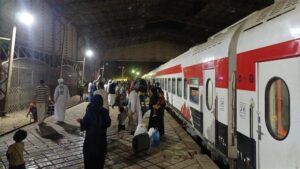
A: The train holds a special place in Sudanese memory, representing a significant symbol in Sudanese culture and history. Train stations played a vital role in connecting diverse communities, fostering acquaintance, and facilitating the exchange of customs. It was one of the most important means of transportation in the past. Many have sung its praises, and it has inspired numerous poets. Therefore, we see the train as a beautiful and comfortable return for Sudanese people, a way to mend their sorrows by reliving cherished memories of bygone eras. Practically speaking, each train carries over a thousand passengers, offering ease and comfort, as well as speed. Those departing from Ramses Station arrive in Halfa the following day. It has had a profound impact on the joy of those returning and has greatly facilitated their travel. Sincere thanks are due to the unlimited logistical support provided by the government of the Arab Republic of Egypt.
Q: How many people have been repatriated to Sudan so far?
A: Number of returnees under the project as of November 6, 2025:
131,483 citizens. Welcome back up to trip number 32 by train and bus, including the Cairo and Aswan groups.
Q: What categories have been repatriated so far and their areas of origin?
A: Large number of active and retired members of the security forces and their families, retired police officers, retired intelligence officers, and retired members of the armed forces have been repatriated, representing approximately 15% of the total returnees.
Also, a large number of people from various sectors of the state (the judiciary, lawyers, civil aviation, and teachers) were repatriated, representing approximately 11% of the returnees.
2,550 stranded individuals from Alexandria were also repatriated. The largest share of repatriation efforts, however, were for citizens from various regions across Sudan, representing approximately 72% of the total returnees.
Q: What areas were targeted by the repatriation flights?
A:The flights targeted the return of citizens to vital and influential areas, particularly those from which residents had been forcibly displaced. The details are as follows:
Khartoum State: Return areas included various localities and neighborhoods:
East Nile (Soba East, Al-Ailafoun, Umm Dom, Umm Duwan Ban, Al-Shariq, Al-Jereif East, Al-Banbounab)
Bahri (Shambat, Al-Halfaya, Hilla Hamad, Hilla Khujali, Al-Sababi, Al-Dunaqla, Al-Mazad, Al-Shaabiya, Al-Darushab, Al-Samrab)
Khartoum Locality (Tuti, Al-Sahafa, Imtidad Nasser and Burri, Al-Jereif West)
Umm Omdurman (Al-Jumou’iya, Al-Fatihah, and Northern Rural areas)
Jabal Awliya (Al-Kalakla, Al-Aqliyin, Al-Shajara, Abu Adam, and Al-Azouzab).
Gezira State: This included Wad Madani, Al-Hasahisa, Al-Masoudiya, Al-Sariha, Al-Hilaliya, and Al-Nuba.
White Nile State (Al-Qutayna and Al-Duwaym).
River Nile State (Atbara, Ad-Damir, and Al-Jabalab).
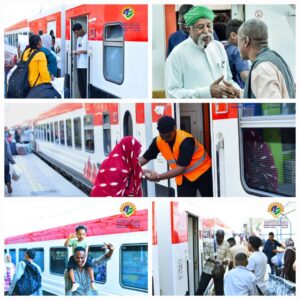
Additionally, transportation capacity was increased and methods were diversified to reduce waiting times for the return of displaced persons.
The cooperation and significant attention from the authorities and relevant bodies in the Arab Republic of Egypt greatly facilitated the committee’s work.
A: Does the organization have a project to repatriate all Sudanese citizens currently in Egypt (who wish to return)?
A: The voluntary return project began last April and is still ongoing, utilizing various means of transportation.
Although we have switched to trains, buses are still operating.
Q: Have there been any obstacles encountered by the voluntary return project?
A: In my opinion, the voluntary return project is an exceptional project and one of the greatest social responsibility projects we have undertaken recently. The Defense Industries System
Therefore, even the obstacles we faced were negligible, thanks be to God.
Q: Can the voluntary return project to Sudan be extended to other countries with Sudanese citizens?
A: I am only concerned with the committee in the Arab Republic of Egypt. However, there are committees in other countries, such as the committee in the Sultanate of Oman, which successfully transported all those wishing to return to Sudan.
Q: Can the national carrier, Sudan Airways, be involved in transporting Sudanese citizens from more distant countries in the same way (free of charge)?
A: Yes, there was a pilot program, which I believe was successful, implemented by the committee in the Sultanate of Oman, for the return of Sudanese citizens from Oman to Sudan.