
The New Gezira Project… An Opportunity for Engineering Development
By: Dr. Ibrahim Shaglawi
Prime Minister Dr. Kamal Idris’s decision to return the irrigation administration to the Gezira Project is a highly significant political and developmental step, carrying indicators of a transformation that could reorganize the house of Sudanese agriculture. The decision reflects a new approach to development management and the rebuilding of state institutions after years of war.
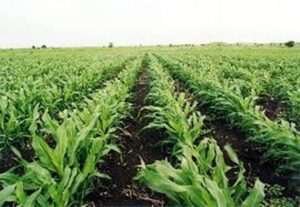
The Gezira Project was established in 1925 following the completion of the Sennar Dam and the infrastructure for land irrigation. The project extends over an estimated area of 2.2 million feddans and was once one of the pillars of the national economy and tools of food security, before it declined in recent decades due to weak management and the deterioration of infrastructure, especially in the irrigation system which forms the backbone of production.
Under Resolution No. (173), a committee was formed to oversee the handover between the Ministry of Irrigation and the Gezira Project Administration in preparation for the establishment of an independent irrigation management unit.
This model may draw inspiration from the experience of the “Merowe Dam Implementation Unit,” which later evolved into the “Dams Implementation Unit,” proving that political will combined with technical competence can create a genuine developmental breakthrough. The unit accomplished major national projects, including the Merowe Dam, Upper Atbara, the Roseires Dam heightening, as well as several roads, bridges, airports, and water-harvesting projects across rural Sudan, known collectively as “accompanying development.”
It appears that the current government seeks to replicate this successful model in the agricultural sector, responding to the country’s urgent need to secure food and revive an economy affected by war. However, it is crucial that the plan be implemented with full authority, detailed policies, and procedures that go beyond bureaucratic constraints and enhance operational efficiency.
The return of irrigation management to the project represents a shift of decision-making power from the center to the field, aligning with the philosophy of decentralization that Dr. Idris has long advocated—aiming to empower farmers and production institutions to manage their technical and financial affairs with greater independence and responsibility.
The decision also opens the door to harnessing new water opportunities offered by Ethiopia’s Grand Renaissance Dam, which ensures stable water levels enabling multiple agricultural cycles throughout the year—thus strengthening consistent agricultural planning. This makes the Gezira Project a potentially replicable model for other major agricultural schemes, helping shape a modern, institutional national vision.
The political dimension behind the decision reveals that the Gezira Project is no longer merely an agricultural venture but rather a laboratory for engineering development and a new vision for managing national resources. Yet, the success of this experiment depends on the ability of the current or upcoming administration to combine managerial innovation at all levels with the utilization of accumulated experience, launching a real productive renaissance capable of transforming the balance of the agricultural economy.
Despite farmers’ welcoming response, the decision sparked wide debate within agricultural and engineering circles. Farmers considered it a victory for their will after years of bureaucratic complications, while some irrigation experts saw it as a hasty move that could expose the project to technical and administrative challenges beyond its current capacity.
History repeats itself: irrigation management was previously transferred to the project in 2010, but later returned to the Ministry of Irrigation after structural problems emerged that affected performance.
Today, the same scene is unfolding under more fragile national and production conditions. The Ministry of Irrigation, which had been merged into the Ministry of Agriculture, has suffered from clear administrative vacuum as a result of flawed measures during Prime Minister Dr. Abdalla Hamdok’s tenure, which undermined its structural and professional coherence.
Meanwhile, the Gezira Project itself faces major financial and administrative challenges, making the success of the experiment dependent on the leadership’s ability to implement a genuine reform plan, in addition to forming active partnerships with supporting institutions and donors. This is alongside the importance of introducing modern technologies, improving farmers’ competencies, and obligating them to follow production policies in accordance with agricultural seasons.
However, the success of the decision will not be guaranteed unless the human resource base is renewed by no less than 60%, allowing new energy capable of innovation, while retaining 40% of the experienced workforce to ensure a smooth transfer of technical and historical knowledge. This balance represents the decisive element in the birth of a new Gezira Project.
Politically, the decision is interpreted within the government’s broader orientation toward activating the concept of “developmental reform,” based on dismantling centralization and redistributing executive powers to regions and major projects. Yet, this direction faces challenges that must be addressed, including weak coordination, overlapping authorities, and the absence of a unified technical vision for managing water resources.
While the Prime Minister is betting on local efficiency within the project, others warn that lack of funding or weak technical capacities could reproduce past failures in a new form—especially since the project’s administration does not yet have full control over the Sennar Dam or the main canals, which remain under federal irrigation supervision.
The decision cannot be separated from the broader political context in which the government operates—an effort to rebuild trust between the state and citizens after years of war. The Gezira Project is not merely an economic initiative; it is a symbol of stability and national production. Any step toward its revival therefore represents a political and economic message par excellence, reflecting the state’s seriousness in revitalizing the economy through the agricultural gateway.
According to #Face_of_Truth, the Gezira Project now stands as a historic opportunity to re-engineer development in Sudan and transform a traditional national project into a modern model for agricultural management and production processes. It offers promising employment opportunities for youth, enhances agriculture’s contribution to GDP, and restores confidence in the state’s ability to manage its resources efficiently.
Yet, the most crucial question remains: does the transfer of irrigation management to the Gezira Project constitute a genuine reformative step toward a productive renaissance—or merely a recycled failure under a new guise? Let us wait and see.