
Sky News… The Intersection of Media and Crime
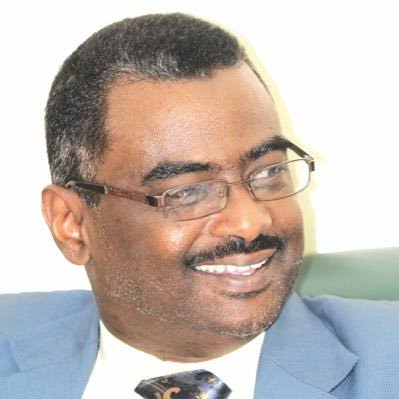
By: Dr. Yassir Mahjoub Elhussein
In a world increasingly turbulent and torn apart by conflicts and wars, the media retains a crucial role in conveying facts, exposing violations, and raising global awareness. However, this noble role does not, under any circumstances, justify violating international law or infringing upon the sovereignty of states.
Respect for state sovereignty is not a selective choice, but a legal and moral obligation that cannot be compromised under any media pretext.
Any presence or activity of militias or armed groups operating outside the authority of the state does not grant them legitimacy, nor does it authorize them to issue permits or make arrangements within the state’s territory. International law recognizes only the sovereignty of the state, represented by its legitimate authority, and any dealings with these groups constitute a clear violation of the law and an unacceptable collusion with criminal entities.
Therefore, any media outlet entering areas controlled by the rebel Rapid Support Forces militia without the permission of the legitimate Sudanese government constitutes a blatant violation of national sovereignty and an attack on international law.
This behavior cannot be justified as journalistic or field work; rather, it is indirect participation in undermining the state and normalization with a militia group that has committed horrific crimes against civilians, as confirmed by United Nations reports documenting grave violations perpetrated by this militia against the population in Darfur and other regions.
This raises a pressing question: Could a channel like Sky News or any other media outlet enter areas controlled by the Mafia in Italy and consider it legitimate simply because it obtained “permission” from the Mafia? Of course not. It would be seen as complicit with a criminal organization and participating in the violation of state sovereignty and prestige. How, then, can such behavior be accepted in Sudan or any other country suffering the ravages of rebellion and chaos?
The problem does not lie in the principle of field reporting from conflict zones, but rather in the nature and content of this reporting. Did the channel obtain a “permission” from a rebel militia, as the facts on the ground clearly demonstrate? Did the channel provide coverage that whitewashed the Rapid Support Forces militia without mentioning its crimes, as evidenced by its reports broadcast from inside El Fasher, a city still replenished with bloodshed? This constitutes the essence of media complicity. What is required is responsible and balanced coverage that reveals the whole truth, not the presentation of an outlaw’s narrative as if it were a legitimate viewpoint.
International humanitarian law is clear in its position: journalists are protected civilians, as long as they maintain their independence and do not participate in hostilities. However, when the media becomes a tool in the hands of militias to justify their crimes or exonerate their actions, it loses its moral and legal immunity and transforms from a conveyor of truth into an accomplice in injustice.
The sovereignty of states is a fundamental principle enshrined in the UN Charter, and violating it is not merely a legal transgression, but a blow to the very foundation of the international order based on respect for borders and legitimate authorities. It is regrettable that some media outlets have begun to disregard this principle, using freedom of reporting or the pursuit of journalistic scoops as pretexts to justify their unauthorized entry into areas outside state control, as if granting rebels a media legitimacy they neither possess nor deserve.
In areas controlled by illegal groups, the media faces a true ethical test: either to adhere to international standards and professional independence, or to succumb to the quagmire of complicity and bias.
Respect for international law here is not merely a formality; it is a safeguard that protects journalists and preserves the credibility of the profession in the eyes of the world.
It is essential that media outlets adopt a clear code of conduct in conflict zones, guaranteeing respect for state sovereignty and the acquisition of legal permits only from legitimate authorities, while coordinating with international organizations to ensure the safety and credibility of their coverage.
Media outlets that ignore these principles do not expose chaos but rather contribute to its perpetuation, placing themselves among the complicit rather than the observers.
Ultimately, true journalism stands with the law and humanity, not with militias and those who defy legitimacy. Those who invoke neutrality to justify complicity betray their mission and undermine trust in the profession of journalism.
Respect for international law and the sovereignty of states is not a slogan to be invoked when convenient, but a moral obligation that brooks no compromise. Those who violate it must be unequivocally condemned, because tolerating violations of sovereignty is to tolerate the very essence of justice.