
Robotic Talk: Neolithic Period
By: Alaa Babiker
This time let’s talk about a different time. The starting of the time we know today. How it evolved over time, and why somehow we still live in the same point.
The Neolithic Period, also known as the New Stone Age, marks one of the most important turning points in human history. Lasting roughly from 10,000 BCE to 3,000 BCE, it was during this era that humans transitioned from a life of hunting and gathering to one of farming, settlement, and social organization. This period laid the foundation for civilization itself — shaping the way we live, work, and interact even today.
Before the Neolithic period, humans lived as nomads during the Paleolithic (Old Stone Age). They hunted wild animals, gathered fruits and plants, and moved constantly in search of food and shelter. Life was uncertain and entirely dependent on nature’s rhythm.
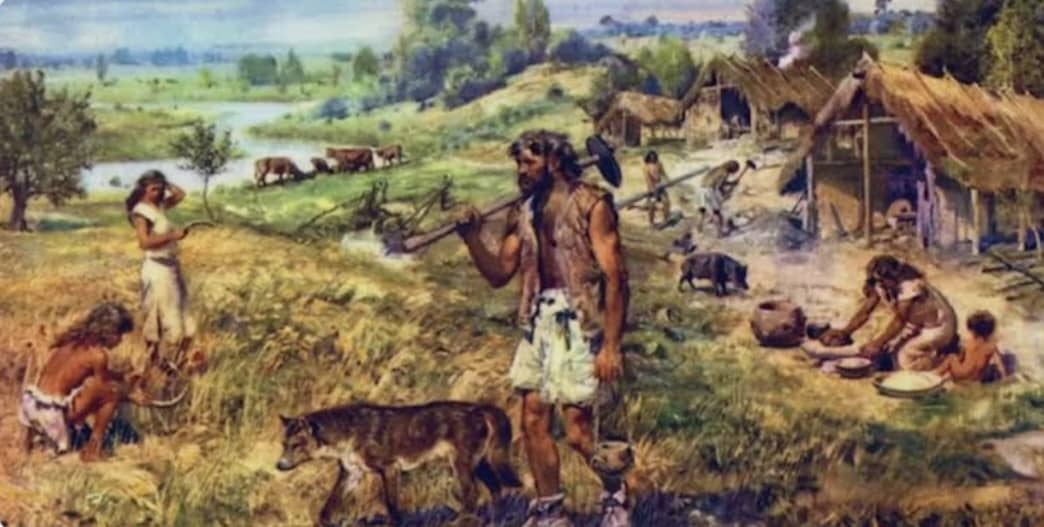
Then came a quiet but revolutionary change — the Agricultural Revolution. Humans discovered that they could plant seeds and domesticate animals for food. Instead of wandering endlessly, they began to settle in one place to cultivate crops such as wheat, barley, and rice. Animals like goats, sheep, and cattle were tamed to provide milk, meat, and labor.
This shift from food gathering to food production changed everything. For the first time, humans could store food, plan for the future, and support larger communities.
With agriculture came stability. People began to build permanent homes using mud, stone, and wood. Villages formed near rivers and fertile lands — places where crops could grow and animals could graze.
These villages represent the first examples of organized communities — with shared labor, social structures, and trade. People began to specialize in different crafts: pottery, weaving, and tool-making. This division of labor marked the beginning of social complexity.
As Neolithic communities grew, they began to exchange goods and skills. Some villages had fertile soil, while others had access to stones, salt, or metals. This led to the development of trade networks, connecting people across regions and encouraging cooperation.
Such interactions spread ideas, technologies, and cultural practices — an early form of globalization. Through trade, societies learned from one another and advanced more rapidly.
In many early Neolithic societies, women played a crucial role. They likely discovered the principles of agriculture and plant cultivation. As communities settled, roles began to shift — with men often managing livestock and land, while women engaged in farming, pottery, and family care.
By the end of the Neolithic period, humans had created the basic structures of civilization — farming, villages, trade, and governance. The discovery of metallurgy (the use of copper and bronze) around 3,000 BCE marked the transition into the Bronze Age, where tools and weapons became stronger, and societies grew into complex kingdoms and cities.
Every field we cultivate, every city we build, and every community we form can trace its roots back to this era. The Neolithic period reminds us that progress begins with curiosity, cooperation, and the courage to imagine a better way of life.
In Sudan, and after this crisis, the entire country – in one way or another – is reliving a Neolithic Period! With too many sectors being destroyed inside the Capital, we need to start building new buildings, new communities, and new homes for the thousands of people who migrated and fleed their homes over the past two years. May Allah help all Sudanese get back their normal lives back.