
Political Settlement and the Requirements of Justice..!
By: Dr. Ibrahim Shglawi
The Sudanese issue is currently facing international and regional pressures to push the Sudanese parties towards a submissive political settlement, with motives that vary and goals that contradict each other.
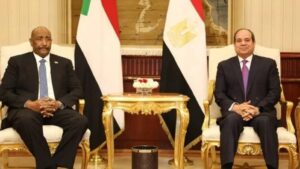
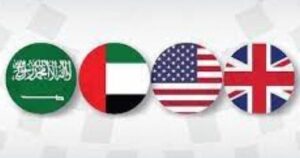
A meeting in Cairo on Thursday brought together Egyptian President Abdel Fattah el-Sisi and Donald Trump’s senior advisor, Massad Boulos, to discuss ways to end the war in Sudan, which is entering its third year. The meeting took place within the context of the international quartet, which includes the United States, Saudi Arabia, Egypt, and the UAE.
It became clear from official statements that Cairo is seeking to solidify its position as a regional guarantor for any upcoming settlement, considering what it has accomplished in Gaza, while Washington seeks to reset the regional balances through the Sudanese file.
In contrast, the Italian capital, Rome, witnessed a parallel diplomatic move, involving Saudi Arabia, Chad, and the United States, in an attempt to formulate a joint vision for Sudan’s future. It thus appears that the quartet is working on imposing a settlement that would recreate the previous framework agreement but in a modified form, aiming to integrate the Rapid Support Forces militia into the political scene, after disarming it, and recycling it as part of the transitional phase.
However, this approach, which ignores the bloody reality of the war and attempts to legitimize a militia involved in widespread violations, clashes with the internal will that still bets on restoring the state, not sharing it.
It is known that the vision promoted by the quartet does not stem from the interests of the Sudanese people but rather reflects the interests of the parties involved in this temporary alliance, especially the UAE, which Sudanese people hold directly responsible for supporting the Rapid Support Forces militia, whether financially or with arms, through channels that have been exposed.
Thus, its involvement in the settlement raises moral and political questions that cannot be overlooked, especially in light of documented reports of war crimes and crimes against humanity committed in areas such as Geneina, Nyala, Khartoum, Wad al-Nour, and Al-Hilaliya.
Above all, the biggest dilemma arises: what about the rights of millions of Sudanese who have lost their homes, properties, been forced to flee, or faced death, rape, and starvation? Any settlement that does not place justice at its core, nor guarantees accountability for the perpetrators, will be nothing but a political charade that entrenches impunity and accumulates the reasons for the next explosion.
Compensation for damage is a legal and moral right, and both material and moral compensation cannot be separated from any genuine peace process.
Amid the political committee’s focus on arrangements for a new transitional phase, including consultations with national forces in Port Sudan, information is leaking about a plan seeking to re-engineer the political scene through new mechanisms, beginning with a ceasefire and ending with transitional arrangements under the auspices of the quartet. However, fears are growing that this process will reproduce the same old tools of destruction and betrayal, through formal reassurances that entrench opportunistic rule and marginalize those who paid the price.
If a national settlement can be built, it is one that places the honorable fighters who defended the state at the heart of the equation, not those who traded it, tore it apart, or sought to dismantle it. To have Sudan run from foreign capitals and impose ready-made roadmaps, modified between hotels and trenches, is not peace; it is an extension of the war with new tools. The people who paid the price of war will not accept making peace from the violation of blood, and establishing their authority on the bodies of the victims.
Sudanese people do not reject the idea of a settlement in itself, but they reject peace without justice, without national sovereignty, and without accountability. They reject that the country be run from abroad while they face death at home. They reject the reproduction of the same failed political elites that made the war, as if nothing had happened.
Perhaps the convening of the National Security and Defense Council, chaired by General Abdel Fattah al-Burhan, which held its meeting recently amid these repercussions, reveals that the country is at a crossroads between a settlement made by foreign powers and another built on the ground with the will of the Sudanese people. History is unforgiving, and peoples who do not make their destiny by their own will are peoples who do not deserve respect.
According to The Face of Truth, the matter is no longer simply about a ceasefire, but about the formulation of a national project capable of pulling the country out of dependence and subjugation, and establishing justice, while honoring those who defended the state, not rewarding those who sold it.