
Moscow Visit… Strengthening the Strategy of Interests
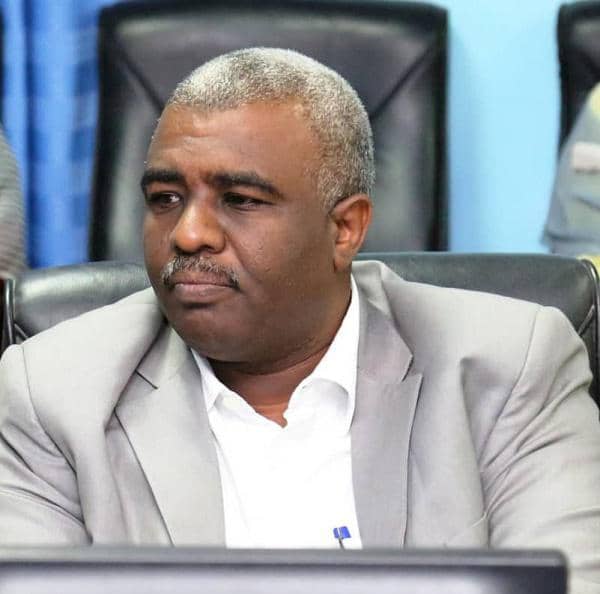
By: Dr. Ibrahim Shiglawi
Khartoum, which has entered its third year of war, stands at a crossroads. On one hand, it seeks to protect its national institutions and restore the state. On the other hand, it faces intense attempts to undermine its authority through ready-made political projects that try to impose artificial civil forces, while ignoring the reality of military control on the ground and the significant political forces.
Lieutenant General Abdul Fattah al-Burhan, Head of the Sovereign Council, is visiting the Russian capital, Moscow, to participate in the upcoming Russian-Arab summit in mid-October. Although the visit seems normal in the context of bilateral relations, it also carries strategic implications, especially as it comes at a delicate political moment characterized by pressing attempts to reshape the Sudanese scene from abroad, in a manner that ignores the internal balances and the interests of the national state.
In this context, Moscow appears to be a calculated step to reposition and expand the margin of options for the Sudanese leadership. It may also represent a deep understanding of the complex political reality, where Khartoum seeks to enhance its decision-making independence in a highly competitive and escalating international environment.
The general context of the visit highlights the complexity of the Sudanese situation on both regional and international levels. Sudan, engaged in an ongoing war with the externally-supported Rapid Support Forces militia, is simultaneously facing multiple pressures from Western powers, manifested in sanctions, freezing of aid, and political paths that overlook the nature of the conflict and the effectiveness of Sudanese armed forces on the ground, which are seeking to restore security.
The anticipated discussions between Burhan and President Vladimir Putin carry a strategic nature, as they are expected to include files that go beyond bilateral cooperation, addressing issues related to the balances of the Red Sea and the security of the Horn of Africa. Military cooperation, expanding Russian investments in mining, energy, agriculture, and infrastructure development are all important issues, but the Russian naval base file in Port Sudan remains the most prominent.
This project, which has sparked regional and international controversy, is seen as a sensitive leverage card that could reshape the balance of power in a highly strategic area. Russia, which has been seeking to cement its presence in the Red Sea for years, sees Sudan as a strategic gateway to the heart of Africa, especially amid the tightening of pressure on it in its traditional spheres of influence after the war in Ukraine.
On the other hand, Sudan needs a reliable international partner willing to offer economic and developmental support without preconditions. The West, in its dealings with Khartoum, still employs a “shameful extortion” approach, often ignoring many of the political and field realities on the ground.
Burhan’s visit also comes after the 8th session of the Sudanese-Russian ministerial committee, which saw the signing of several memoranda of understanding in the fields of transport, mining, infrastructure, energy, and banking. The increase in trade exchange between the two countries by 92% in one year clearly indicates that Moscow seeks to fill the void left by the retreat of Western partners, while Khartoum opens up to new options that ensure the continuation of the minimum level of economic and investment activity.
However, despite the opportunities, these moves are not without risks. Sudan cannot fully align with any international axis without bearing political and economic costs. Therefore, the real challenge lies in maintaining a cautious balance between the East and the West, between partnering with Moscow and maintaining reasonable communication with Washington and Europe.
Provoking the West could lead to further sanctions and possibly freeze reconstruction efforts, while an uncalculated embrace of Russia could drag Sudan into regional military alignments it cannot afford in its current situation.
Hence, what is required is not alignment, but a well-thought-out approach based on diversifying partnerships without dependence, and leveraging the country’s exceptional geopolitical position along one of the most important maritime passages in the world, thereby strengthening national decision-making independence and restoring Sudan’s role as a regional actor, not a subordinate within alliances.
There is no doubt that the situational alliance known as the “International Quartet” is closely monitoring this visit, as are the regional and international powers interested in the future of the Red Sea. Any resulting military or economic understandings could shuffle the cards and open the door to unexpected transformations.
Despite its challenges, Sudan still holds significant power cards that should not be underestimated: a strategic location of nearly 850 km on the Red Sea coast, immense natural resources, and a direct influence on the security of seven neighboring African countries, all of which suffer from severe security imbalances.
Khartoum can no longer afford to stand in the gray area. Western pressures are increasing, and the internal political vacuum is opening the door to external interventions. Therefore, Burhan’s visit to Moscow can be read as a multi-directional message: to the West that Sudan still has alternatives, to the interior that the leadership is still capable of acting effectively, and to the regional powers that Khartoum is not an open arena for extortion and violations.
Thus, the Moscow visit is a clear expression of an attempt to break the imposed political blockade and reposition itself in an increasingly polarized international arena. While the visit will not immediately resolve Sudan’s crisis, it represents a necessary step toward regaining the initiative and reaffirming the concept of national sovereignty, at a time when many parties are attempting to shape the country’s future away from the will of its people.
In the end, the bet will not only be on the results of the discussions but on the Sudanese leadership’s ability to translate these moves into real strategic gains, preserving Sudan’s balance in a volatile regional environment and enhancing its ability to build balanced partnerships that will pull it out of the tunnel of isolation, without making it hostage to any foreign axis or polarization..