
UHS Omdurman: Rebuilding Sudan’s Legacy of Medical Excellence
By Abdelrahman Mohamedzain Abdeldafe Ahmed (Magdi)
“The reopening of UHS Omdurman is a powerful symbol of resilience. The challenge is to transform it from a symbol into the engine of a national healthcare renaissance.”
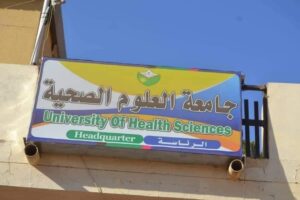
As Sudan labors to mend its profound wounds, a quiet yet profound professional awakening is taking shape. Amidst the rubble of conflict, the nation is being forced to re-examine its very foundations and rebuild them stronger. In this pivotal moment, the reopening of the University of Health Sciences (UHS) in Omdurman emerges not as a mere administrative act, but as a declaration of intent. It is a bet on Sudan’s greatest asset: the legendary skill and resilience of its healthcare professionals.
This legacy is not a myth. It is a history written in dedication and competence. From Dr. Babiker Badri’s pioneering midwifery school in Rufaa (1901) to the esteemed graduates of the University of Khartoum’s medical faculty, Sudan forged a global reputation for producing clinicians of exceptional skill and diagnostic acumen. This reputation became their passport to the world.
Today, more than 4,000 Sudanese doctors are registered with the UK’s General Medical Council (GMC, 2022), with thousands more serving across Ireland and the Gulf States (WHO EMRO, 2021). Within the NHS, in Saudi hospitals, and in Dubai’s clinics, they are not merely staff—they are often the backbone of clinical departments, a testament to the strength of their Sudanese training.
From Global Acclaim to a Stark Warning
This excellence was never an individual achievement; it was a symphony. For every surgeon, there was a scrub nurse anticipating every move, a midwife delivering generations with consummate skill, and a lab technician whose precision dictated life-saving decisions. This complete, interdependent ecosystem was Sudan’s true secret.
It led to moments of profound global recognition. The story of the successful operation on the daughter of the Japanese Emperor by Sudanese doctors in Khartoum, which resulted in the gift of Ibn Sina Hospital, stands as a powerful testament to an era where Sudanese medical excellence, achieved with modest means, commanded international respect and admiration.
Yet, reputations are fragile. A recent incident involving a Sudanese nurse in Saudi Arabia serves as a stark reminder: a legacy built over decades must be actively safeguarded through unwavering ethics and rigorous standards.
Learning from Institutional Failure
The peril of neglecting this duty is vividly illustrated by the contrast with the experience of the National Council for Technical and Technology Education. Its incarnation, the Sudan Technical University, was established with promise but gradually collapsed into an institution defined by uncontrolled admissions, outdated curricula, and poorly supervised practical training. The result has been graduates holding certificates but lacking competence, unable to meet local demands, let alone international standards.
This institutional failure is a cautionary tale. It demonstrates that Sudan cannot afford to treat medical education as a matter of paper qualifications. For UHS to succeed, it must categorically avoid these pitfalls of weak academic content and insufficient clinical preparation. It must instead cultivate the genuine, practical skills that restore global trust in the Sudanese medical brand.
A Bold Vision for 2040: Strategies for Success
The vision for UHS must be ambitious: to become a nexus where Sudanese expertise from around the world converges to heal the nation and serve the continent. Its 2040 vision—to be a globally recognized hub of advanced learning, innovative research, and ethical leadership—provides a clear blueprint. Bridging the gap between aspiration and reality requires immediate, pragmatic strategies:
1. Leverage the Diaspora Digitally: Create a “Digital Twin” of UHS. Sudanese experts in the UK, USA, Gulf, and Europe can deliver virtual lectures, mentor students, and conduct real-time grand rounds, ensuring knowledge transfer without borders.
2. Focus on Niche Excellence: Sudan possesses hard-earned expertise in trauma medicine, tropical diseases, and public health in crisis settings. By specializing in these areas, UHS can transform national tragedy into a unique competitive advantage.
3. Forge Strategic Alliances: The government must proactively pursue international accreditation for UHS degrees and create tangible incentives for the global Sudanese medical diaspora to return for teaching sabbaticals and curriculum development.
A Call for Decisive Leadership
This transformation will not happen by accident. It requires decisive action and visionary investment.
A Message to the Government of National Unity, Prime Minister Dr. Kamil Idris, and Minister of Health Dr. Haitham Mohammed Ibrahim:
Your leadership will be judged by the commitments you make in these difficult times. We urge you to:
· Declare UHS a National Strategic Project: Shield its funding from bureaucratic inertia and prioritize its digital and physical infrastructure above all else.
· Champion Diaspora Engagement Personally: Host a virtual summit with Sudanese medical leaders abroad. Present the UHS 2040 vision and formally invite them to co-build it.
· Empower Through Autonomy: Grant UHS the administrative flexibility to form international partnerships and fast-track curricula development to meet urgent national needs.
The reopening of UHS is the first spark. It is the seed of a phoenix. If nurtured with strategic investment, global partnership, and an unwavering commitment to quality, this institution can rise again—not just as a symbol of Sudanese resilience, but as a beacon of medical excellence for all of Africa.
If Sudanese doctors once carried our nation’s name across the world, let UHS Omdurman be the vessel that brings the world back to Sudan.
Author’s Note: The writer is a Sudanese professional RACHP Engineer and Activist in Occupational Health, Safety and Environment. For more, please contact: mr.zainrac@gmail.com
References:
· GMC (2022). The State of Medical Education and Practice in the UK.
· WHO EMRO (2021). Health Workforce in the Eastern Mediterranean Region.
· WHO (2020). Midwifery in Africa.
· World Bank (2019). Health Financing in Africa.