
The Grand Ethiopian Renaissance Dam… In the First Tests of Trust between Sudan and Ethiopia
By: Dr. Ibrahim Shaglawi
In the first practical test of the technical information exchange agreement between Sudan and Ethiopia signed in October 2022, the Sudanese Ministry of Irrigation, on Thursday, September 25, 2025, issued a high-risk warning through the Early Warning Unit regarding potential floods along the Nile River due to a sudden rise in the levels of the Blue Nile.
The warning covered several Sudanese states, including Khartoum, Sinnar, Al-Jazira, and White Nile, which revived critical questions about the Ethiopian side’s commitment to the principle of transparency and prior coordination in the management of the Grand Ethiopian Renaissance Dam (GERD).
From a technical standpoint, the GERD’s discharges exceeded 750 million cubic meters per day, according to statements from Sudanese water resources expert Dr. Othman Al-Tom Hamid, while the water inflow did not exceed 450 million cubic meters, which means an intensive withdrawal from the reservoir exceeding 300 million cubic meters per day.
This rapid withdrawal is likely linked to an attempt to reduce the storage level, particularly in the last two meters of the earthen dam, areas that may not have been wetted previously. This is considering that Ethiopia hastened the storage process, which was originally supposed to be completed by October 15, rather than the beginning of September 2025.
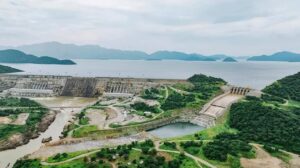
However, this explanation, despite its technical and engineering validity, does not eliminate legitimate concerns about the lack of real coordination with Sudan, as the large-scale discharge occurred without prior notification or actual coordination, which undermines the foundations of the information exchange agreement that established joint technical and ministerial committees between the two countries to ensure the safety of reservoirs and operations. The last meeting of these committees was in the first week of November 2024, and it was supposed to meet regularly every three months.
Nonetheless, it seems that Ethiopia is practicing what can be described as a “notification without consultation” policy, which puts Sudan in a situation where it loses the ability to take proactive measures to protect its vital facilities and its population distributed along the Blue Nile and the main Nile.
On the other hand, this development reflects the fragility of trust between the two parties, despite the existence of a written agreement that is supposed to regulate reporting, consultation, and daily data exchange regarding the operation and filling of the dam. This incident raises clear questions about the effectiveness of the daily information exchange mechanism, in addition to the seriousness of the Ethiopian side in fulfilling its technical commitments, away from political maneuvers.
There is also the question of Sudan’s ability to monitor and analyze the exchanged data independently, given the limited monitoring tools after the impact of the war and the absence of a regional control center.
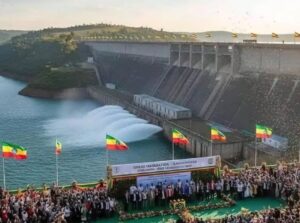
It is clear that the opening of the GERD on September 9, 2025, has introduced a new water equation in the region, which goes beyond the technical aspect to more complex political and security dimensions. Through the dam, Ethiopia now controls more than 80% of the Blue Nile’s water, giving it significant water influence over Sudan and Egypt, and placing both countries in an unprecedented water reality in terms of dependency and impact.
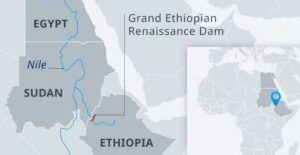
While Egypt chose the path of international escalation, Sudan opted for direct engagement through the information exchange agreement, driven by operational and security necessities related to its geographic proximity to the dam, especially its impact on the Rosiers Dam and the 20 million people on its banks.
Despite the theoretical correctness of this choice, the recent experience showed that “information exchange” cannot be considered a real gain unless it is accompanied by binding executive guarantees and a swift formation of joint monitoring mechanisms and their meetings.
In light of this reality, there is an urgent need to reassess the executive framework of the information exchange agreement, especially in light of the recent incident. Experts suggest that Sudan should include updated monitoring mechanisms in the agreement, including a joint control and operation room in Rosiers and the GERD. Additionally, mandatory timelines for prior notification before any significant change in discharges should be established, along with the direct participation of Sudanese experts in monitoring and measuring the dam’s flows.
Some experts also highlight the importance of exploiting the dam’s reality as a strategic opportunity by developing joint projects in the fields of energy, agriculture, and industry, which could transform the dam from a point of tension into a real developmental lever. However, this can only be achieved with a productive technical and political partnership based on transparency, coordination, and strategic interests, not on imposition and unilateral decision-making.
Ultimately, the recent flooding incident cannot be read in isolation from the broader political context of Sudanese-Ethiopian relations, where the bilateral agreement on the GERD remains an important step, but it is not sufficient on its own to guarantee Sudan’s water security, unless it is reinforced by a genuine will for transparent technical cooperation, and effective mechanisms for monitoring, coordination, and joint intervention. It is an early test not only for the agreement but for the entire approach Sudan has chosen to deal with one of the most sensitive issues in the Horn of Africa.
The information exchange agreement between Sudan and Ethiopia, according to #TheFaceOfTruth, is a necessary step, but it is insufficient unless supported by serious political will that balances strategic and political interests and operational transparency to ensure Sudan’s water security.
The recent flooding incident serves as an early test of the agreement’s effectiveness, and a wake-up call to reset the technical relationship and resume meetings between the two countries before the GERD turns from a developmental project into a permanent point of tension.