
Sudan is going through one of its most difficult stages, and victory is coming ، Interview
The Citizen/
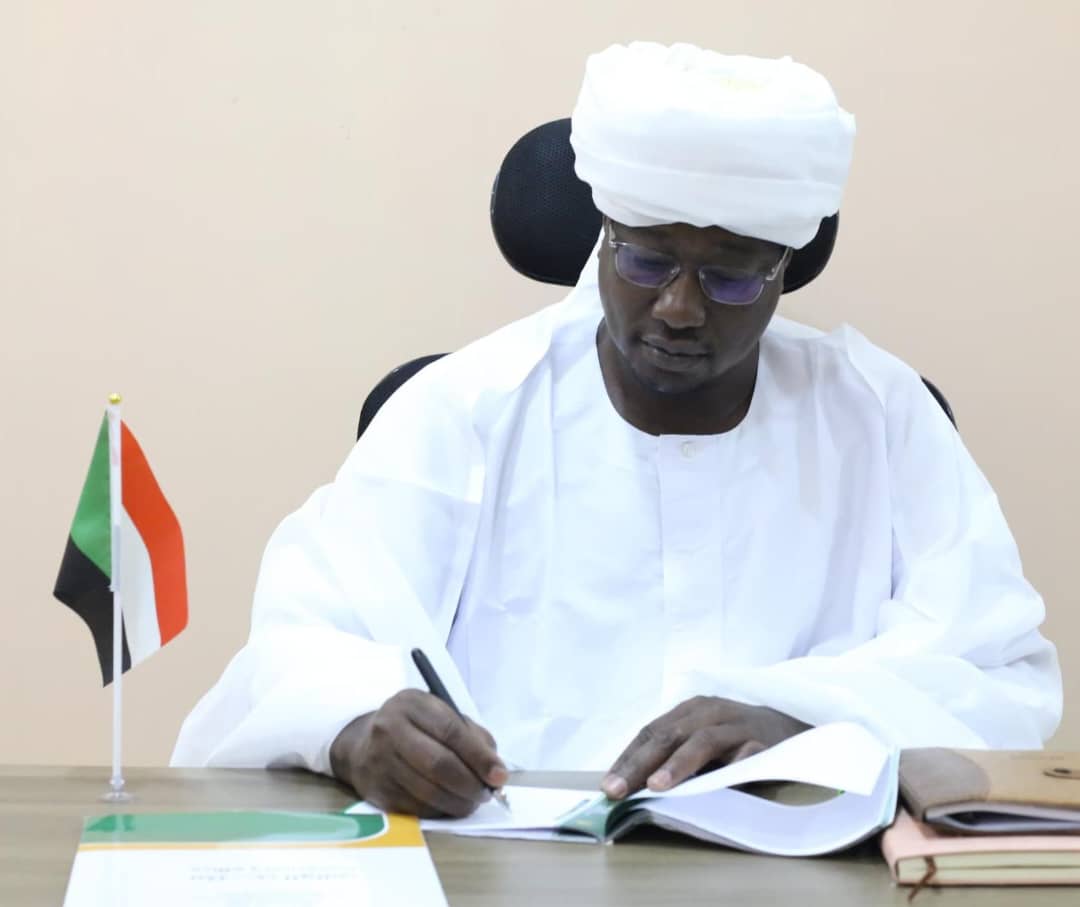
The humanitarian situation of displaced people is tragic by all means. Thousands of families are stranded, some of them living on land in makeshift camps, some living on the generosity of host families in Sudan’s safe states. The need for food, clean water, health care, and shelter is urgent. The tragedy is greater than the available potential. Haffiya Elyas interviewed Bahr Eddin Adam Karama, the governor of West Darfur State , to highlight on the situation and the daunting challenges they face at this critical juncture.
# In numbers: How much humanitarian aid has reached the refugees of eastern Chad and the displaced inside Sudan? Where have your contacts with the international community reached to speed up their flow?
Unfortunately, the amount of humanitarian aid that has arrived so far is very low compared to the growing needs of our refugees and displaced people. What has arrived is limited to restricted interventions in the food and health sectors, while the needs are much greater than that. The situation of our people in eastern Chad is very difficult, especially in terms of health, where many suffer from a lack of medical care and the spread of epidemics, in addition to the suffering of people with chronic diseases who need continuous follow-up and treatment.
We are in constant contact with the Federal Ministry of Health, as well as with international and regional health organizations, to secure medicine and urgent medical services. We stress in our contacts with the international community and the United Nations the need to raise quotas and accelerate the flow of aid. Inside the state, the militia sometimes impedes the arrival of convoys and unfairly redistributes them, exacerbating the scale of the humanitarian catastrophe, which we are working to confront with all we can.
#The postponed Sudanese certificate exams for refugee students in eastern Chad was an exceptional event, how were they arranged and what were the most prominent obstacles?
Education for our children is a matter of life and death, so we have made it a national priority. We coordinated with the Ministry of Education, the Higher Commission for Examinations, and the authorities in Chad to secure accredited halls and proclamation centers. We faced significant logistical difficulties: deportation of students and rosters, equipping rooms, securing basic needs, as well as psychological and health challenges for students living in refugee conditions. However, we have succeeded in enabling them to take their exams with dignity and acceptable standards, believing that education is their weapon for a better future.
# Where do the admission processes of state students in higher education institutions stand?
We have already started steps with the Ministry of Higher Education and a number of universities to allocate seats and scholarships to affected students. The aim is to ensure that the people of the state have a fair opportunity to enroll in university education despite the circumstances. We constantly demand that the specificity of our mandate, which has paid a heavy price, be respected, and we hope that it will open the door to exceptional and compensatory programs for our children.
# Your reading of the so-called Quartet. What is between the lines of this statement?
The statement reveals a dangerous attempt to equate the national army with the rebel militia and find a foothold for it in the political process. We say clearly: this is a grave mistake and an injustice to the Sudanese people, especially the people of Darfur who have tasted the woes of this militia. We do not accept any compromise that rewards the aggressor or equates the victim with the executioner.
# Where does Sudan stand now, specifically Darfur? And when do you expect a recovery?
Sudan is going through its most difficult stages, and the reason is external interventions that provide the militia with weapons and money. This is the last decision, but we are confident that victory is inevitably coming because it is a divine promise and a cause for justice. The recovery will not begin until after full liberation, and then a grueling construction process begins. However, we are sure that the sacrifices will not be in vain.
# Are you satisfied with the performance of humanitarian organizations and the United Nations towards the IDPs?
We appreciate their efforts, but we are not satisfied. There is a clear shortcoming in the volume of aid and its speed, in addition to the militia’s encroachments on convoys and its control over the distribution according to its interests. We call on organizations to act more boldly and to ensure that support reaches those in need directly, away from the control of the militia.
# How much damage has been done to the state’s infrastructure? Have the government or partners started to develop reconstruction plans?
The destruction is enormous: major roads have been cut off, power plants have gone out of service, water networks have been destroyed, and educational and health facilities have been looted or razed to the ground. We have formed a specialized committee to assess the losses in preparation for the post-liberation phase, where the reconstruction plan will be launched according to urgent and interim priorities.
# Darfur is Sudan’s food basket. How do you see the future of the agricultural season under the current circumstances? What are your plans to support farmers and pastoralists?
The militia has devastated agriculture and grazing, but we believe that the countryside will return to being productive once it is liberated. Our plan is to provide seeds and agricultural inputs, secure farmers and their herds, and support marketing chains. Darfur will remain Sudan’s food basket, and it will come back stronger.
# What are the most prominent government plans to support economic and commercial activities under the current circumstances?
We have prepared integrated post-liberalization scenarios: restoring security to attract investment, supporting small and medium-sized enterprises, and revitalizing markets by providing the necessary infrastructure. We are working to create an environment conducive to the return of commercial activity and to activate the role of the private sector in reconstruction.
# How is your government working to absorb and employ the energies of the youth in a way that serves stability and development?
Young people are the fuel for change. Our plan includes vocational training and qualification programs, microfinance projects for entrepreneurship, and the involvement of youth in reconstruction projects such as basic services and infrastructure. We also attach importance to combating hate speech and creating genuine youth participation in decision-making.
Finally, what is your message to the people of Darfur and Sudan in general?
We say to our people: West Darfur will be liberated, and its deep wound will be healed by your will. We are now planning for the post-liberation phase: rebuilding infrastructure, supporting agriculture and trade, and harnessing the potential of young people in development projects. The battle has been protracted, but it will be decided, and victory is coming, God willing.