
Port Sudan Hosts A workshop to Develop the Basic Framework of Sudan’s Plan to End Conflict-Related Sexual Violence
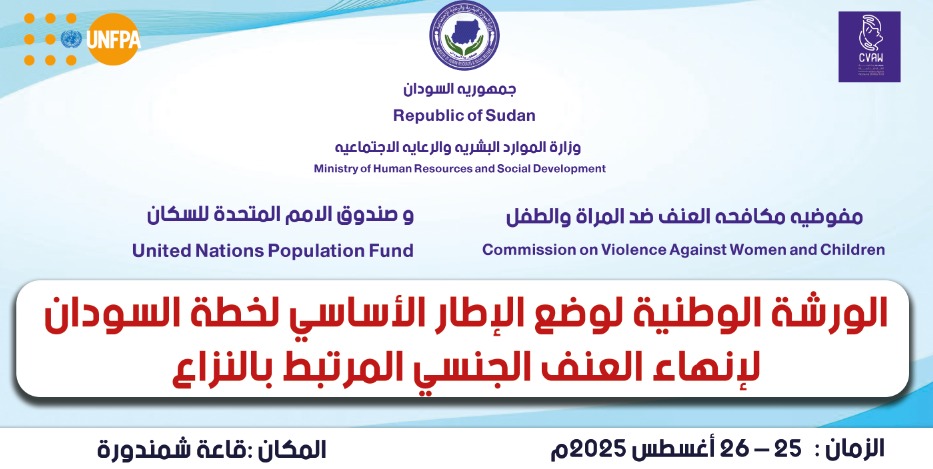
The Government of the Sudan renews its commitment to prevent and address conflict-related sexual violence
Report by:Haffiya Elyas
Photo/Hamza Al-Sir
Gender-based violence (GBV) in conflict can take many forms, including conflict-related sexual violence (CRSV). CRSV is an abuse of human rights and when perpetrated in the context of and associated with an armed conflict, is a serious violation of international humanitarian law and a war crime.
CRSV can lead to death and those who survive it experienced multiple forms of harm, such as serious and lifelong injuries, trauma, and distress. Survivors’ families and communities are also affected, including from the discrimination, stigma, and lack of access to quality services and support for survivors. CRSV undermines poverty reduction, gender equality, conflict prevention and resolution, and fuels conflict.
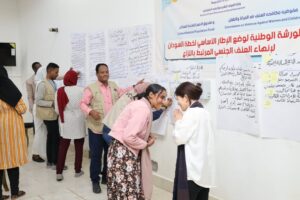
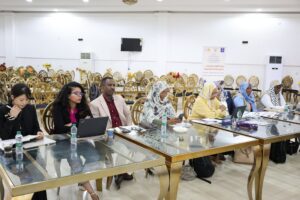
The National Workshop to Develop the Basic Framework of Sudan’s Plan to End Conflict-Related Sexual Violence, organized by the Ministry of Human Resources and Social Development in cooperation with the United Nations Population Fund (UNFPA) in Port Sudan .
The Minister of State at the Ministry of Human Resources and Social Development, Sulima Ishaq, addressed the workshop, affirming the government’s efforts to eliminate all forms of conflict-related sexual violence, noting Sudan’s and the government’s commitment to protecting women and girls, ending impunity, and restoring safety for women and girls. Salima noting that the government has made moves in this framework with local and international partners.
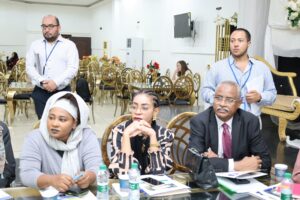
Ishaq said in press statements that the workshop comes in implementation of the framework agreement signed with the United Nations on April 15, 2024. She pointed out that a commitment to this principle comes through the great partnership between the government and civil society, as demonstrated by what is happening today in the workshop. She noted that the workshop includes the government, civil society, the United Nations, and international organizations.
She added that the session aims to establish the basic features, represented in the reform of issues related to security, safety, and access to justice, noting that the implementation of the plan is linked to community partnership. She stated that the workshop represents the first stage, and in the second phase, there will be advice on the plan after its features are clear at all different levels and among the various parties in society.
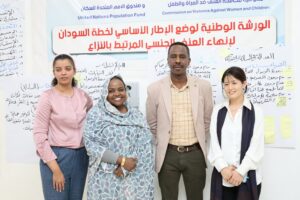
Sulima , affirmed that the government seeks to end all forms of conflict-related sexual violence, pointing to the commitment of Sudan and its government to protect women and girls, end impunity, ensure that they are safe .
Shatha Najm El-Din Ahmed, Executive Director of Nada Al-Azhar Organization (a national organization led by women), confirmed that the workshop is considered the first of its kind after the outbreak of war in the country on 15-4-2023, explaining that the workshop discusses the strategic framework for conflict-related violence.
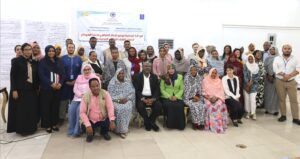
She said that the workshop came as a result of the close cooperation between the government and civil society organizations in general, especially women-led organizations, to consult on this sensitive file, indicating that the workshop is the basic building block of a program that enables the reduction and end of conflict-related violence.
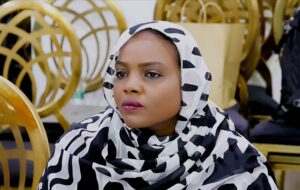
Dr. Rowaida Awad, Head of the Gender-Based Violence and Health Response Unit for Cases of Gender-Based Violence at the Ministry of Health, pointed out that the workshop addresses the overall response to cases resulting from sexual violence during conflict situations through the development of the National Plan for Protection from Violence.
Strong commitment :
According to the press release issued recently by the United Nations ،Office of the Special Representative of the Secretary-General onSexual Violence in Conflict , the Government of the Republic of the Sudan has taken decisive steps for the prevention and eradication of conflict-related sexual violence (CRSV) by renewing a Framework of Cooperation to address CRSV, to be implemented with the support of the United Nations.
Despite significant obstacles to reporting these crimes – stemming from fear and stigma faced by survivors, as well as insecurity and targeted attacks against health structures and service providers – alarming and widespread patterns of sexual violence have been documented since the onset of the conflict. These include rape and gang-rape, often occurring during attacks on urban areas and IDP sites, targeting individuals fleeing from conflict-affected areas, during prolonged occupation of residential areas, and in the context of abductions that have resulted in sexual slavery.
The landmark agreement, signed with the Government of the Republic of the Sudan, in accordance with Security Council resolution 2467 (2019), prioritizes a number of areas such as the provision of holistic services for survivors; supporting the review and/or adoption of legislation to strengthen protection from conflict-related sexual violence; engaging with Sudanese justice and security actors, including to enhance capacity for the investigation and prosecution of crimes of sexual violence; and, engagement with other relevant actors such as tribal, religious and community leaders, civil society including women and youth-led organisations and survivors themselves who will be at the heart of all efforts.
In Port Sudan, SRSG Patten met with the Vice-President and Deputy Chairman of the Transitional Sovereignty Council, and with the Ministers of Defense, Foreign Affairs, Interior, Justice and Social Development, with the Attorney General and the Head of the Unit for Combating Violence against Women. She also met with the UN Resident and Humanitarian Coordinator a.i., the United Nations Country Team, gender-based violence service providers, women-led organizations, and visited assistance structures, including shelters and women’s safe spaces, in which she heard firsthand accounts from survivors. The Government of the Sudan welcomed the Special Representative’s offer to deploy a technical team to support the development of an implementation plan. The process will be led by the Ministry of Social Development and will engage other relevant national authorities and institutions, including the Sudanese Armed Forces.